 CALGARY, AB/ Troy Media/ – From the fur trade to fisheries and forests, Canada was built on the toil and sweat of those who wanted to prosper. But these days, it’s harder to create opportunity. And sometimes, government is to blame.
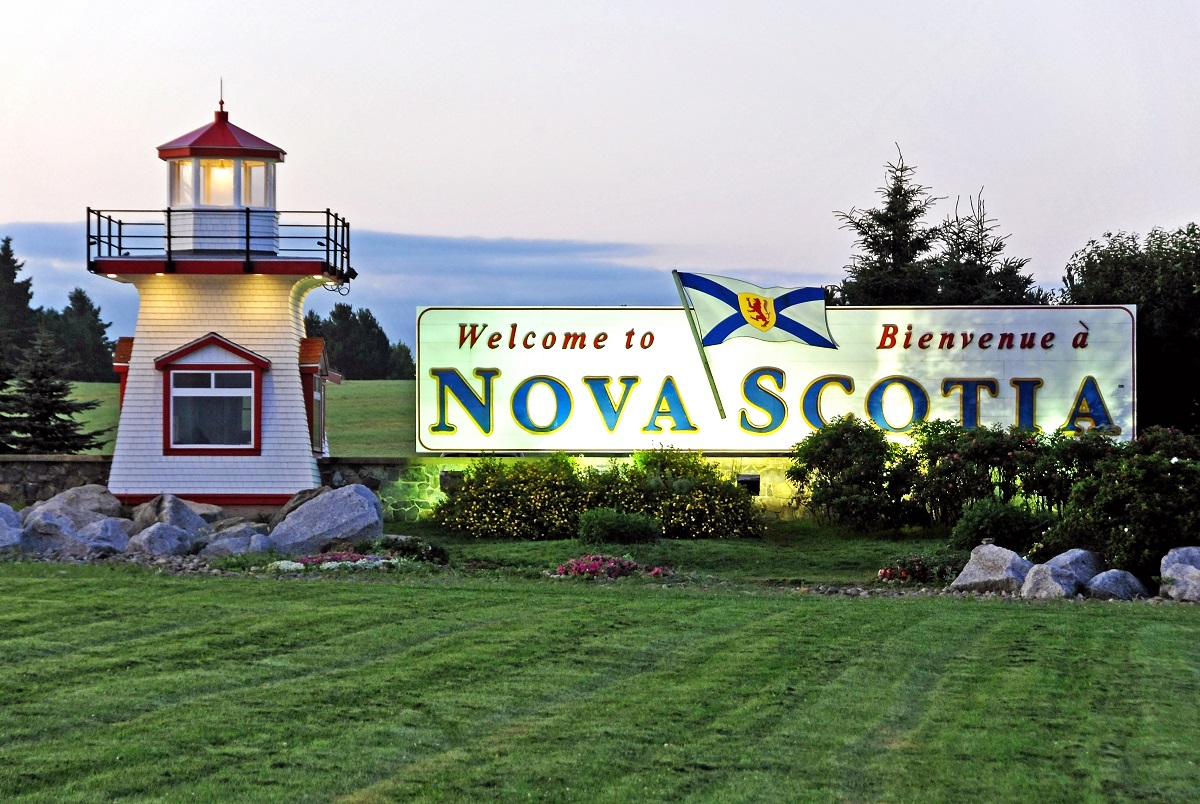
The latest example comes from Nova Scotia where the provincial government just imposed a moratorium on hydraulic fracturing used to produce both oil and natural gas. Some people will be quite happy, asserting fracking is dangerous.
But as my colleague and environmental scientist Ken Green tirelessly points out, while portrayed as something new and radical, fracking is a relatively straightforward combination of two technologies (horizontal drilling and hydraulic fracturing) that date back to the 1920s and 1940s respectively.
On safety, Green cites a literature review in the journal Science, which observes how “more than one million hydraulic fracturing treatments have been conducted, with perhaps only one documented case of direct groundwater pollution resulting from injection of hydraulic fracturing chemicals used for shale gas extraction.”
Of course provincial governments can ignore the science and announce whatever they want. But Nova Scotia is a have-not province desperately in need of something more than just another Ottawa equalization cheque. Last year, own-source revenues amounted to $5.7 billion; transfer payments from the federal government were worth just over $3.1 billion, or 55 per cent of what the province raised on its own.
In contrast, Saskatchewan’s own-source revenues were about $9.8 billion. Federal transfers were $1.7 billion or 17 per cent of the revenues produced at home. In Alberta, the province reaped $33.8 billion from the locals; Ottawa added $4.8 billion, equivalent to 14 per cent of at-home revenue. One critical difference in revenue flows between Nova Scotia and these two provinces: royalties and taxes that accrue from oil, gas and other resources that are extracted on the prairies.
The decision by Nova Scotia politicians to turn down potential resource revenues means Nova Scotians will experience more of the same; among other ills, high taxes that could be alleviated by new energy royalties.
How bad are Nova Scotia’s taxes? Consider some examples.
In Nova Scotia, the general corporate tax rate is 16 per cent; that compares with 12 per cent in Saskatchewan and 10 per cent in Alberta. Small businesses pay a 3 per cent tax in Nova Scotia below a $350,000 threshold. In Alberta and Saskatchewan, the rate is 3 and 2 per cent respectively on a $500,000 threshold. Nova Scotia and Saskatchewan impose a 4 per cent and 3.25 per cent capital tax, respectively, on financial institutions (which pass it on to consumers). Alberta imposes no such tax.
Nova Scotians pay a 10 per cent provincial sales tax (embedded in the HST), compared to 5 per cent in Saskatchewan and zero in Alberta.
More numbers: The total provincial tax bill for a one-income family with two children and a $35,000 income in Alberta: a $1,128 refund; in Saskatchewan, a $923 bill; and in Nova Scotia, a whopping $4,089 provincial tax hit.
A one-income, two-child family with $75,000 in earnings pays $3,212 in total provincial taxes in Alberta, $5,095 in Saskatchewan, and $10,159 in Nova Scotia.
A two-income, two-child family at $100,000 pays provincial taxes of $5,258 in Alberta, $7,445 in Saskatchewan, and $12,116 in Nova Scotia.
Twenty years ago, governments taxed everything that moved. Some, such as Nova Scotia’s ruling politicians, still do. They’re reinforced in such behaviour by anti-development purists who reject any sensible and safe way of obtaining new revenue. Those foregone royalties and tax receipts could be used to finance government operations or lower taxes. The latter option is a crying need in a high-tax province.
Defensible development is desirable. Centuries ago, Canadians trapped animals to sell fur to the English and Europeans. Now we hawk beef, oil, gas, automobiles, environmental services, financial know-how and high-tech Blackberries to countries around the world.
The result? Jobs, incomes and an enviable standard of living.
But when politicians in Nova Scotia opt out of reasonable development options such as fracking for oil or gas, they leave nothing but high personal taxes and few at-home, in-province opportunities. That’s not exactly helpful for Nova Scotians.
Mark Milke is a Senior Fellow with the Fraser Institute. You can follow him on twitter: @MilkeMark