 The U.S. military’s ouster of Venezuelan President Nicolás Maduro is set to swiftly reroute the country’s oil exports back toward the United States – and away from China. That will give U.S. refiners an immediate boost, but President Donald Trump’s plans to revive production in the Latin American country may be slower to materialize.
Speaking on Saturday after announcing Maduro’s arrest on Truth Social, Trump said he would maintain the U.S. embargo on exports of sanctioned Venezuelan crude oil for now, but also stated that the U.S. would run Venezuela “for a period of time,” suggesting U.S. restrictions could be lifted very soon.
Benchmark oil prices had edged higher in recent weeks as Washington stepped up its military and economic pressure on Caracas. But any new disruption to exports will likely have a limited impact on the global oil market, particularly since supplies are set to sharply exceed demand in 2026.
Venezuela, once a major producer, last year pumped only around 900,000 barrels per day, accounting for less than 1% of global supply. This followed years of shrinking investment due to failed government policies and sanctions.
It was unclear how Venezuela’s regime change will unfold, but a peaceful shift to a U.S.-friendly regime would almost certainly lead to the repeal of Washington’s sanctions.
This will offer Venezuela’s creaking oil sector a much-needed reprieve and, perhaps more importantly, redraw the global refining map.
REFINERY RE-ROUTE
A smooth transition in Caracas will likely result in a rapid rerouting of Venezuelan oil exports, re-establishing the U.S. as the major buyer of the country’s volumes.
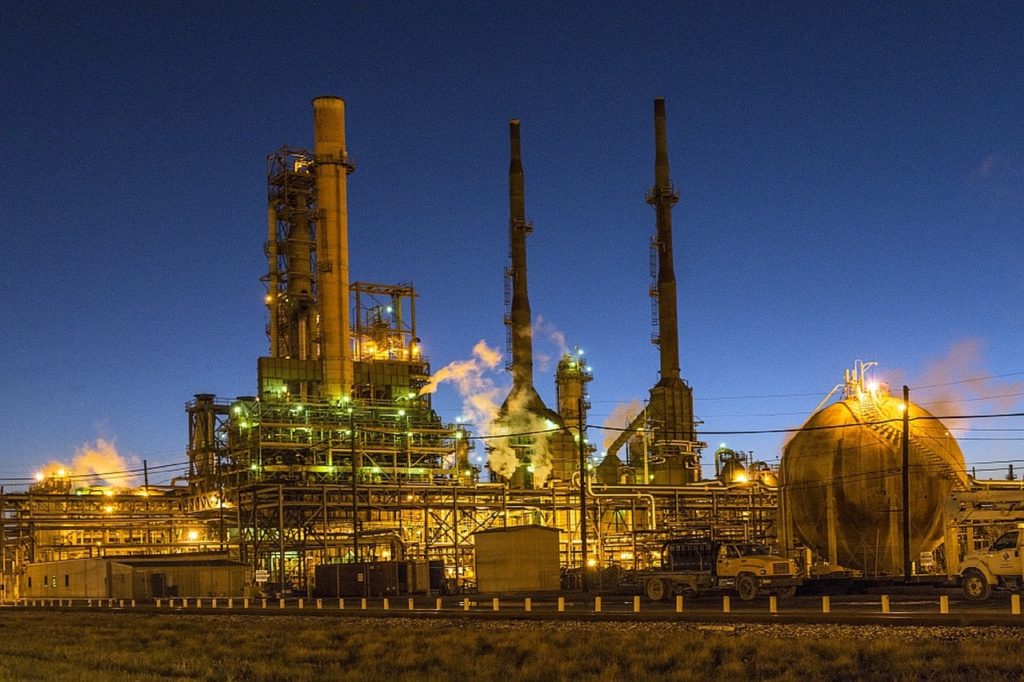
Oil refineries along the U.S. Gulf Coast, the country’s main refining and exporting hub, were built decades ago to process heavy-grade crude – the type Venezuela exports – for products such as gasoline, diesel and jet fuel.
Although the U.S. crude oil mix dramatically changed following the boom in domestic shale oil – a light grade – in the early 2010s, many refineries still require heavy grades to optimise operations.
Venezuelan crude exports to the U.S. reached a peak of 1.4 million bpd in 1997, when they accounted for 44% of Venezuela’s production, according to the Energy Information Administration. The flow gradually declined to 506,000 bpd in 2018 as supplies of competing heavy grades from the U.S., Mexico and Canada increased.
Venezuelan exports collapsed to zero between 2020 and 2022 after Trump imposed direct oil sanctions on the state-owned energy company PDVSA. But they then recovered to 227,000 bpd in 2024 and 140,000 bpd in the first 10 months of 2025 after Washington in 2020 issued Chevron a waiver to continue operating its joint ventures in Venezuela.
A BLOW TO CHINA
A shift in Venezuela’s exports would come largely at the expense of China, which became the main importer of Venezuelan oil after Trump imposed sanctions on the country’s energy industry in 2019.
China accounted for more than half of Venezuela’s crude exports of 768,000 bpd last year, according to data from analytics firm Kpler.
Trump suggested on Saturday that China will continue to receive some Venezuelan oil under a U.S.-led government in Caracas, but that amount is likely to be limited.
Around two-thirds of Chinese oil imports from Venezuela go to independent refineries, known as teapots, that are willing to flout sanctions in order to purchase the crude at sharp discounts, according to Reuters estimates.
However, if sanctions are lifted, oil would be sold at international prices, removing the incentive for these buyers.
The remaining one-third of current oil exports to China goes towards repayment of Caracas’s heavy debts to Beijing. It is unclear if this trade would continue, as the oil is probably delivered at or near production costs, far below market prices.
Ultimately, the direction of travel for the bulk of Venezuela’s crude volumes is clear. The U.S. is a far more natural market than China, due to the geographic proximity, making freight costs significantly lower.
If the bulk of the current Venezuelan exports to Chinese “teapots” gets redirected to the U.S., the latter’s imports could increase by more than 200,000 bpd within months of this action, more than doubling U.S. purchases, based on 2025 export levels, according to Reuters estimates.
SLOW PRODUCTION BUILD
While Venezuelan export routes may change quickly, any meaningful recovery in the country’s production and exports will take much longer.
Trump said on Saturday that large U.S. oil companies will re-enter the country to revive its energy industry – a lucrative prospect since Venezuela holds the world’s largest proven oil and gas reserves of around 303 billion barrels, concentrated in the Orinoco belt region.
U.S. oil companies helped discover and develop Venezuela’s oil riches beginning in the 1920s, turning the Latin American country into the world’s second-largest producer by the 1930s.
However, Western companies including Chevron, Exxon Mobil and Shell were forced to retreat after Venezuela nationalised the industry first in the 1970s and again under Hugo Chavez in the 2000s.
NEED FOR STABILITY
Venezuela’s production consequently shriveled from a peak of 3.7 million bpd in 1970 to a low of 665,000 bpd in 2021 before slightly recovering in 2024.
Western companies will likely be eager to tap into Venezuela’s abundant and low-cost resources. But they will require a certain degree of political stability and confidence regarding the sanctity of contracts before pouring billions into new projects or signing long-term trade deals.
Further complicating expansion plans is the fact that Venezuela owes Exxon, ConocoPhillips and Chevron billions of dollars in unpaid joint-venture costs, which the companies would likely require to settle before making sizeable new investments.
Even assuming such political, legal and financial hurdles are resolved, developing new oil and gas projects would still take years.
Venezuelan oil production could increase by up to 200,000 bpd in the first year following a Maduro ouster, according to Rapidan Energy’s forecasts, and double to 2 million bpd within a decade under the consultancy’s most optimistic scenario.
But even if Trump’s dramatic actions don’t lead to an immediate revamp of Venezuela’s oil industry, they should still be a warning to investors: the rules of the global energy game have changed.
Want to receive my column in your inbox every Monday and Thursday, along with additional energy insights and links to trending stories? Sign up for my Power Up newsletter here.
Enjoying this column? Check out Reuters Open Interest (ROI),your essential new source for global financial commentary. ROI delivers thought-provoking, data-driven analysis. Markets are moving faster than ever. ROI can help you keep up. Follow ROI on LinkedIn and X.
(Ron Bousso; Editing by David Holmes)