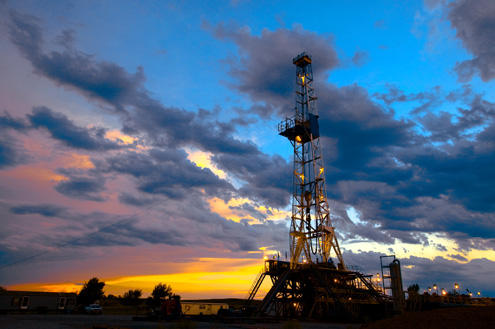
 U.S. energy firms this week cut the number of oil and natural gas rigs operating for the first time in three weeks, energy services firm Baker Hughes said in its closely followed report on Friday.
The oil and gas rig count, an early indicator of future output, fell by two to 544 in the week to January 9, the lowest since mid-December.
Baker Hughes said this week’s decline puts the total rig count down 40 rigs, or about 7% below this time last year.
Baker Hughes said oil rigs fell by three to 409 this week, while gas rigs fell by one to 124, their lowest since October.
In the Permian Basin in West Texas and eastern New Mexico, the biggest U.S. oil-producing shale formation, the rig count fell by three this week to 244, the lowest since August 2021.
In the Williston Basin in North Dakota and Montana, the rig count fell by one to 28, the lowest since January 2022.
In North Dakota, the rig count fell by one to 26, the lowest since November 2021.
In Utah, the rig count rose by four to 17, the most since January 2015.
The oil and gas rig count declined by about 7% in 2025, 5% in 2024, and 20% in 2023 as lower U.S. oil prices in recent years prompted energy firms to focus more on boosting shareholder returns and paying down debt rather than increasing output.
The independent exploration and production companies tracked by financial services firm TD Cowen said they planned to keep capital expenditures flat in 2026 after planning to cut spending by around 4% in 2025.
That compares with roughly flat year-on-year spending in 2024, increases of 27% in 2023, 40% in 2022, and 4% in 2021.
With U.S. spot crude prices expected to fall for a fourth year in a row in 2026, the U.S. Energy Information Administration projected crude output would decline from a record 13.6 million barrels per day in 2025 to around 13.5 million bpd in 2026.
On the gas side, the EIA projected a 13% increase in spot prices in 2026 would prompt producers to boost gas output to around 109.1 billion cubic feet per day (bcfd) this year, up from a record 107.7 bcfd in 2025.
(Reporting by Scott DiSavino; Editing by Nia Williams)