President Donald Trump said on Thursday that the United States has an “armada” heading toward Iran, renewing warnings to Tehran against restarting its nuclear program or killing protesters after a wave of anti-government unrest.
Tehran accuses the United States of fomenting the turmoil.
Any major escalation risks endangering key energy infrastructure and adding uncertainty to oil and gas markets.
Following are some facts on Iran’s energy industry, exports, and the impact of Western sanctions:
WORLD’S LARGEST GAS RESERVE
Iran produces natural gas from the offshore South Pars gas field, which makes up around a third of the world’s largest reservoir of natural gas.
Iran shares the reservoir with major exporter Qatar, which calls its field the North Dome.
Sanctions and technical constraints have meant most gas Tehran produces from South Pars is for domestic use. Iran’s total gas production totalled 276 billion cubic meters in 2024, with 94% consumed in Iran, according to data by the Gas Exporting Countries Forum.
Israeli attacks in June last year struck four units of Phase 14 of South Pars, around 200 km (125 miles) from Qatar’s gas installations, many of which are joint ventures with energy giants ExxonMobil and ConocoPhillips of the U.S.
Qatar has made hundreds of billions of dollars exporting liquefied natural gas for nearly three decades.
The entire reservoir contains an estimated 1,800 trillion cubic feet of usable gas – enough to supply the entire world’s needs for 13 years.
OIL PRODUCTION AND INFRASTRUCTURE
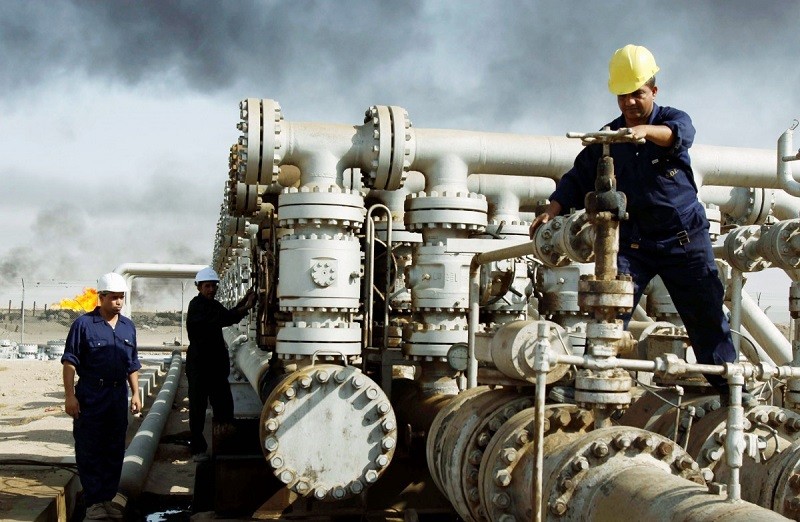
Iran, third largest producer in the Organization of the Petroleum Exporting Countries, extracts about 3.3 million barrels per day of crude oil, plus 1.3 million bpd of condensate and other liquids, totalling about 4.5% of global supplies.
Iran’s domestic refineries have a capacity of 2.6 million bpd, according to the consultancy FGE.
In 2025, it exported nearly 820,000 bpd of oil products, including LPG, according to Kpler, slightly below 2024 levels. Iran’s hydrocarbon production facilities are primarily concentrated in southwestern provinces: Khuzestan for oil and Bushehr for gas and condensate from South Pars.
It exports 90% of its crude via Kharg Island, for shipping through the narrow Strait of Hormuz. Analysts say Saudi Arabia and other OPEC members could compensate for a drop in Iranian supply by using spare capacity to pump more, even though this spare capacity has been shrinking due to output increases.
SANCTIONS IMPOSED AND EVADED
Iran’s oil production peaked at 6 million bpd in 1974, according to OPEC data – over 10% of world output at the time.
In 1979, the U.S. imposed the first of several waves of sanctions, and the European Union has followed. The U.S. tightened sanctions in 2018 after Trump exited a nuclear accord during his first term.
Iran’s oil exports fell to nearly zero during some months, but rose steadily under Trump’s successor, Joe Biden, as analysts said enforcement became slacker and Iran – exempt from OPEC+ output restrictions – managed to evade many sanctions.
WHO BUYS IRAN’S OIL?
For years now, Iran has dodged sanctions through ship-to-ship transfers and hiding tankers’ locations from satellites.
In 2025, its crude exports rose to nearly 1.7 million bpd, the highest since 2018, driven by Chinese demand.
The main buyers have been Chinese private refiners, but some of these were recently placed on the U.S. Treasury sanctions list.
Although China says it does not recognise sanctions against its trade partners, its purchases have declined.
As Iran also seeks to protect its stocks from potential U.S. strikes, it now has a record amount of oil on the water, equivalent to about 50 days of output, data from Kpler and Vortexa showed this month.
(Compiled by Andrew Mills, Federico Maccioni, Dmitry Zhdannikov, Ahmad Ghaddar and Alex Lawler; Editing by Kevin Liffey)