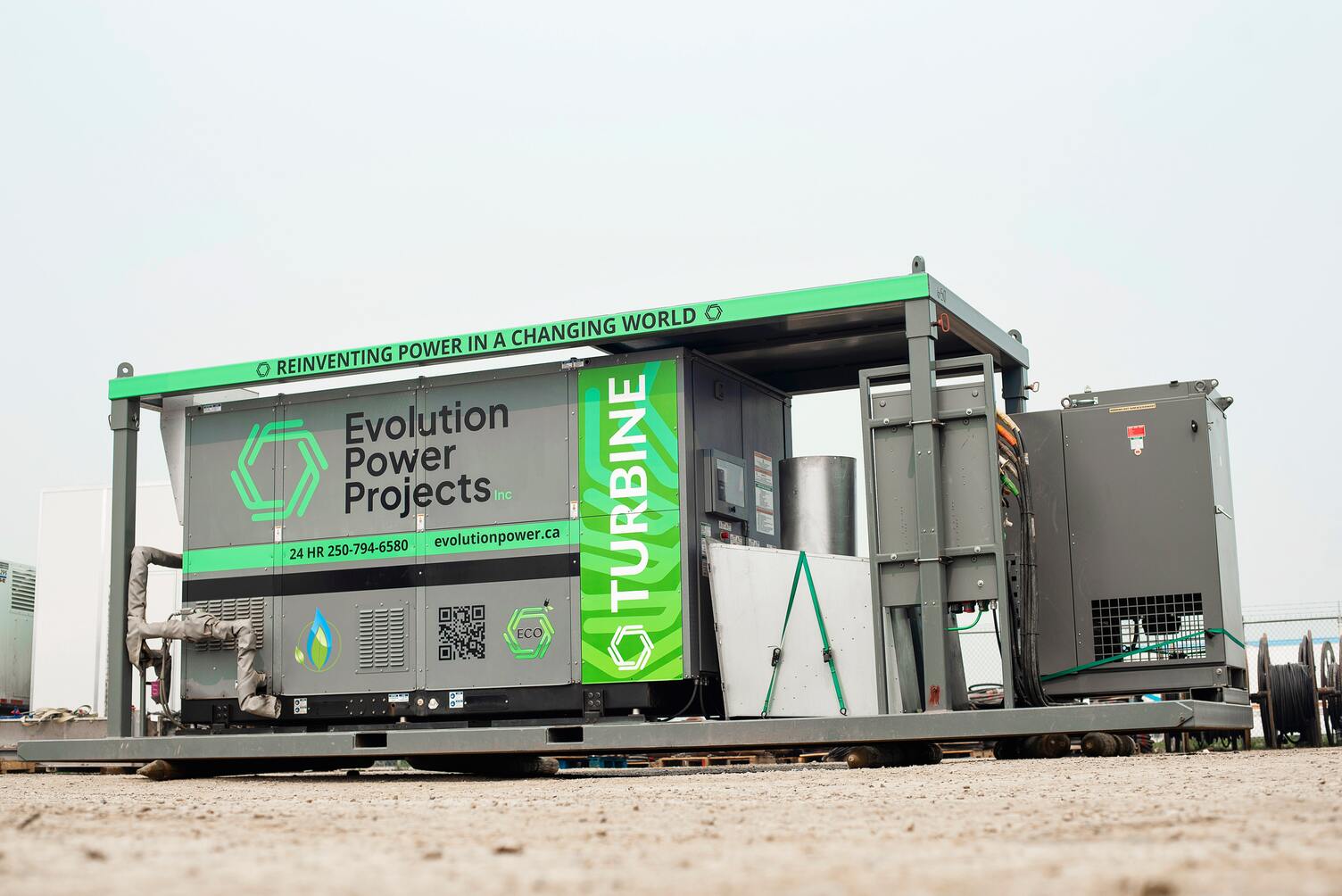
In West-Central Alberta, a Completions Superintendent at a large Oil and Gas Producer recently powered a six-well pad for around $80 per day (consuming 1.6 decs/day) by leveraging their own fuel gas. Evolution Power Projects, who supplied the 333 kW fuel gas turbine that powered the site, worked with the Operator to enact a pad electrification strategy. The choice to use a fuel gas turbine displaced multiple diesel generators and the accompanying fuel, logistics, and maintenance costs. Generator rental costs displaced were around $2000/day, and intangible savings are added on top of fuel and rental displacement. There was no manpower needed once the turbine was mobilized. The Operator powered their wireline units, light towers, and all shacks.
After a gas analysis, the Operator used a Pressure Reduction Skid (PRS) to ensure proper gas treatment of the site’s fuel gas for the one turbine generator at site. The turbine comes with a diesel back up generator which was not needed during Operations, further proving concept. There is remote monitoring of the turbine for any gas supply or site shut down issues. The Operator also captured better turbine efficiency with the colder weather.
This project is emblematic of a shift in Western Canadian energy operations whereby producers are increasingly recognizing the value of powering their sites with Pad Electrification strategies and fuel gas. These modern turbines have highly flexible fuel tolerances and can run on natural gas, fuel gas, solution gas, dry flare gas, or blended streams. Equipment can be provided to manage gas pressure and to condition wet or sour gas (the turbines can handle up to 5,000 ppm of H2S). Even when site gas is not used, fuel savings compared with diesel generators are estimated at around 60%.
The success of the six-well pad shows what many Operators in the region can already achieve with the gas they have on location. Moreover, gas turbines are well-suited for cold-weather and remote locations, have reduced noise and emissions, and only need 5 hours of maintenance per year. Turbines can be linked to provide up to 2.5 MW of power to run drilling, completion, production, construction, and midstream sites. If you are considering using a natural gas turbine to power your next project, contact Michael.lawson@enterprisegrp.ca.