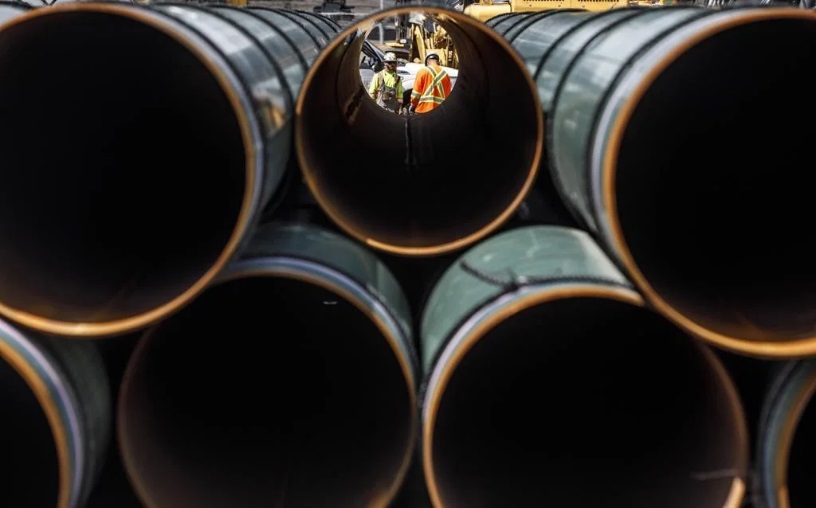
 The Canadian tycoon who heads one of North America’s fastest growing oil companies told Reuters he supports a proposal to potentially revive parts of the former Keystone XL pipeline and wants to see Canada use the project as leverage in upcoming trade negotiations with the United States. Still, Adam Waterous, CEO of Strathcona Resources, said he would prefer a new West Coast pipeline to increase access to Asian markets. The comments by Waterous, one of Canada’s most aggressive oil industry dealmakers, are the first public statements by a Canadian oil shipper in favour of a new pipeline proposal led by Canadian company South Bow that could increase the country’s crude exports to the U.S. by more than 12%. They are an early indication that the project — which would require both a green light from U.S. President Donald Trump and the construction of additional links to U.S. refining hubs — has at least some level of commercial support from Canadian oil sands producers at a time when the U.S.-Israel war on Iran has disrupted international supply and sent global crude prices soaring.
The plan involves a different route through the U.S. than the previous Keystone XL pipeline, which was canceled by former U.S. President Joe Biden in 2021 after years of Indigenous and environmental opposition, but would use some of that project’s already built pipe in Alberta. South Bow launched a competitive bidding process last week offering 450,000 barrels per day of contracted pipeline capacity from Hardisty, Alberta to multiple U.S. delivery points including Cushing, Oklahoma, and destinations on the U.S. Gulf Coast, to gauge potential commercial use. Waterous declined to say if Strathcona will commit barrels to the South Bow project, citing ongoing commercial negotiations. But he pointed to his company’s stated goal to expand its own oil production from 125,000 barrels per day in 2026 to up to 300,000 bpd by 2035.
“I’ve been a very early advocate of this project,” Waterous said.
“And we are looking for egress now,” he said, referring to oil shippers’ ability to transport their product to market. But Waterous said the South Bow proposal is not the Canadian oil industry’s first choice for bolstering crude exports. Currently more than 90% of Canada’s oil exports go to the United States, and Waterous said Canadian oil shippers have long wanted greater market diversification.
Canadian oil companies would prefer another pipeline to the Pacific, to supplement the existing Trans Mountain pipeline which runs from Alberta to the British Columbia coast and offers an outlet to Asian markets, Waterous said.
Four other large Canadian oil sands producers did not respond to a Reuters request for comment on whether they support the South Bow proposal.
POTENTIAL POLITICAL BENEFITS
The Alberta government has said it will submit an application for a new crude oil pipeline to the west coast for fast-track approval by the federal government, but no private company has said it will build the project.
The main benefit to the South Bow proposal, Waterous said, is that it can likely be built faster and more cheaply than a new West Coast pipeline, while also carrying potential political benefits for Canada. He said Canada should try to leverage Trump’s previously stated comments that he would like to see the Keystone XL project built. Prime Minister Mark Carney has also raised with Trump the prospect of reviving the Keystone XL oil pipeline from Alberta to the United States as part of his efforts to ease trade tensions between the two countries.
“The utility of a pipeline to the south is that it is a tool to achieve a tariff agreement to protect principally Canada’s steel, auto and aluminum sectors, while also allowing the Canadian oil sector to grow,” Waterous said.
(Reporting by Amanda Stephenson in Calgary; Editing by Caroline Stauffer and Deepa Babington)