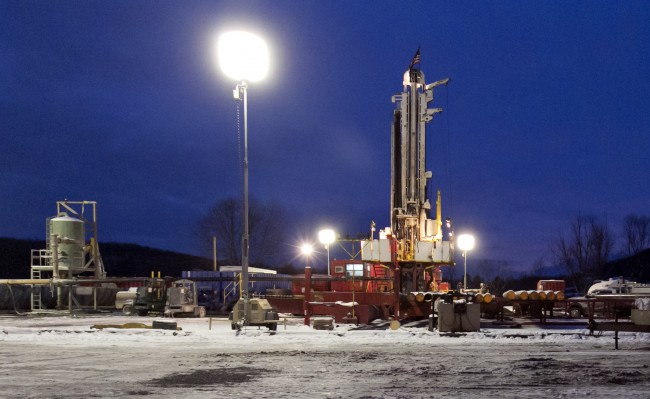
 U.S. natural gas output fell to a preliminary 11-month low on Sunday as frigid weather froze wells across the country, while gas demand for heating and power generation was on track to hit record highs.
In Texas the state’s power grid operator, the Electric Reliability Council of Texas (ERCOT), forecast electric demand on Tuesday would top last summer’s all-time high and warned power supplies could fall short on both Monday and Tuesday.
ERCOT, which said operating conditions were normal on Sunday, has ways to increase supplies and reduce usage if necessary. Those include calls for conservation and programs that encourage businesses to use on-site generation.
The drop in U.S. gas availability so far this week was the most in over a year, with supplies on track to fall by around 9.6 billion cubic feet per day (bcfd) from Jan. 8-14 to an estimated 11-month low of 98.6 bcfd on Jan. 14, according to data from financial firm LSEG.
That decline so far was small compared with gas supply losses of around 19.6 bcfd during Winter Storm Elliott in December 2022, and 20.4 bcfd during the February freeze of 2021.
Electricity supply and demand forecasts can change quickly, however, as power plant availability and weather patterns develop. The February 2021 freeze left millions in Texas without power, water and heat for days and resulted in over 200 deaths as ERCOT scrambled to prevent a grid collapse after an unusually large amount of generation shut.
Some of those power plants shut because they could not access enough gas supplies after frigid temperatures froze wells and other equipment, known in the energy industry as freeze-offs.
DEMAND SOARS
U.S. gas demand, including exports, will reach 164.6 bcfd on Jan. 15 and 171.9 bcfd on Jan. 16, according to LSEG.
Those daily demand forecasts would top the current all-time high of 162.5 bcfd set in December 2022 during Winter Storm Elliott, federal energy data from S&P Global Commodities Insights showed.
In Texas, ERCOT forecast power demand would peak at around 85,564 megawatts (MW) on Jan. 16 at around 8 a.m. local time, which would top the current all-time peak of 85,508 MW set in August 2023.
ERCOT estimated power use could top supplies by around 1,000 MW during the mornings of both Jan. 15 and Jan. 16. Those estimates, however, are subject to change and do not account for steps the grid operator may take to boost supplies and reduce demand.
One of the states hardest hit by the freeze over the past few days is Oregon, where roughly 164,000 homes and businesses were without power on Sunday, according to PowerOutage.us.
Portland General Electric, the state’s biggest power company, said in a post on social media platform X that restoration efforts would continue through the weekend. Portland General had about 126,000 customers still without power at midday on Sunday.
Next-day power prices at the Mid-Columbia (Mid-C) hub at the Washington-Oregon border soared to a record high of around $1,075 per megawatt hour (MWh), according to LSEG data going back to 2010.
That compares with Mid-C averages of $81 per MWh in 2023 and $52 from 2018 to 2022.
Northwest Pipeline, a 1,500-mile (2,400 kilometer) system that supplies gas to states including Washington, Oregon, Idaho, Wyoming, Utah and Colorado, on Saturday declared force majeure following an outage at a gas storage facility but has since resumed operations, according to company notices.
Officials at U.S. energy company Williams Cos, the pipeline’s owner, were not immediately available for comment.
(Reporting by Scott DiSavino; Additional reporting by Liz Hampton in Denver; Editing by Richard Chang)