A recent field pilot in Alberta is showing how producers can simplify well testing, reduce flaring, and lower capital costs without sacrificing measurement accuracy. Torxen, was an Alberta E&P focused on light oil development, partnered with SLB to trial the Vx Spectra surface multiphase flowmeter as an alternative to conventional test separators. The results point to a practical path for Canadian operators looking to optimize pad designs while staying fully compliant with provincial regulations.
Why Torxen Went Looking for a New Approach
Across Alberta’s onshore plays, traditional test separators remain the standard for well test and production allocation. But separators bring a sizeable footprint, higher maintenance demands, and added sources of fugitive emissions and flaring. Torxen’s objective was to reduce pad capital spend, shrink surface equipment complexity, and cut emissions, while still meeting Alberta Energy Regulator requirements under Directive 017, which governs well testing and production measurement. Because Directive 017 requires demonstrated equivalency before replacing separators, Torxen needed a site-specific exemption supported by field evidence. That meant proving any new technology could deliver reliable, repeatable results in real Canadian well conditions.
The Technology: Vx Spectra surface multiphase flowmeter
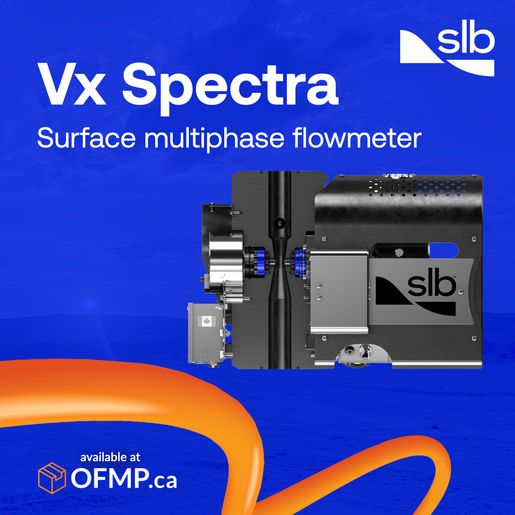
The Alberta Field Trial
Torxen and SLB tested the Vx Spectra across four wells over roughly six months. The meter was benchmarked against test separator readings to evaluate accuracy, operational fit, and regulatory equivalency.
Key outcomes included:
- Accuracy on par with separators: For wells within the meter’s operating range, oil measurement deviation averaged around plus or minus 3 percent on monthly prorations, supporting equivalency to traditional well test methods.
- Reduced flaring and emissions: Eliminating the need for separation helped lower routine flaring and reduced fugitive emission sources tied to separator-based testing.
- Simpler pad architecture: With no separator required, Torxen can streamline surface layouts, reduce maintenance touchpoints, and enable more automated monitoring across multiple wells from a single installation.
What This Means for Canadian Operators
For Alberta producers facing ongoing pressure to improve environmental performance and cost efficiency, this pilot demonstrates a real-world option to:
- Replace or reduce the use of test separators where appropriate,
- Improve pad economics through smaller, simpler surface systems, and
- Maintain compliance with AER measurement standards.
Torxen estimated that shifting from test separators to Vx Spectra meters could reduce new pad capex by up to CAD $750,000 per pad, a meaningful savings in today’s cost-disciplined development environment. Since the Torxen trial, several other Canadian operators have begun implementing VX meters in their own operations and are realizing these efficiency gains firsthand.
Available Now on OFMP Canada
The VX Meters are available for purchase on Oilfield Marketplace Canada. You can find the product page here: VX Multiphase Meter.
The Oilfield Marketplace Canada makes it simple for Canadian operators to source proven technology through a trusted local e-commerce channel. Buyers can review product details, connect directly with suppliers, and even execute the purchase of the equipment via multiple payment methods, including traditional purchase orders, all in one place, without the delays that often come with traditional procurement.
For Canadian operators and service companies looking to modernize testing, reduce pad footprint, and support lower-emission operations, the Vx Spectra meter is a proven technology now accessible through a streamlined online procurement channel.