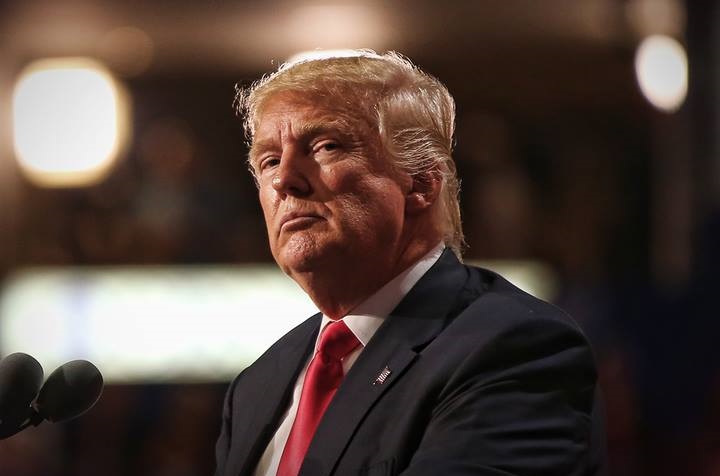
 Oil surged by more than 5% on Wednesday and global stocks and bond prices tumbled, as investors fled risk assets after U.S. President Donald Trump said the memorandum of understanding signed with Iran to end the Gulf conflict was “over”.
Trump, who was speaking in Ankara ahead of a NATO summit in the Turkish capital, added that he did not want to engage with Tehran. “As far as I’m concerned, it’s just a waste of time dealing with them,” he said.
Market sentiment was already fragile after U.S. and Iranian forces had traded attacks in the Gulf.
Brent crude futures leapt 5%, the most in a day since late May, to $78 a barrel.
While that was well shy of the peaks above $120 seen during the height of the fighting, it was enough to inject some fresh inflation risk into the bond market, particularly since months of conflict have drawn down global oil inventories.
“It’s clearly not what the market’s wanted and it really weighs heavily on sentiment,” Chris Beauchamp, chief market strategist at IG, said.
Benchmark 10-year U.S. Treasury note yields rose for a seventh day to a one-month high of 4.56%, while in Europe, yields on German and Italian 10-year bonds rose by the most in a month to also hit one-month highs at 3.06% and 3.9%, respectively.
Data this week showed crude stocks in the U.S. Strategic Petroleum Reserve hit their lowest level since 1983, leaving markets more vulnerable to future supply shocks.
“The main thing is really whether or not the Strait of Hormuz remains open and we still see traffic (and) whether or not oil can continue to flow,” Khoon Goh, head of Asia research at ANZ in Singapore, said.
STOCKS DROP
European shares dropped 1.6%, on track for the biggest one-day drop in the STOXX 600 since mid-March, while U.S. futures fell 0.8% to 1.2%.
The VIX volatility index jumped nearly 13% in its largest one-day rise in over a month, although it was still below the highs in March.
The stock market has already been under some pressure in the last couple of weeks, as investors are increasingly questioning the valuations of some of this year’s high-flying semiconductor and AI-linked stocks.
Samsung Electronics shares slid for a second straight session on Wednesday, despite the company flagging a staggering 19-fold rise in profit. Analysts and investors are concerned that memory chip demand may slow in the second half of the year.
Over the last couple of weeks, there has been a distinct shift out of red-hot chip stocks and into other parts of the market, including financials, consumer stocks and back to the so-called hyperscalers that have dominated market action over the past year or so.
Samsung’s results highlighted how investors are increasingly questioning valuations as bottlenecks in some parts of the AI supply chain — such as memory chips or data centres — start to clear, and pricing for AI models becomes harder to predict.
“What you could see is the market looking for exactly what the pricing power will be, and that can mean that there are fluctuations in valuations,” said ING chief economist and global head of research Marieke Blom.
“What we also see is capex spending is — relative to EBITDA — increasing, which means that the amount of support that can be given via share buybacks and so forth is coming down. So we may see pressure on valuations in some parts of the AI chain.”
In currency markets, the dollar rose, pushing the euro to just above $1.14, while the yen hovered around 162.4, not far from 40-year lows.
Minutes from last month’s Federal Reserve meeting are due later on Wednesday, and traders reckon new chair Kevin Warsh might pare back the detail to dampen any policy signal.
(Reporting by Tom Westbrook in Singapore and Amanda Cooper in London; Editing by Kevin Buckland and Jan Harvey)