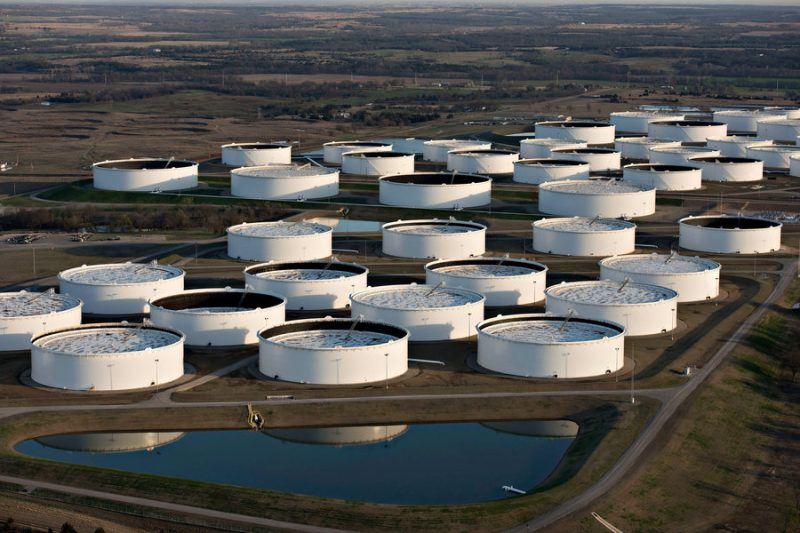
 Governments are set to buy millions of barrels of oil through 2028 to rebuild emergency reserves depleted by drawdowns to plug a gap in global supply caused by the U.S.-Israeli war on Iran, analysts and officials said. This could boost demand for crude that would absorb some of the expected global supply surplus following OPEC+’s decision to increase output, they say. Governments drew down emergency reserves after supply disruptions linked to the conflict removed an estimated 1.5 billion barrels from global inventories this year, according to Reuters calculations based on International Energy Agency, OPEC and U.S. Department of Energy data.
The IEA coordinated a record 400 million-barrel release after disruptions in the Strait of Hormuz drove crude prices sharply higher. Brent crude rose above $126 a barrel in late April and U.S. crude approached $120 in early March. Replenishing those reserves could add up to 664,000 barrels per day of demand by third quarter 2027, according to commodities analytics firm Kpler, helping to soak up some of excess supply expected next year as OPEC+ continues to unwind production cuts. This would curb price falls.
“Strategic Petroleum Reserve (SPR) restocking will lead to a higher price floor in 2027,” said Christopher Haines, head of oil at consultancy Energy Aspects.
Refilling reserves could generate an additional 506,000 bpd of crude demand in the fourth quarter of 2026, rising further next year, said Michelle Brouhard, head of policy and geopolitical risk at Kpler.
US TO START FILLING FIRST
The United States, which released 172 million barrels under the IEA programme, is expected to begin receiving oil back later this year under exchange agreements that require companies to return borrowed barrels plus additional barrels as a premium. U.S. strategic reserves fell by 6.2 million barrels to 319.5 million in the week to July 3, the lowest since April 1983, Department of Energy data showed on Monday.
The government expects to receive an average of 1.28 barrels for every barrel released under the exchange deals, U.S. Energy Secretary Chris Wright told Reuters at a Reuters Next event in late June. The returns would help lift SPR inventories above 400 million barrels, Wright said, adding that Washington was exploring ways to raise stocks beyond 500 million barrels.
The United States could replenish reserves sooner than other countries because the exchange agreements allow stocks to return to pre-war levels without additional government spending, former U.S. Energy Information Administration administrator Jay Hakes told Reuters.
“For other IEA members the picture is more 2027-weighted and discretionary,” said Naveen Das, senior oil analyst at Kpler.
Analysts expect countries including Japan and South Korea to rebuild reserves more gradually, with replenishment efforts likely to depend on oil prices and government spending decisions.
ASIA EXPANDS STOCKPILING
Lower oil prices could encourage China to increase stockpiling, creating another source of demand alongside reserve rebuilding by IEA countries, analysts said.
“Historically, when Brent crude oil prices are below the 12-month moving average, China starts buying and filling SPR,” said Michael Haigh, global head of commodities research at Societe Generale.
Brent front-month futures were trading around $78 a barrel on Thursday, slightly above their 12-month moving average of about $76.59 a barrel, according to LSEG data.
Besides replacing barrels released during the crisis, several countries in Asia — which rely on supplies from the Gulf — are expanding storage capacity to strengthen energy security in the wake of the Middle East energy shock. China is building 11 new strategic oil storage sites, while India plans to more than double strategic petroleum reserve capacity through expansion projects at Padur and Chandikhol. The Philippines is also developing a national strategic petroleum reserve system with support from Japan.
(Reporting by Anushree Mukherjee in Bengaluru; Editing by Alex Lawler, Nina Chestney and Emelia Sithole-Matarise)