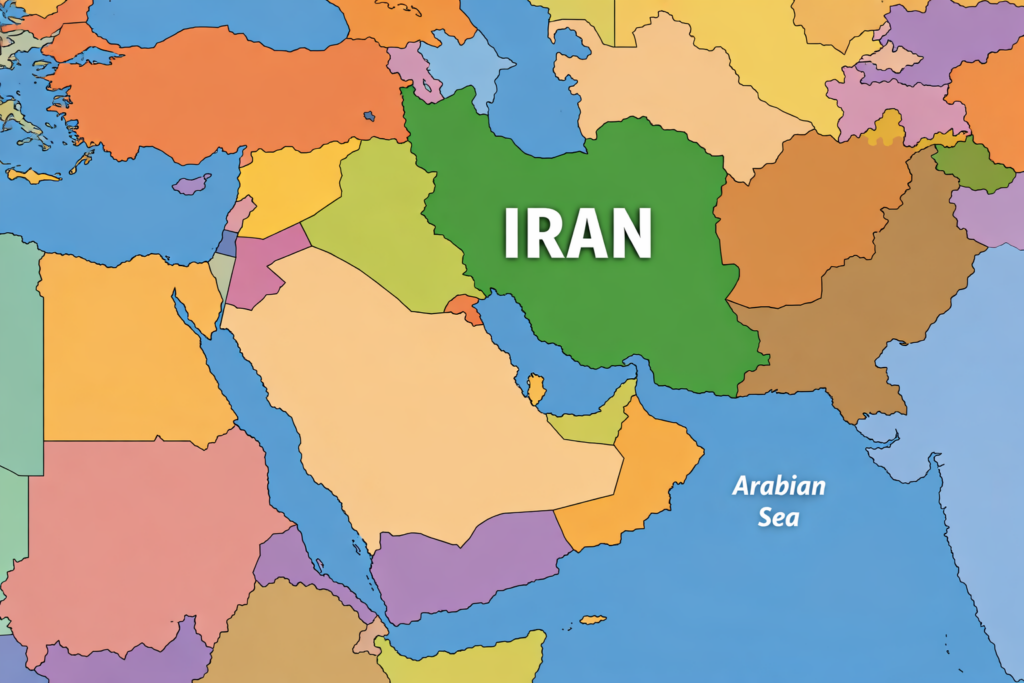
 Iran is betting it can outlast Washington by turning the Middle East’s trade routes, shipping lanes and energy infrastructure into pressure points that steadily raise the cost of confrontation, according to Gulf officials and analysts.
Rather than seeking a decisive military victory, Tehran is pursuing a strategy of calibrated escalation aimed at widening the conflict without triggering full-scale war.
The goal, they say, is to convince the United States and its allies that containing the crisis is more costly than accommodating Iran’s demands over the Strait of Hormuz.
The message from Tehran is that unless Washington accepts a new status quo that gives Iran a greater role in Hormuz, the conflict could spread beyond the Gulf.
By putting multiple maritime chokepoints and energy assets at risk, Iran believes it can strengthen its hand in any future negotiations.
“Iran, from the beginning, has tried to out-escalate the United States by stretching out its escalation options so that it always has something new to bring every week — a new geography, a new type of weapon, a new type of target,” Michael Knights of the Washington Institute told Reuters.
“The bigger advantage they have is not that they can hurt America or Israel,” Knights added. “Their big advantage is that they can hurt the regional states and the global economy.”
EXPANDING THREATS BEYOND HORMUZ
Having demonstrated its ability to disrupt traffic through Hormuz, through which about a fifth of global oil consumption flowed before the war, Tehran has signalled that no maritime chokepoint is off limits.
Threats to the Red Sea and Saudi energy infrastructure suggest a broader effort to raise the cost of protecting global commerce while testing Washington’s tolerance for disruption.
Iran’s approach reflects what one Gulf source described as a belief among Revolutionary Guards commanders that “they can get more”.
They see an opportunity in what they regard as President Donald Trump’s reluctance to become deeply entangled in another Middle East conflict ahead of November’s midterm elections.
“The Iranians…believe that by widening the war and increasing the pressure, he will eventually give in,” the Gulf source said. “Trump thinks he can hit the Iranians hard and bring them to the negotiating table, but they won’t bend.”
ESCALATE TO FORCE CONCESSIONS
That calculation underpins Tehran’s negotiating strategy.
Trump said talks with Iran would take place on Monday after earlier saying he had called off an imminent attack in hopes of securing a deal to reopen the Strait of Hormuz. Tehran, however, said it was not currently holding talks with the United States.
A senior Iranian source said Tehran’s leadership has concluded that earlier attempts at flexibility only yielded greater pressure from Washington, reinforcing the view that leverage must be established before meaningful negotiations can begin.
In Tehran’s assessment, the source said, Trump interprets concessions as weakness and responds only to pressure.
Michael Singh, senior fellow at the Washington Institute, said Tehran believes it still holds the initiative, partly because the Trump administration appears uncertain how far it is willing to go militarily.
“The Iranians are trying to press their advantage,” he added. “They’re interested in establishing sovereignty over the strait and exercising selective control over the waterway.”
Alan Eyre, a former U.S. diplomat and Iran expert, said Tehran is pursuing a strategy of deterrence aimed at forcing Washington to lift its blockade and halt military strikes. “They don’t want the U.S. to dictate the pace of events,” he said. At the centre of the dispute is the future governance of Hormuz. Oman has presented Iran with a Gulf-backed proposal for managing the waterway, including voluntary user fees, according to regional sources.
Tehran, however, is seeking administrative authority over the strait and the ability to levy service charges on vessels. Washington has rejected any fees, insisting Hormuz remain an international waterway free from Iranian control.
THE ENDURANCE GAMBIT
Iran’s campaign has produced a consequence that reflects the logic of its strategy. As threats have expanded beyond Hormuz, regional and Western powers have increasingly focused on protecting trade routes and energy infrastructure rather than intensifying pressure on Iran.
The emerging Saudi-led maritime coalition exemplifies that shift. Gulf sources describe it as a defensive framework focused on escorting commercial vessels, sharing intelligence and safeguarding sea lanes rather than confronting Iran directly.
Knights compares the effort to Europe’s Aspides mission in the Red Sea, which was created to protect merchant traffic rather than alter the military balance.
For Tehran, that dynamic represents a measure of success. Unable to match U.S. military power directly, Iran can still impose costs by forcing governments and navies into a defensive posture.
Each new threat, whether in Hormuz, Bab al-Mandeb — that connects the Red Sea to the Gulf of Aden — or elsewhere, increases the resources required to keep global trade flowing.
At its core, the contest is one of endurance. Iranian leaders appear to believe they can tolerate economic pressure longer than a U.S.-led coalition can tolerate recurring disruption to global commerce and energy markets.
The strategy also carries a diplomatic objective. By demonstrating it can broaden the crisis when necessary, Tehran hopes to shape the terms of any eventual negotiations.
“If there are going to be negotiations, they will define the terms,” said Ray Takeyh of the Council on Foreign Relations and a former advisor on Iran at the U.S. State Department. “Both sides are matching escalation with escalation.”
Yet neither side appears willing to back down. As Washington and Tehran continue to test each other’s resolve, the risk remains that a strategy designed to maximise leverage could spiral into a conflict neither can fully control.
(Additional reporting by Parisa Hafezi in Dubai; Writing by Samia Nakhoul; Editing by Ros Russell)