 For the first time in a while, many across the Gulf have been able to exhale. US President Donald Trump told Reuters this week that Qatar and Saudi Arabia had told him they “would rather see a peaceful solution” to the Iran conflict.
Secretary of State Marco Rubio then said the US blockade and sanctions are working so well that there is no need to resume major combat operations. After months of sirens, cancellations and nervous glances at the sky, that means a little more room to plan ahead.
The relief is real, but fragile.
Trump said the US is “ready to go anytime we want” and Washington says nuclear issues must be part of any initial talks. Meanwhile, Iranian security chief Mohsen Rezaei said Tehran will not let “a single particle” of enriched nuclear material leave the country, no negotiations are underway, and any new US strike would be met with attacks on its bases.
The Houthis also fired missiles at Saudi cities overnight, the Saudi-led coalition said.
The gap between hopeful markets and a dangerous reality is widest at sea. We explore how October brought both the busiest month for Gulf LNG exports since the war began and the worst month for ship attacks. We also look at what that means for the sailors and coastlines paying the price. Also in this edition: Formula One keeps its Gulf finale, Iran braces for winter gas shortages and Saudi Arabia’s wealth fund seeks new ways to raise cash.
NEWS BRIEFING
* Formula One will end its season with races in Qatar on Nov. 29 and Abu Dhabi a week later, dropping the Italian track of Imola as a backup, with all 11 teams supportive. The races could still be canceled if tensions flare.
* The Saudi-led coalition said it intercepted Houthi missiles and a drone aimed at Riyadh, southern cities and the oil-rich east on Tuesday; the Houthis said Saudi strikes hit Sanaa. This follows a reported pipeline attack and a Houthi-claimed strike on Aramco’s Riyadh offices, amid growing attacks on Saudi sites since September.
* Iran’s government warned of worsening gas shortages this winter, saying cuts could hit the whole country, including Tehran, if consumption is high. It forecast a 430 million cubic meter shortfall, up from about 300 million in past years, after war damage to processing plants, with a US blockade of its ports continuing.
AS HORMUZ TRAFFIC RECOVERS, SO DO ATTACKS
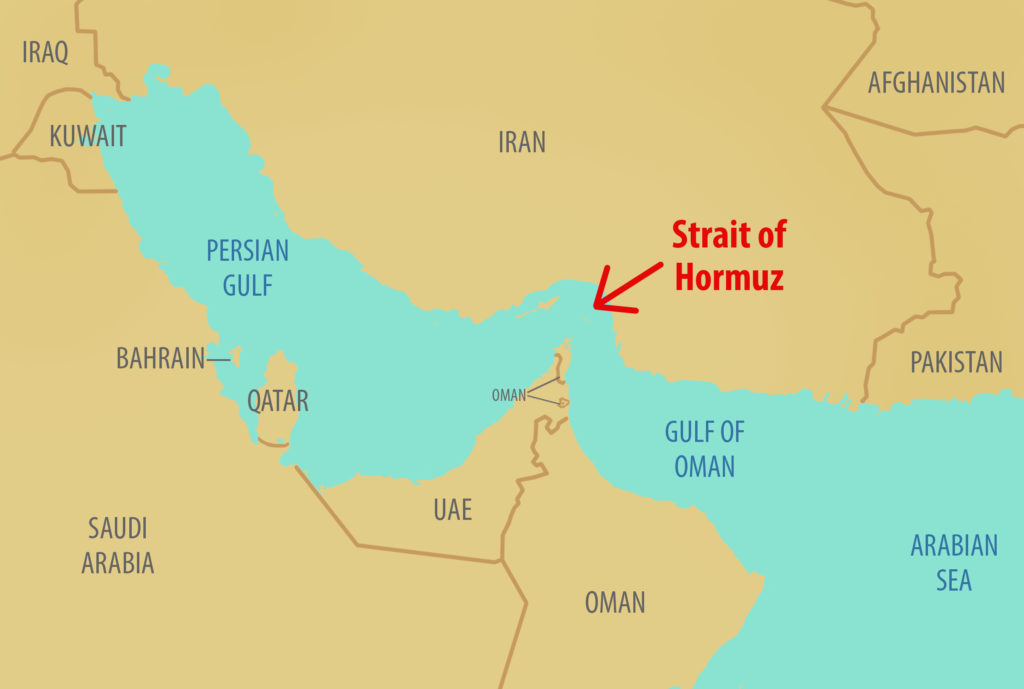
Traffic through the Strait of Hormuz is climbing back, and so is the danger.
October was the busiest month for liquefied natural gas (LNG) exports from the Gulf since the Iran war began on February 28. S&P Global Energy counted 31 LNG tankers carrying cargo out of the strait, up from 23 in September. LNG traffic from the UAE is back to prewar levels, an S&P analyst said, while Qatar’s is just over 30% of its prewar level.
But October was also the worst month of the war for ship attacks. The Washington Institute for Near East Policy, a think tank, counted 37 vessels hit.
The two trends are linked. Shipowners have become more willing to load cargoes inside the Gulf, drawn by charter rates above $1 million a day, Reuters reported. But more ships on the water mean more targets. A Reuters review of International Maritime Organization (IMO) data found that 11 supertankers had been damaged by October 23.
The human cost is less visible.
Reuters reported in May on more than 20,000 sailors stuck on about 2,000 ships in the Gulf, short of food and pay. Now the worry is whether crews survive the passage.
The IMO, a United Nations agency, has confirmed 130 incidents, mostly attacks, since the conflict began, with at least 25 seafarers killed.
Pay has risen with danger. Hiring costs have tripled, and captains can earn three times their prewar pay, but many sailors quit after one trip, a shipper told Reuters.
Some of those at risk are missing from the tallies altogether. V. Pandiselvi has not heard from her son, Indian sailor Naveen Kumar, in more than six months, though she still sends voice notes to a number she saved as “Naveen Mariner.” He was among six crew members assigned to two Iran-linked cargo ships, Bridge 1 and Bridge 2. Their tracking signals stopped about 8 nautical miles (around 15 km) from Iran’s Kish Island on May 9.
Their fate is unknown. The ships are not on the IMO’s list of incidents, and Kumar is still missing.
The environment is also paying. Oil leaking from the damaged tanker Gem No.2 has closed beaches across the northern emirates. The stakes are higher because the UAE gets more than 80% of its drinking water from desalination plants, which turn seawater into fresh water. Maritime intelligence firm Windward said the slick threatened the seawater intake of the Naqa’a plant. Footage verified by Reuters showed the slick about 2 km (1.2 miles) from the plant. No shutdowns have been announced.
Markets are betting the worst is over, with crude at two-month lows on Tuesday. On the water, the signs are less reassuring. Iranian state media, citing the Revolutionary Guards Navy, said three tankers were hit on Sunday for using “unauthorised routes.”
And the recovery is still only partial: Qatar’s LNG traffic is about 30% of prewar levels.
CHART OF THE WEEK
Commercial ships have come under fire since the Iran war began on February 28. Tehran attacked ships to assert control over the Strait of Hormuz, and the US in turn struck Iran-linked ships to impose a blockade on Iranian ports.
LAST WAVE: SAUDI PIF WEIGHS FRESH FUNDRAISING OPTIONS TO GENERATE CASH FROM COMPANIES, SOURCES SAY
Saudi Arabia’s Public Investment Fund, which manages more than $900 billion, is in the early stages of exploring new fundraising options, three people told Reuters, as part of a move by the wealth fund to expand investments without injecting more of its own capital.
Options include selling investors a share of the income that some of the fund’s companies will earn in future, or selling part-ownership in more established businesses. But stake-sale talks have run into trouble because buyers and the fund disagree on price and control issues.
The fund drives Saudi Arabia’s Vision 2030 plan, but the Iran war and Houthi attacks have clouded the kingdom’s outlook. Real GDP is projected to shrink 3.6% this year, and pressure is rising for PIF investments to generate returns. PIF is weighing the sale of a stake in English soccer team Newcastle United.
(Editing by Alexander Smith)