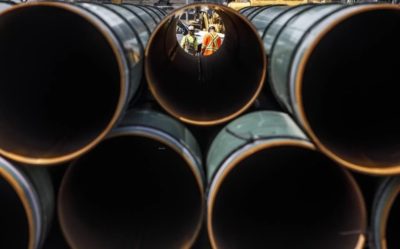
Bridger Pipeline’s proposed project to transport Canadian crude from the U.S.-Canada border to Wyoming would cost about $2 billion and have the capacity to transport more than 1 million barrels of oil per day, according to new details released by the company. The company first outlined plans in January to the Montana Department of Environmental Quality for a pipeline capable of transporting 550,000 barrels per day of Canadian crude from near the U.S.-Canada border in Phillips County to travel [Read more]
Trump says Tuesday deadline to make a deal with Iran is final

U.S. President Donald Trump said on Monday the Tuesday deadline he has set for Iran to make a deal is final, adding that Iran's proposal was significant but not good enough. "They made a proposal, and it's a significant proposal. It's a significant step. It's not good enough," Trump said of Iran. "It could end very quickly, the war, if they do what they have to do. They have to do certain things. They know that, they've been negotiating I think in good faith," he said while at an annual [Read more]
China’s Xi urges faster development of new energy system as Middle East war continues
Chinese President Xi Jinping has called for accelerated planning and construction of a new energy system to safeguard the country's energy security, weeks into the Iran war that has triggered global energy shocks. The leader of the world's second-largest economy also emphasised hydropower development and ecological protection, while urging the safe and orderly expansion of nuclear power, according to state broadcaster CCTV on Monday. "The Party Central Committee has gained a profound grasp [Read more]
Iran rejects ceasefire in response to proposals and emphasises need for permanent end to war, IRNA says
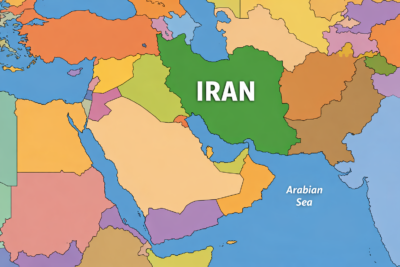
Iran has conveyed its response to the U.S. proposal for ending the war to Pakistan, rejecting a ceasefire and emphasizing the necessity of a permanent end to the war, the official IRNA news agency said on Monday. Iran's response consists of ten clauses, including an end to conflicts in the region, a protocol for safe passage through the Strait of Hormuz, lifting of sanctions, and reconstruction, the agency added. (Reporting by Menna Alaa El Din; Editing by Toby Chopra) [Read more]
Europe gas underprices Hormuz disruption risk, China demand masks impact, Goldman says

European gas prices may be underestimating the risks from ongoing Liquefied Natural Gas (LNG) supply disruptions through the Strait of Hormuz, with resilient imports and weak Asian demand masking the impact for now, Goldman Sachs said in a note dated April 2. * European natural gas markets are pricing a lower-than-expected risk premium even as ~19% of global LNG supply (80 mtpa) remains disrupted via the Strait of Hormuz, including lasting damage to some Qatari output, Goldman said. * "We [Read more]
US crude premiums climb to record levels as Asia, Europe compete for supply
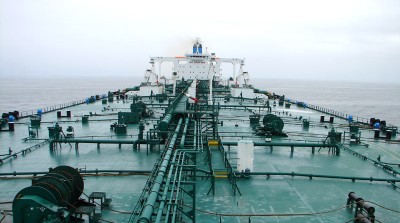
Spot premiums for U.S. West Texas Intermediate crude have jumped to all-time highs as competition between Asian and European refiners for supply heats up to replace Middle Eastern oil flows disrupted by the Iran war, industry sources said. Europe is typically the largest importer of U.S. crude, but competition has escalated with Asian buyers scouring for supply from the Americas to Africa and Europe to replace Middle Eastern oil that is unable to move through the Strait of Hormuz. The jump [Read more]
Saudi Arabia hikes Arab Light crude prices for Asia to record-high premium
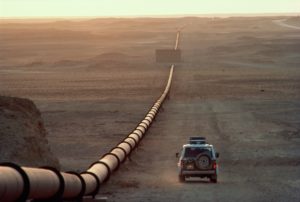
Saudi Arabia has set the official selling price of May Arab Light crude oil to Asia at a record premium of $19.50 a barrel above the Oman/Dubai average, an increase of $17 from the previous month, a pricing document reviewed by Reuters showed on Monday. The sharp jump comes at a time when Middle East oil has become the world's most expensive as the U.S.-Israel war on Iran limited shipping through the Strait of Hormuz, a key chokepoint for a fifth of the world's oil supplies. It remains [Read more]
Trump gives Iran until Tuesday night to open Strait of Hormuz, WSJ reports
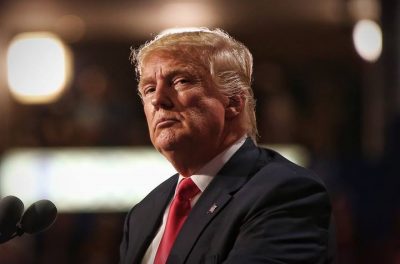
U.S. President Donald Trump said his deadline for Iran to open the Strait of Hormuz or face attacks on critical infrastructure is Tuesday evening, according to an interview he gave to the Wall Street Journal on Sunday. "If they don’t do something by Tuesday evening, they won’t have any power plants and they won’t have any bridges standing,” Trump told the Journal. Trump later posted on social media, without mentioning Iran or any other details: "Tuesday, 8:00 P.M. Eastern Time!" [Read more]
OPEC+ panel concerned about attacks on energy assets in Iran war, draft statement says
An OPEC+ panel meeting on Sunday has expressed concern about attacks on energy assets during the U.S.-Israel war on Iran, saying they were expensive and time-consuming to repair and so have an impact on supply, a draft statement seen by Reuters showed. "The committee highlighted the critical importance of safeguarding international maritime routes to ensure the uninterrupted flow of energy," the statement said. "It also expressed concern regarding attacks on energy infrastructure, noting that [Read more]
Trump threatens to hit Iran infrastructure on Tuesday if Strait remains blocked
U.S. President Donald Trump said in an expletive-laden social media post on Sunday that the United States will target Iran's power plants and bridges on Tuesday if the Strait of Hormuz is not reopened. "Tuesday will be Power Plant Day, and Bridge Day, all wrapped up in one, in Iran. There will be nothing like it!!!" Trump said in a Truth Social post, referencing the key shipping lane that Tehran has effectively closed since the U.S. and Israel launched attacks on Iran more than a month [Read more]
- « Previous Page
- 1
- …
- 4
- 5
- 6
- 7
- 8
- …
- 1087
- Next Page »