• Sign up for the Daily Digest E-mail
  • X
  • LinkedIn
  • See more results

    Generic selectors
    Exact matches only
    Search in title
    Search in content
    Post Type Selectors

BOE Report

Sign up

See more results

Generic selectors
Exact matches only
Search in title
Search in content
Post Type Selectors
  • Home
  • StackDX Intel
  • Headlines
    • Latest Headlines
    • Featured Companies
    • Columns
    • Discussions
  • Well Activity
    • Well Licences
    • Well Activity Map
  • Property Listings
  • Land Sales
  • M&A Activity
    • M&A Database
    • AER Transfers
  • Markets
  • Rig Counts/Data
    • CAOEC Rig Count
    • Baker Hughes Rig Count
    • USA Rig Count
    • Data
      • Canada Oil Market Data
      • Canada NG Market Data
      • USA Market Data
      • Data Downloads
  • Jobs

Canada provides record-high share and amount of U.S. crude oil imports in 2015

April 12, 201611:17 AM Energy Information Agency0 Comments

eia

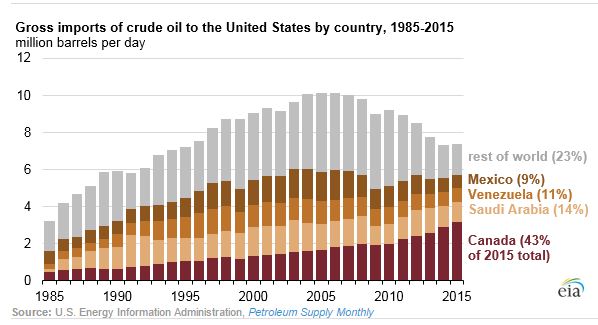
Although total U.S. crude oil imports in 2015 continued to be lower than levels reached during the mid-2000s, imports from the United States’ top foreign oil supplier—Canada—were the highest on record, according to annual trade data from EIA’s Petroleum Supply Monthly. Canada provided 4 out of every 10 barrels of oil imported into the United States in 2015.

U.S. gross crude oil imports from all sources averaged 7.4 million barrels per day (b/d) in 2015, down 27% since the 2005 high of 10.1 million b/d. As gross crude oil imports decline, a growing share of remaining imports are being sourced from four top suppliers: Canada, Saudi Arabia, Venezuela, and Mexico. Canada, America’s largest crude oil supplier since 2004, sent a record-high 3.2 million b/d of gross crude oil exports to the United States in 2015, up 10% from the year before, accounting for a record 43% of total U.S. crude oil imports. Canada also receives nearly all U.S. crude oil exports, making up 422,000 b/d, or 92%, of the 458,000 b/d of crude oil exported from the United States in 2015.

Canada generally produces heavy, sour crude oil that is well-matched to processing capacity in the United States, where many refineries have the equipment needed to process such oil. Canada has few alternative outlets for the heavy crude produced in Alberta, where most of Canada’s proved oil reserves are located. Canada is expected to continue to provide a large share of U.S. oil imports for the foreseeable future, especially given the expansion of pipeline and rail shipping capacities to transport Canadian oil.

Follow BOE Report
  • Facebook
  • X
  • LinkedIn

Sign up for the BOE Report Daily Digest E-mail

Successfully subscribed

Latest Headlines
  • Tanker struck by projectile off Oman, UKMTO says
  • Full stoppage of CPC not under consideration, Kazakh energy ministry says
  • Exxon, Chevron warn of continued high fuel prices from Iran war
  • ROK Resources Announces the Closing of its Non-Core Southeast Saskatchewan Asset Disposition
  • Chevron records highest quarterly profit in six years, beating analyst estimates

Return to Home
Alberta GasMonthly Avg.
CAD/GJ
Market Data by TradingView

    Report Error


    Note: The page you are currently on will be sent with your report. If this report is about a different page, please specify.

    About
    • About BOEReport.com
    • In the News
    • Terms of Use
    • Privacy Policy
    • Editorial Policy
    Resources
    • Widgets
    • Notifications
    • Daily Digest E-mail
    Get In Touch
    • Advertise
    • Post a Job
    • Contact
    • Report Error
    StackDX
    • BOE Report Jobs
    • StackDX Intel
    © 2026 Stack Technologies Ltd.