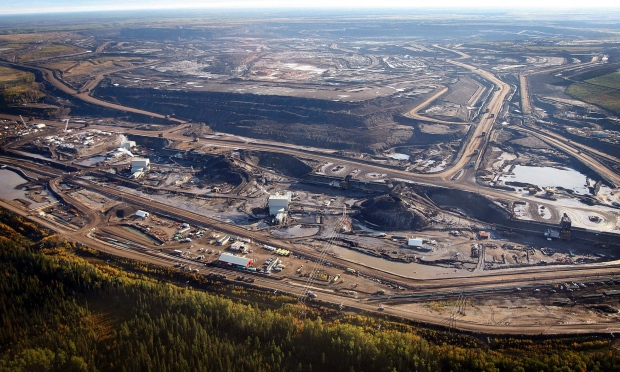
 Canada’s oil sands hold a massive known resource base of 170 billion recoverable barrels. Wood Mackenzie’s oil sands key play report breaks down the projects to the phase level to understand what makes the sector tick. A total of 81 phases, covering 35 projects, are assessed and benchmarked to understand the opportunities as well as the risks.
Below are key points from WoodMac’s analysis:
Production growth slows post-2020
Wood Mackenzie forecasts commercial projects to approach 3.5 million b/d of production in 2020. Production growth after 2020 slows due to delays in sanctioning new projects and expansions due to low oil prices
High breakevens for new projects
New in-situ projects and phases breakeven between US$55/bbl to US$70/bbl, while producing SAGD projects breakeven between US$30/bbl to US$45/bbl. Existing mining projects all have breakevens below US$50/bbl. Wood Mackenzie does not anticipate any new mining projects in our forecast apart from Fort Hills.
Large operators dominate the competitive landscape
Focused operators such as Suncor, CNRL, Cenovus, and Imperial Oil derive greater than 70% of their portfolio value from the oil sands. Pure play operators such as MEG Energy are also making an impact in the sector through their focused expertise.
Market access remains a concern
Rail infrastructure has close to tripled since 2014 and Wood Mackenzie continues to see rail playing a role. Our long term view is that Energy East and the Trans Mountain Expansion will ultimately progress and relieve infrastructure bottlenecks. Further delays or cancellations of these projects could severely impact takeaway capacity and increase the WCS differential in the future.
The current project pipeline is sparse
If oil price weakness persists, the level of achievable cost control, project management expertise and each company’s level of portfolio optionality will dictate the pace of development of new projects and phases.