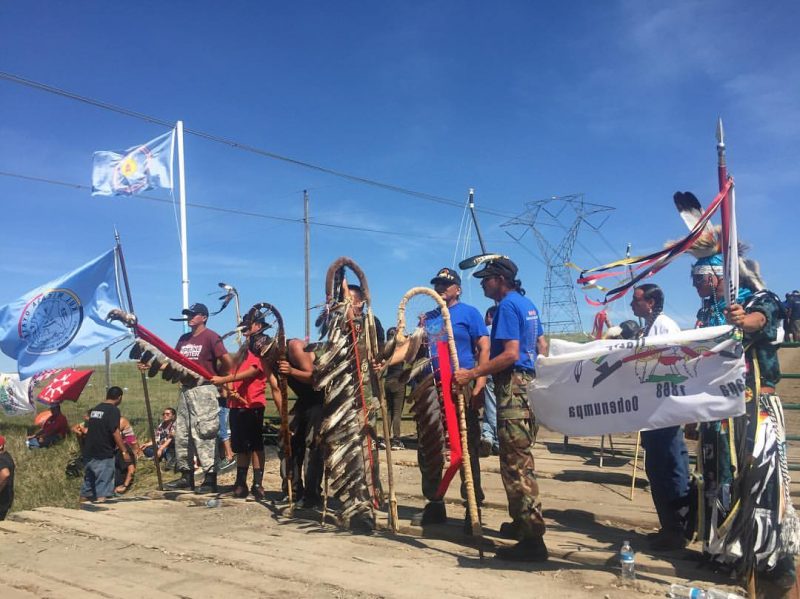
BISMARCK, N.D. – The Dakota Access pipeline, a $3.8 billion, four-state project designed to carry oil from North Dakota to Illinois, has become a rallying point for American Indian tribes and others determined to block it. Here’s a look at the key players connected with the protest, which began in April, heated up during the summer and boiled over in October with some 400 arrests.
___
THE PIPELINE COMPANY
Energy Transfer Partners, or ETP, is a Fortune 500 oil and natural gas company based in Dallas. It is the main owner of the pipeline, along with Sunoco Logistics Partners and Phillips 66.
Launched in 1995, the company now has about 71,000 miles of natural gas and crude oil pipeline. The Dakota Access project would add 1,200 more miles, and ETP has long had a goal of finishing it by the end of 2016. The company warned in court documents that a delay in construction would cost it $1.4 billion in lost revenue in the first year.
In August, the company announced it had sold nearly 37 per cent of the project to Enbridge Energy Partners, the company that developed the Keystone XL pipeline, and Marathon Petroleum Corp. in a deal worth $2 billion.
___
THE TRIBAL CHAIRMAN
Dave Archambault II leads the Standing Rock Sioux Tribe, whose reservation on the North Dakota-South Dakota border sits close to the pipeline’s path. The laconic 45-year-old, whose tribe helped build a lawsuit against ETP and the federal government, has been sued by ETP for interfering with the pipeline and been arrested.
Archambault has spoken for years about concerns among the leaders of North Dakota’s five American Indian reservations about increasing “environmental incidents” in the state’s western oil patch. He travelled to Switzerland to plead the tribe’s case to the United Nations and urged President Barack Obama to step in.
After a federal judge declined to grant the Standing Rock tribe an injunction against the pipeline, three federal agencies ordered a halt to construction on Army Corps of Engineers-owned land while the permitting process was reviewed.
___
THE PROTESTERS
Members of more than 200 tribes from across North America have come to the tribe’s encampment at the confluence of the Missouri and Cannonball rivers since August, the tribe says. Crowd estimates at the protest site have varied from a few hundred to several thousand depending on the day — enough for tribal officials to call it one of the largest gatherings of Native Americans in a century or more.
They say the pipeline threatens water sources and will disturb sacred sites and artifacts, and there is a broader concern about tribal sovereignty and rights.
Many of the protesters are demonstrating peacefully and urging others to do the same. Others have been more militant. More than 140 people were arrested recently when law enforcement moved in to evict an encampment that had been set up on pipeline property.
___
THE SHERIFF
The main face of law enforcement has been Morton County Sheriff Kyle Kirchmeier, who previously was a captain with the state highway patrol, a part-time police officer, a corrections officer and a soldier.
His department has been accused by protesters of being sympathetic to the pipeline’s workers and private security. Though deputies were not at a violent Sept. 3 clash between protesters and private security guards on private land, Kirchmeier said in a news release that the guards were “ambushed and assaulted” by protesters. The tribe says the protesters were being provoked.
Kirchmeier has frequently cited the burden of the long-lasting protest on his small department. Morton County has had help from state troopers and National Guard members and, more recently, from sheriff’s departments travelling in from several states to help out.
___
PRIVATE SECURITY
Clashes between private security and protesters have been an issue, particularly during the Sept. 3 confrontation. Both security guards and protesters reported injuries.
Tribal officials say about 30 protesters were pepper-sprayed and some bitten by dogs.
The sheriff’s department said last week that their investigation concluded that the guards with dogs were not licensed to do security work in North Dakota. They sent the results of their investigation to prosecutors for consideration of misdemeanour charges.
___
THE GOVERNOR
When the Dakota Access pipeline was announced, North Dakota Gov. Jack Dalrymple had just urged industry and government officials to build more pipelines to keep pace with the state’s oil production, which is second only to oil production in Texas.
Aside from appearing at some briefings, Dalrymple has been mostly out of public view during the long process. The governor did send 100 National Guard members to help law enforcement.
___
THE FEDERAL JUDGE
The Standing Rock Sioux’s lawsuit against the pipeline revolves around challenging the Army Corps’ process for permitting water crossings. In September, U.S. District Judge James Boasberg in Washington declined the tribe’s request for an injunction as it pursues an appeal.
Boasberg, an Obama appointee in 2010, said the Corps documented dozens of its attempts to engage with Standing Rock officials to identify historical resources at Lake Oahe and other places covered by the permit, despite the tribe’s claims to the contrary. He said the tribe did not show it will suffer any harm that the court has the authority to prevent.
The tribe’s appeal is pending with the U.S. Court of Appeals.