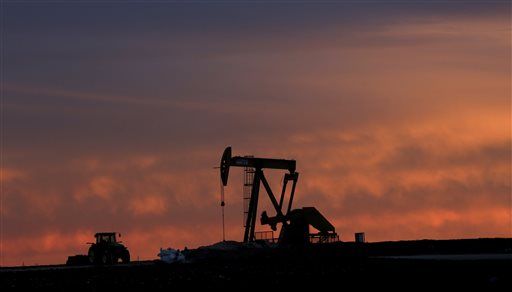
 Exxon Mobil’s investors now prefer the company use its share price and financial might to acquire existing oil and gas production rather than spend on drilling that could take years to pay off. In the last four years energy investors have dumped stocks in oil companies that boost capital spending, favoring higher returns over spending on costly, long-term new projects. But Exxon shares last month hit a record high of $120, lifted by returns on its oil, gas and refining businesses.
Its talks to acquire Pioneer Natural Resources, the No. 2 Permian shale oil producer, for $60 billion, signals it is ready to pay up for production after missing its own output targets in the Permian.
A deal would bring Exxon to about 1.33 million barrels of oil and gas per day, the largest in the oilfield. In 2019, it set a 1 million barrel per day goal for 2025 and more recently pushed it back to 2027. “There is incredible political pressure against drilling new holes in the ground to find oil and gas,” said Bill Smead, chief investment officer at Smead Capital Management, which manages $5.2 billion in funds, 25% of which are devoted to oil and gas.
“So it makes complete sense to buy a smaller company. Pioneer has fantastic reserves,” he said. The surge in oil and gas prices following Russia’s invasion of Ukraine underscored the need for fossil fuels despite rapid gains in solar and wind energy. Reduced spending by U.S. oil producers allowed OPEC members to increase global oil prices this year by cutting their production.
Analysts say acquisitions are readily embraced if a deal can generate high cash flow for the acquirer, said Rystad’s head of Shale Research Alexandre Ramos-Peon.
“These companies are sitting on record amounts of cash,” he said. “You buy a cash positive business, with cash that is otherwise not going to be used.”
Exxon was hoarding cash this year after paying off the huge debt it ran up in 2020 during the COVID-19 oil-price collapse. It has been holding some $30 billion in cash for the past year to give it the financial leeway to act when oil cycles turned, the company’s Chief Financial Officer Kathryn Mikells said in July after second-quarter earnings.
KING OF THE PERMIAN
A deal would not be Exxon’s first or second in shale. It paid $36 billion to acquire XTO Energy in 2010 after missing the first phase of the U.S. shale revolution. In 2017, it followed up that with a $6.6 billion purchase to bulk up its Permian assets from the billionaire Bass family.
That track record worries some.
“Exxon’s endeavor to acquire large U.S. producers has not been widely seen as successful by investors,” said Scott Hanold, a RBC Capital Markets oil analyst. “The cultures tend to differ quite a bit between U.S. E&Ps and larger, more integrated entities.”
But in recent years, the oil industry has turned away from drill-bit exploration and embraced purchases of existing production rather than untapped fields. Oil firms have grown accustomed to making routine purchases, say analysts.
A Pioneer acquisition would expand Exxon’s Permian acreage position by about 84% to around 2 million acres. And consolidate its spot in two giant oil producing regions in the Americas – U.S. shale and Guyana.
Exxon holds 45% stake in a Guyana consortium that aims to produce 1.2 million barrels by 2027, with most of the capital spending already budgeted.
“If ExxonMobil is crowned the undisputed king of the Permian in the coming days, the shale sector will fundamentally become a more mature consolidated business,” said Matthew Bernstein, a senior shale analyst with consultancy Rystad Energy.
(Reporting by Sabrina Valle; Editing by Anna Driver)