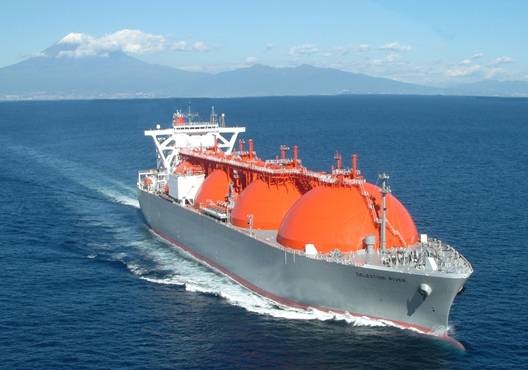
 Several shipping companies and a few liquefied natural gas (LNG) tankers have decided to avoid the world’s main East-West trade route, following attacks launched by Yemen’s Houthi group on commercial ships at the southern end of the Red Sea.
The attacks raised the spectre of another bout of disruption to international commerce following the upheaval of the COVID pandemic, and prompted a U.S.-led international force to patrol waters near Yemen.
IS THE RED SEA ROUTE IMPORTANT FOR THE LNG MARKET?
The attacks have made reaching the Suez Canal more perilous.
About 12% of world shipping traffic transits the canal and 4-8% of global LNG cargoes have passed through it in 2023.
This year, a total of 16.2 million metric tons (MMt), or 51% of LNG trade, has flowed from the Atlantic Basin east through the Suez Canal, while 15.7 MMt went through the canal from the Pacific Basin west, according to S&P Global Commodity Insights.
WHO ARE THE MAIN SHIPPERS THROUGH THE ROUTE?
Qatar, the United States and Russia are the most active shippers via Suez. S&P estimates Qatari cargoes through the canal at 14.8 MMt, U.S. cargoes at 8.8 MMt and Russian ones at 3.7 MMt.
Qatar tops active shippers of cargoes heading from the East to Europe, but it provides only around 5% of net EU and UK imports.
“In reality, Qatar is the only exporter in an east-to-west direction via the Suez Canal. You can count the number of cargoes from Oman and the UAE to Europe this year on one hand,” said Robert Songer, LNG analyst at date intelligence firm ICIS.
An alternative route to Europe through the Cape of Good Hope could increase Qatari voyage days by 145%, or an extra 22 days on a round-trip basis. For LNG to Asia, Qatar comes on top followed by the United States which has been using the Suez Canal recently as an alternative to the Panama Canal.
ICIS’ Songer said that U.S. Cheniere Energy has four tankers that were designed to avoid the Panama Canal due to being too big and hence sometimes go via Suez.
ARE PRICES IMPACTED?
Asian spot prices are currently at $12.3 per million British thermal units (mmBtu) and have remained around this range since the start of the attacks.
High inventories in Europe and North Asia are capping demand and expected to curb spot price growth in H1-2024.
HOW MARKET PLAYERS SEE THE RISK?
Market players believe LNG trade is likely to be largely unaffected and any disruption would not have a massive impact on global supply.
European gas prices saw a short-lived rebound on Monday on concerns over supply disruption from Qatar but had fallen back by Tuesday.
The majority believe that U.S. shipments, if they head to China/Asia, could only see short-term delay if cargoes reroute.
“The physical risks to Suez LNG transit are more weighted towards keeping Atlantic supply pointed at Europe than
stopping Qatari supply from reaching Europe,” said Jake Horslen, senior LNG analyst at Energy Aspects.
The chairman of the Japan Gas Association (JGA), Takahiro Honjo, told a news conference that while there are risks, “I don’t think a supply crunch will suddenly occur anytime soon”.
Honjo, also the chairman of Osaka Gas Co., said that given the Panama Canal congestion, LNG companies have a few options including swapping supply between Europe and Asia.
(Reporting by Marwa Rashad in London, Aditional reporting by Emily Chow and Aizhu Chen in Singapore and Yuka Obayshi in Tokyo; Editing by Susanna Twidale and Ed Osmond)