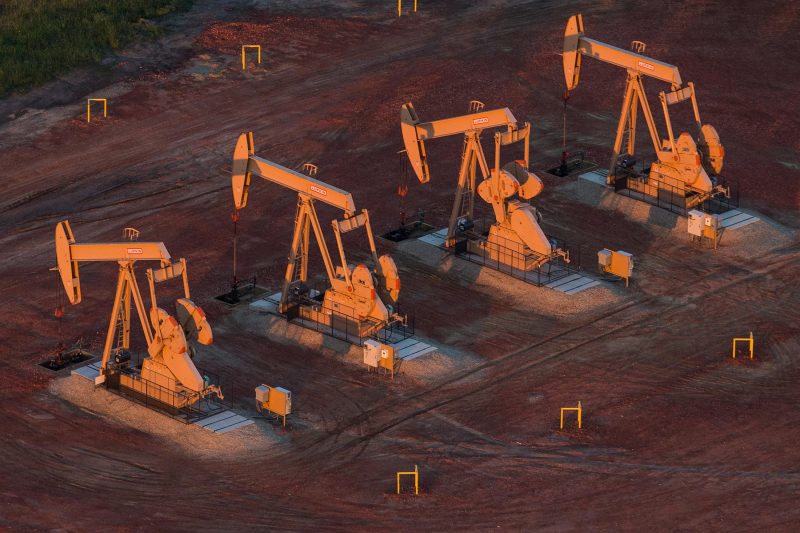
 While energy companies are retrenching in the face of a bleak near-term outlook for oil and gas, their investment plans suggest they believe the environment will shift dramatically by the end of the decade.
Energy companies’ spending plans are typically a good gauge of their confidence in the sector’s long-term outlook, given that it takes years to develop an oil or gas field and many more years before profits from these investments show up.
Accurately forecasting the oil and gas sector’s fortunes many years out has become particularly tricky in recent years.
On the one hand, the energy transition has raised questions about future demand for fossil fuels. On the other, governments’ renewed focus on energy security in the wake of the 2022 war in Ukraine has revived investment appetite, leading companies such as BP and Shell to reverse their strategies away from renewable energy and back toward their core oil and gas businesses.
The top western energy companies’ current investment and spending plans suggest bullish arguments about the future of fossil fuels are gaining ground, even as prices are expected to fall in the near term.
SHORT-TERM CAUTION
Price forecasts for crude in the next two years are pretty gloomy, as many agencies and investors anticipate a significant oil glut due to increased production from OPEC and non-OPEC nations. The U.S. Energy Information Administration expects Brent prices to fall from an average of $68 per barrel this year to $51 in 2026. On top of that, an expected surge in liquefied natural gas capacity in the coming years, emanating primarily from the U.S. and Qatar, is set to put pressure on another key growth market for the sector.
Oil and gas companies have responded to the darkening outlook by slashing jobs, costs and – perhaps most notably – buybacks.
The majors had increasingly been using share repurchases to attract investment in recent years. The scale of buybacks in the sector rose sharply after the COVID-19 pandemic, particularly in the wake of the energy price rally that followed Russia’s invasion of Ukraine.
The top five western energy majors – BP, Chevron, Exxon Mobil, Shell and TotalEnergies – repurchased a total of $61.5 billion of shares in 2024, more than the $51 billion paid out as dividends, according to Reuters calculations. However, that trend has now stalled. TotalEnergies last week announced it will slow the pace of its share buyback programme from around $2 billion per quarter this year to a range of $750 million to $1.5 billion per quarter next year.
The company cited “economic and geopolitical uncertainties” and needing “to retain room to maneuver” as justifications for the move.
Chevron and BP slowed their buyback pace earlier this year.
The reduced share repurchases are accompanied by deep cost cuts. Chevron is in the midst of a $3 billion cost-cutting drive by 2026 that will see it lay off up to 20% of its workforce, around 9,000 people. U.S. rival ConocoPhillips plans to cut as much as 25% of its workforce. BP announced earlier this year plans to cut over 7,000 jobs, which was followed last month by a further cost review that came on top of a $4–5 billion cost-cutting target for 2023–2027. Exxon and Shell are also trimming expenses aggressively.
These cuts are the deepest the sector has seen in recent history, including during the pandemic, pointing to a heightened focus on competitiveness and a rising bearishness about the near-term outlook for energy prices.
LONG-TERM FORTUNE
But look beyond the next few years, and Big Oil appears much more sanguine, evidenced by these companies’ willingness to invest in new mega projects and make huge acquisitions. BP on Monday announced it will go ahead with developing a $5 billion offshore drilling project in the Gulf of Mexico. The Tiber-Guadalupe project, expected to begin oil and gas production in 2030, will include a floating platform with the capacity to produce 80,000 barrels of crude per day. TotalEnergies on Monday announced it had acquired onshore U.S. gas producing assets. Exxon, the largest of the western majors, has kept its capital spending plans for 2025 steady at $27-29 billion as it continues to increase output in U.S. shale basins and in Guyana. It also said in August that it was ready to take advantage of lower oil prices and make acquisitions.
Underpinning this confidence are forecasts that the upcoming strong growth in oil production will go into reverse by the end of the decade.
Indeed, the International Energy Agency expects world oil supply to grow by 4.5 million bpd between 2024 and 2028 to 107.6 million bpd before stagnating in 2029 and declining by 400,000 bpd in 2030.
On top of the slower growth, the natural decline of oilfields means companies need to invest meaningfully simply to keep their production steady.
Of course, oil demand growth is also expected to decelerate in the coming years, partly because of the adoption of electric vehicles. A faster than anticipated slowdown in consumption could weigh on oil prices, even if supply growth slows.
But for now, companies’ willingness to look past a looming downturn suggests boards believe crude prices will rise by the end of the decade and remain sufficiently elevated into the next decade to pay back their big-ticket investments in new fields.
Want to receive my column in your inbox every Monday and Thursday, along with additional energy insights and links to trending stories? Sign up for my Power Up newsletter here. Enjoying this column? Check out Reuters Open Interest (ROI),your essential new source for global financial commentary. ROI delivers thought-provoking, data-driven analysis. Markets are moving faster than ever. ROI can help you keep up. Follow ROI on LinkedIn and X.
(Ron Bousso Editing by Marguerita Choy)