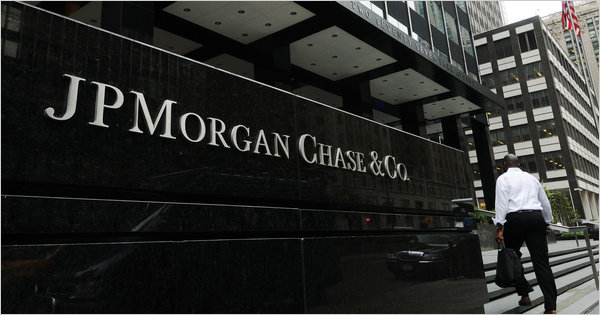
 The U.S. involvement in Venezuela’s oil sector offers a potential opportunity for international banks, with JPMorgan Chase in an advantageous spot due to its history in the country and past involvement with international trade financing. A clutch of banks including JPMorgan and Citigroup have historically operated in the country, but reduced operations or pulled out in the last few decades. U.S. banks now, however, may have the potential to compete for opportunities in trade financing or financing investment in oil infrastructure, one source familiar with the situation said. Venezuela is under an interim government after the United States captured President Nicolas Maduro over the weekend and analysts stressed there would still be significant challenges to doing business.
Among the banks, JPMorgan could have an edge in the country, where it has had a presence for 60 years. While JPM curtailed its banking and stock trading operation in 2002, it kept a dormant office in Caracas for many years, according to a second source familiar with the matter, adding that it could be reactivated as needed.
“JPMorgan is among the very few U.S. banks with an office in Venezuela, though activity is minimal due to current restrictions,” said María Paola Figueroa, Head of Frontier Latin America Research at the Institute of International Finance. “The potential reopening of the oil sector and a broader economic recovery could create meaningful opportunities for foreign banks to re-enter the Venezuelan market, subject to the easing of U.S. financial sanctions.” Venezuela has been under U.S. sanctions since 2006, which were tightened in 2017, prohibiting U.S. financial institutions from providing new money to the government or state oil company, PDVSA. In 2019, Washington imposed broad sanctions on its oil sector. Now the United States is planning to selectively roll back sanctions on Venezuela as it begins marketing Venezuelan oil. The Department of Energy on Wednesday said that proceeds from oil would settle in U.S.-controlled accounts at global banks. ConocoPhillips CEO Ryan Lance said on Friday at a meeting at the White House that U.S. banks including the Export-Import Bank, a federal bank which finances projects overseas, may need to be involved in financing Venezuela oil investments.
For JPMorgan, there could be several avenues for involvement. One idea floated within the bank was the possibility of creating a trade bank to finance oil exports, a third source familiar with the matter said, without specifying if official discussions were taking place. The bank, which has a strong presence in oil-producing regions such as the Middle East and Africa, has historical precedence here, as it led the consortium of banks that operated Trade Bank of Iraq, set up in 2003 after the U.S.-led invasion. JPMorgan could also use funds from its Security and Resiliency Initiative, a $1.5 trillion 10-year plan it unveiled last year to finance areas such as critical minerals, where Venezuela has deep resources, the second source familiar with the matter said. “JPMorgan is the best in class global bank,” said Mike Mayo, banking analyst at Wells Fargo. “So if there are more opportunities globally or in Venezuela, the best in class global bank should get a fair share of this.”
Currently, the bank trades Venezuelan sovereign bonds that are not under sanctions with offshore counterparties, the source said.
Separately, an industry source said there could be opportunities for restructuring, financing deals and within energy that banks would be interested in.
A White House official said that President Trump’s administration is carefully evaluating all options at its disposal, prioritizing the best interests of the American people. Any announcement will come directly from the administration; anything else is purely speculation, the official said.
BANKS, OTHERS CURRENTLY IN WAIT-AND-SEE MODE
U.S. banks have done business in Latin America for decades, but the share of revenue from the region is small. In 2024, JPMorgan Chase’s share of the Latin America/Caribbean region accounted for 2.19% of its global revenue.
But while Venezuela has only 0.1% share of global GDP, it has broader importance. “Venezuela… is a country with huge geopolitical and economic significance,” Deutsche Bank economists said in a note published Jan. 5, citing oil reserves.
Citigroup historically had a presence in Venezuela, but sold its operations to Banco Nacional de Crédito, exiting the country in 2021.
“The dark horse here is Citigroup,” Mayo said, citing the bank’s past experience in Latin America. Citi declined comment.
Spanish lender BBVA is the only major foreign bank with significant presence in Venezuela.
Alejandro Moreno-Salamanca, professor at IESE Business School, said that if the political transition in Venezuela goes ahead, there would be opportunities in energy and infrastructure projects, “especially for BBVA.”
A spokesperson for BBVA said “it is too early to say anything at this moment in time due to high uncertainty.”
Bank of Nova Scotia CEO Scott Thomson said at a banking conference in Toronto on Tuesday he anticipated the U.S. involvement in Venezuela would be good for the bank’s growth, which relies on its international business that includes the Latin American region for a chunk of its income. The bank exited Venezuela in 2014.
CURBS ON OPERATIONS
Domestically, Venezuela’s banking system is heavily regulated and operates under severe financial isolation and economic instability, said Paola Figueroa, relying on foreign banks outside U.S. jurisdiction, alternative currencies and offshore intermediaries to move payments and settle trade. Even if sanctions were lifted, there may still be hesitancy from banks. For example, even after the lifting of sanctions in Iran in 2016 global banks were reluctant to do business.
This is far from an “if you build it, they will come” scenario, said Christopher Hodge, chief U.S. economist for investment bank Natixis.
(Reporting by Saeed Azhar and Tatiana Bautzer, additional reporting by Lananh Nguyen, Nivedita Balu, Michelle Price, Jarrett Renshaw, Andrea Shalal, Jesús Aguado, Bo Erickson, editing by Megan Davies and Anna Driver)