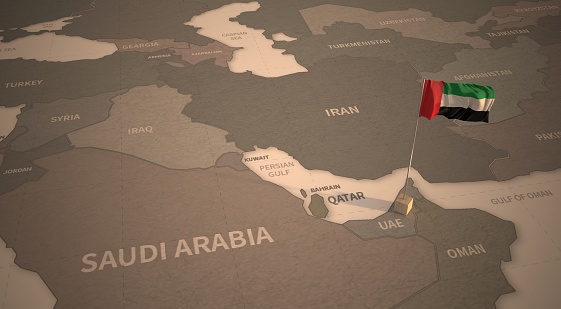
 Abu Dhabi National Oil Company said on Saturday it is actively managing offshore output levels to address storage requirements amid the U.S.-Isaeli war on Iran, while its onshore operations are continuing.
“This approach preserves operational flexibility and will enable the company to resume normal operations without prolonged delay,” ADNOC said in a statement.
The war, now in its eighth day, has blocked shipments through the Strait of Hormuz, the crucial waterway responsible for roughly 20% of global oil and LNG supply. Analysts have predicted the UAE and Saudi Arabia would soon have to cut output as their oil storage fills up.
ADNOC said its operations are continuing, and that it is using export capacity that bypasses the strait as well as international storage facilities to ensure supply continuity to global markets.
The UAE can bypass the strait using the Abu Dhabi Crude Oil Pipeline, also known as the Habshan-Fujairah Pipeline. The pipeline, which has a capacity of 1.5 million to 1.8 million barrels per day, transports oil from Abu Dhabi’s fields directly to the port of Fujairah on the Gulf of Oman, feeding its storage terminals and refining facilities.
“Business units are assessing the situation on a product-by-product and transaction-by-transaction basis, considering the ongoing disruption that is affecting shipping through the Strait of Hormuz,” it said.
ADNOC has activated well-established protocols and is working closely with authorities to protect its people, assets and operations, it added. Kuwait Petroleum Corporation began cutting oil output on Saturday and declared force majeure, adding to earlier oil and gas reductions from Iraq and Qatar.
(Reporting by Yousef Saba, Editing by Timothy Heritage and Jan Harvey)