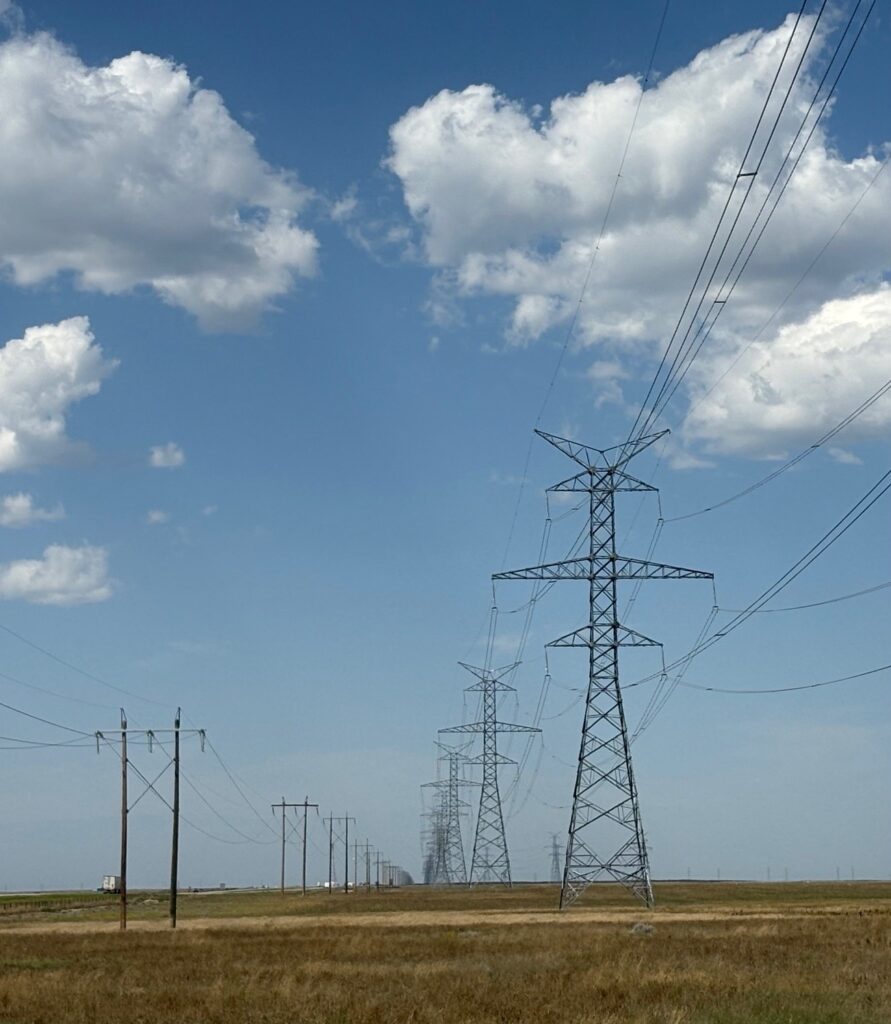
 U.S. power consumption, which hit its second straight annual record high in 2025, will rise further in 2026 and 2027, driven by AI-hungry data centers and electrification, the Energy Information Administration said in its Short-Term Energy Outlook on Tuesday.
The EIA projected power demand will rise from a record 4,195 billion kilowatt-hours (kWh) in 2025 to 4,271 billion kWh in 2026 and 4,397 billion kWh in 2027. Demand is surging in large part because of data centers dedicated to artificial intelligence and cryptocurrency, and as homes and businesses use more electricity and less fossil fuels for heat and transportation.
Electricity demand growth is led by an increase in the commercial sector, which is expected to outpace residential demand in 2026 for the first time on record, the agency said.
The EIA forecast power sales in 2026 will ease to 1,512 billion kWh for residential consumers, but rise to 1,547 billion kWh for commercial customers and 1,066 billion kWh for industrial customers.
Those forecasts compare with all-time highs of 1,515 billion kWh for residential consumers and 1,493 billion kWh for commercial customers in 2025, and 1,064 billion kWh for industrial customers in 2000.
As renewable output rises, the EIA said the share of power generation from coal will slide from 17% in 2025 to 16% in 2026 and 15% in 2027, while the share of natural gas will hold at 40% in 2026 and 2027, the same as 2025.
The percentage of renewable generation will rise from around 24% in 2025 to 25% in 2026 and 27% in 2027, while nuclear power’s share will hold at 18% in 2026 and 2027, the same as 2025, according to the outlook.
The EIA projected gas sales in 2026 would slide to 12.5 billion cubic feet per day (bcfd) for residential consumers and 9.4 bcfd for commercial customers, but rise to 24.1 bcfd for industrial customers and 36.6 bcfd for power generation.
Those figures compare with all-time highs of 14.3 bcfd in 1996 for residential consumers, 9.9 bcfd in 2025 for commercial customers, 23.8 bcfd in 1973 for industrial customers, and 36.8 bcfd in 2024 for power generation.
(Reporting by Scott DiSavino; Editing by Nia Williams)