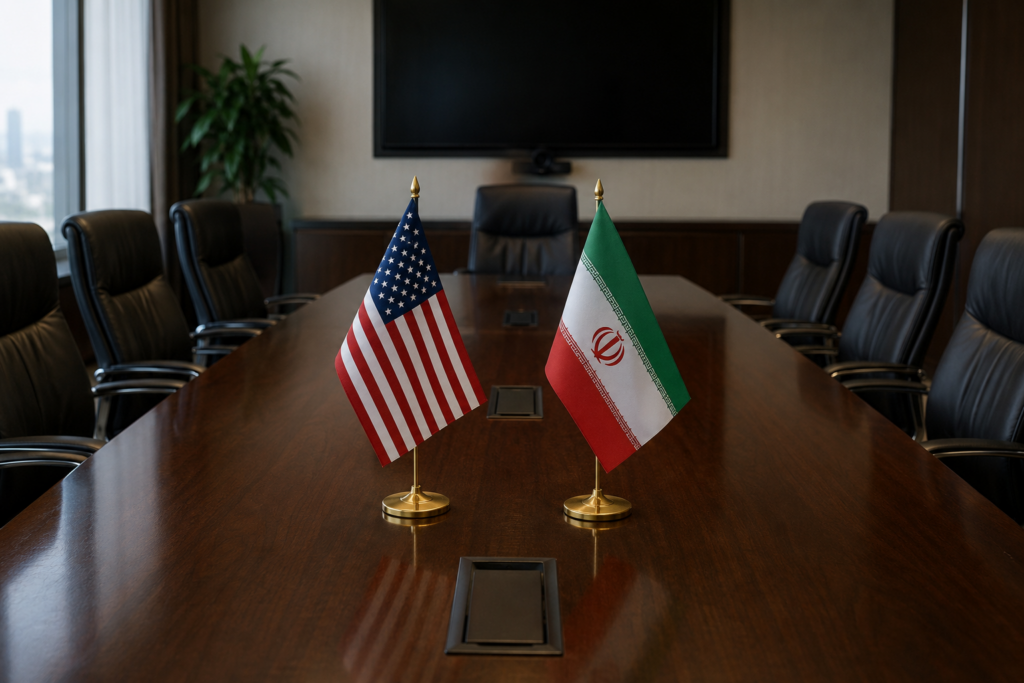
 Tehran stands to gain billions of dollars from a 60-day reprieve from U.S. sanctions announced on Monday, but unwinding more than four decades of restrictions poses legal, political and commercial challenges that could take years.
At issue is whether an interim U.S. deal with Iran can translate into lasting economic relief, given the complexity of dismantling a sanctions regime that spans U.S. law, international measures and private-sector risk concerns.
The United Nations, the U.S. and the European Union have imposed sanctions and trade embargoes and have frozen assets since the late 1970s over Iran’s nuclear program, human rights violations and support for militant groups around the region.
Under a 14-point memorandum of understanding signed by the U.S. and Iran last week, Washington is to start abolishing all types of sanctions using a schedule to be forged in a final deal within 60 days, a period that can be extended.
On Monday, the U.S. Treasury issued a temporary general license allowing the production, delivery and sale of crude oil and petrochemical and petroleum products of Iranian origin through August 21.
Removing the remaining sanctions – if it happens – would represent a stark change in U.S. policy toward the Middle East, which has long focused on curbing Iran’s influence and using financial pressure to weaken its theocratic government.
It would also be difficult, requiring executive action for some measures, approval by Congress for others and close coordination with the U.N. and other countries that have imposed their own sanctions. Companies, wary after decades of restrictions, could also blunt the impact.
“You have this tangled nest of sanctions, and it’s not just executive orders, it’s congressional sanctions,” said Juan Zarate, deputy national security adviser for combating terrorism under former President George W. Bush.
CONGRESS IS SKEPTICAL
Washington first sanctioned Iran in 1979, after revolutionary students seized the U.S. embassy in Tehran, holding diplomats hostage.
Since then, Congress has passed half a dozen sanctions laws and presidents have issued executive orders over Iran’s nuclear program and its support for groups the U.S. deems terrorist organizations including Hamas, Hezbollah and Yemen’s Houthis.
Since early 2025, the Treasury’s Office of Foreign Assets Control (OFAC) has imposed sanctions on more than 1,000 people, vessels and aircraft, according to Treasury data.
Delisting thousands of entities designated for sanctions would take OFAC at least a year, said Jeremy Paner, a partner at law firm Hughes Hubbard & Reed and a former U.S. sanctions official.
President Donald Trump can rescind executive orders issued on Iran, but some measures – including sanctions on Hamas and Hezbollah – are mandated by law and will have to be removed or amended by Congress, where the interim deal has already sparked sharp public criticism from his fellow Republican lawmakers.
Undoing 40 years of sanctions would be difficult, added Matt Zweig, managing director of policy at FDD Action, the lobbying arm of the Foundation for Defense of Democracies.
“Any attempt to comprehensively remove layer upon layer of sanctions will be like peeling back an onion — exposing the administration – not just to legal complexities but political risks,” said Zweig, a former aide on the House Foreign Affairs Committee.
The license issued on Monday could be worth up to $3 billion for Iran over two months, by some estimates.
That could swell to “at least tens of billions of dollars” if made permanent, erasing a discount on Iranian oil, allowing Tehran to sell to additional buyers beyond China, and increasing exports, said Edward Fishman, senior fellow at the Council on Foreign Relations. China now buys about 90% of Iranian oil, despite the sanctions.
The new license is broader than the one issued in March, calling for inclusion of not just oil and petroleum products, but also banking, insurance and transportation related to the oil trade, giving Tehran quicker access to its revenues.
“There are a number of thorny issues involved,” said Stephanie Connor, a former OFAC official now a partner with law firm Holland & Knight, adding that lifting sanctions could mean funds flowing to groups the U.S. considers a threat.
“Are we really going to let money start flowing to Iran’s Islamic Revolutionary Guard Corps?” she asked, referring to the powerful paramilitary force that the U.S. has designated a foreign terrorist organization.
WARY COMPANIES
Banks, oil firms and insurers will face evolving regulations, tougher due diligence and exposure to sanctions-evasion risks tied to Iran links with countries such as China, North Korea and Russia. They also remain subject to separate sanctions from Britain, the U.N., the EU and others. “We’ve kind of beaten the markets up with the risk of doing business with or through Iran, so you can’t just flip a switch and say, ‘Oh, now it’s okay to do business with Iran,'” Zarate said.
Companies that deal with Iran would still face lawsuits from victims of attacks, who can sue investors and companies for aiding designated groups under the 2016 Justice Against Sponsors of Terrorism Act, which aides say is unlikely to be repealed.
Given such risks, companies may steer clear of working with Iran to escape legal and reputational risk as long as the Iranian government remains in power, said Brett Erickson, principal with Obsidian Risk Advisors.
“We’re not going to see massive multi-billion dollar commitments until things are far more cemented and politically stable,” he said. “There’s just a long way to go.”
(Reporting by Andrea Shalal and Timothy Gardner; Editing by Don Durfee and Howard Goller)