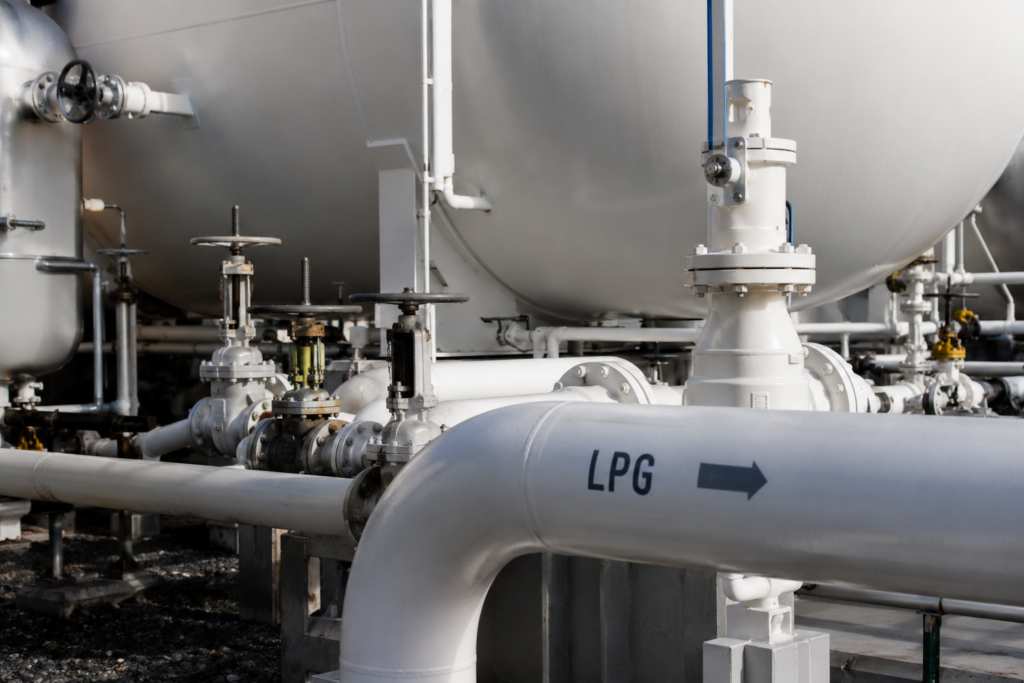
 Railway exports of liquefied petroleum gases from the Canadian production hub of Edmonton, Alberta, to refining and trading centers in the United States are unusually high this summer due to strong demand from motor fuel blenders, according to storage broker The Tank Tiger.
The out-of-season surge in LPG flows highlights the knock-on effects of the Iran war on energy supply chains around the world, and how some government initiatives to shield consumers from the resulting price shocks have flipped long-standing trading dynamics.
LPG demand in the U.S. typically declines in summer as propane is no longer used for space heating, and as tighter restrictions on gasoline quality – designed to reduce smog-linked emissions – reduce the amount of butane added to motor fuel. The U.S. government this year eased blending restrictions after its war against Iran sent prices surging at the pumps, allowing fuelmakers to continue adding high amounts of butane into gasoline.
The waivers have helped keep rail exports of LPG from Edmonton to the United States above 2025 and 2024 levels, said Steven Barsamian, chief operating officer at The Tank Tiger.
Some 5.2 million barrels of LPG were exported by rail from Edmonton in May, up from about 3.6 million barrels in the same period last year, according to data compiled by The Tank Tiger and rail analytics firm RailState.
Weekly exports peaked in the first week of June at about 1.4 million barrels, about 400,000 barrels higher than last year’s peak during that time, the data showed.
While the data does not show the specific product loaded onto LPG railcars, market participants say the bulk of the arrivals are butane due to higher blending demand this year, Barsamian said. Most of the imports likely headed to Mont Belvieu, Texas, the key U.S. LPG storage hub and pricing benchmark for the Americas, he added.
The U.S. is the world’s largest butane exporter but has imported growing amounts of the blending component from Canada in recent years, mainly for refiners in the Midwest, Northeast and West Coast markets. Total U.S. butane imports averaged 51,000 barrels per day last year, all of which was supplied by Canada, according to U.S. Energy Information Administration data.
The waivers of summertime fuel specifications have likely generated around 50,000 to 100,000 bpd of additional butane demand in the U.S., said Alex Hodes, director of energy market strategy at brokerage StoneX.
“Blending dynamics have been turned on their head,” Hodes said.
The price spread for butane between Edmonton and Mont Belvieu is near a historical high, with prices at the Texas hub at around $1 per gallon, a premium of about 30 cents to Edmonton, making it attractive for traders to sell higher volumes to the U.S., Hodes added.
(Reporting by Shariq Khan in New York and Amanda Stephenson in Calgary; Editing by Liz Hampton and Nia Williams)