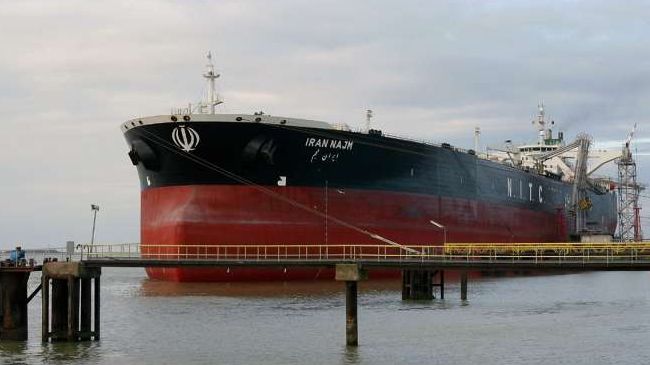
 Middle East producers are pushing ahead with loading oil and liquefied natural gas despite fresh ship attacks in the Strait of Hormuz and renewed strikes between the U.S. and Iran in recent days, shipping data showed. Energy shipping in the strait slowed after attacks on a container ship on Thursday and an oil tanker on Saturday sparked fresh tit-for-tat strikes, straining Washington and Iran’s interim peace deal. But on Sunday, a U.S. official said the two countries had agreed to halt recent hostilities and renew talks over the strategically important waterway. On Monday, a fourth Very Large Crude Carrier, capable of carrying 2 million barrels of oil, was seen loading at Saudi Arabia’s Ras Tanura terminal, LSEG data showed, even after a helicopter belonging to the company crashed on Sunday, killing 14 people. The cause of the crash was unknown.
Three other VLCCs have loaded oil and gone dark since leaving the terminal over the weekend, according to the data. Going dark refers to vessels with their transponders switched off to reduce the risk of attack while sailing through the Gulf.
One of these supertankers emerged on Monday, having exited the strait, and is now heading for Japan, the data showed.
Two VLCCs entered the strait on Sunday and have docked at a United Arab Emirates terminal to load crude, LSEG data showed.
Saudi Aramco declined to comment.
The Abu Dhabi National Oil Co said the company does not comment on the position, movements and routing of its vessels as a matter of policy.
IRAN ACCELERATES OIL LOADINGS
Iran is also accelerating oil loadings after Washington waived sanctions on its exports for 60 days.
Tehran loaded simultaneously at both of its export terminals at Kharg Island on Saturday for the first time in nearly a week, according to maritime intelligence firm Windward.
Kpler data showed Iranian-flagged VLCCs Dan and Hawk, entered the strait on Saturday, while about 8 million barrels of Emirati and Qatari crude moved out on four VLCCs during the weekend. The National Iranian Oil Co could not be immediately reached for comment. Rising exports from the Gulf, a region that accounts for a third of the world’s oil supplies, are sending global oil prices lower, with Brent down 10.6% last week, its third weekly decline, although the fresh weekend strikes lifted prices on Monday.
“If you take the view that the Strait will continue with an uneven re-opening in the weeks and months ahead, then crude oil right here is reasonably priced with a downward bias,” said IG markets analyst Tony Sycamore.
“However, if you feel the risks are that one of these weekend flare-ups leads to the conflict re-igniting more broadly then crude oil prices here are just way too cheap.”
QATAR, UAE CONTINUE LNG EXPORTS
On liquefied natural gas, two additional ballast tankers appeared on ship-tracking data in the west of the strait on June 26 after going dark, while two other loaded LNG tankers have exited Hormuz.
The Al Kharaitiyat is heading to Kuwait after loading at Qatar’s Ras Laffan terminal while another QatarEnergy-controlled vessel, the Al Kharsaah, is waiting off Qatar, Kpler ship-tracking data showed. Meanwhile, the ADNOC-controlled Mraweh, which loaded at UAE’s Das Island on June 21, is scheduled to deliver its cargo to the Dahej terminal on India’s west coast on July 5, according to Kpler data. Al Hamla, controlled by QatarEnergy, transporting a cargo loaded at Ras Laffan on June 18, is scheduled to reach China on July 3, LSEG and Kpler data showed.
QatarEnergy did not immediately respond to an email seeking comment.
(Reporting by Florence Tan and Emily Chow; Editing by Kate Mayberry)