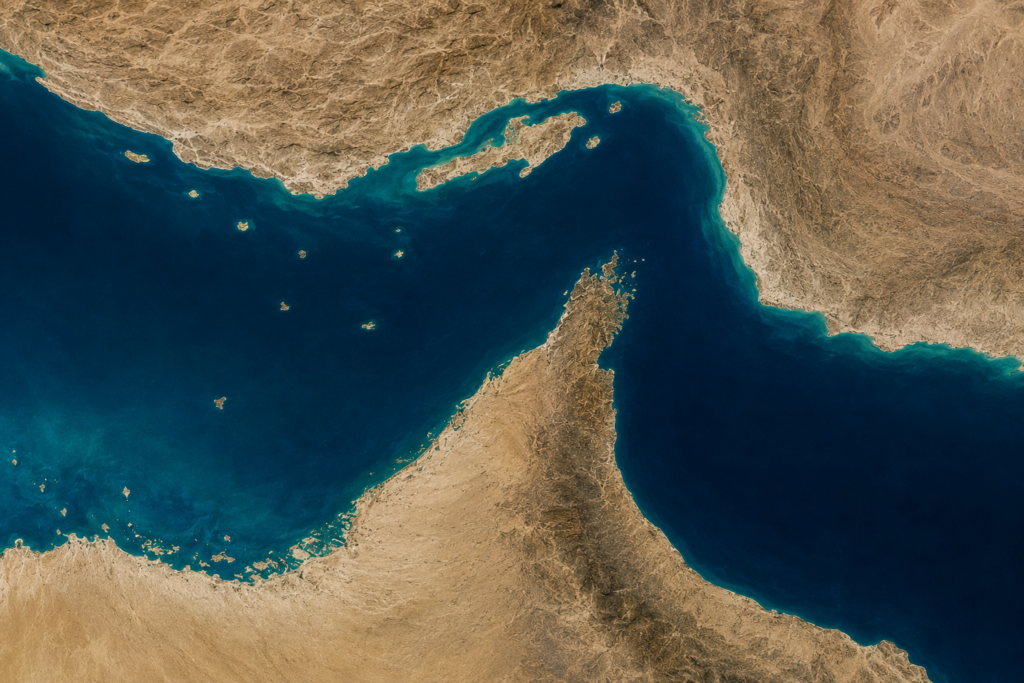
 The oil market is increasingly behaving as though disruptions to Middle East energy supplies are not a temporary shock but a new reality. Nearly six months after war erupted between the U.S. and Iran, hopes for a diplomatic breakthrough have faded. An interim ceasefire agreed on June 17 has effectively collapsed, the 60-day negotiating period has expired, and neither Washington nor Tehran appears willing to compromise over the future of the Strait of Hormuz.
Instead, both sides are digging in. Iran warned on Monday it would escalate tensions unless Washington fully implemented the interim peace deal within weeks. A senior Iranian official told Reuters that, if diplomacy failed, Tehran would launch a “timely and precise” attack to break the U.S. naval blockade. U.S. President Donald Trump said on July 7 that the pact was “over.” He has since insisted Washington was moving closer to defeating Iran.
The stalemate is increasingly forcing traders to contend with restrictions on shipping through the Strait of Hormuz, the world’s most important oil chokepoint, that could persist for months.
That shift in expectations helps explain why crude oil prices have stabilized around $90 a barrel. Crude has surrendered some of its panic premium since the early days of the conflict, but remains roughly 50% higher than at the start of the year. The market may no longer fear an immediate collapse in supplies, but neither does it expect a swift return to normal.
MOUNTING PAIN
Behind the political rhetoric, the economic costs are mounting for both sides. Iran is under growing strain from the conflict and U.S. blockade. Inflation exceeded 80% in July from a year earlier, according to an ISNA report, while crude exports have fallen to 294,000 barrels per day (bpd) so far this month from 1.7 million bpd in 2025, according to analytics firm Kpler. The U.S. is also paying a price. Trump has warned Americans to prepare for high fuel costs, an uncomfortable admission for a president who campaigned on lowering energy prices and now faces congressional elections in November. The average price of gasoline stood at $4.06 per gallon on Monday, up 29% from a year ago, according to the American Automobile Association.
Yet while diplomats remain deadlocked, the oil market is adapting.
SMOKE AND MIRRORS
The biggest uncertainty is the scale of supply disruptions. Flows of crude and refined products through Hormuz, which averaged about 18 million bpd before the war, fell to 4.8 million bpd in July and have averaged around 2 million bpd so far in August amid Iranian attacks and a U.S. blockade, according to Kpler. Some of that lost volume has been offset by higher exports from the Fujairah terminal in the United Arab Emirates and from Saudi Arabia’s Red Sea coast. Even those alternative routes, however, are under pressure after Yemen’s Iran-backed Houthis imposed a blockade on Saudi exports through the Bab el-Mandeb Strait, at the Red Sea’s southern entrance.
Taken together, Middle East exports averaged 9.5 million bpd this month, less than half the 21 million bpd in 2025, according to Kpler.
But those figures may understate — or overstate — actual exports because more regional oil appears to be moving in the shadows.
Evidence is mounting that Gulf producers are relying more heavily on vessels that disable tracking systems while transiting Hormuz and Bab el-Mandeb. The UAE, in particular, appears to have built a network of “dark tankers” that shuttle crude through Hormuz before transferring cargoes in the Gulf of Oman.
The result is an unusual situation in which traders know supplies have been disrupted but cannot determine by how much. Indeed, UAE crude exports averaged 3.38 million bpd so far in August, compared with 3.2 million bpd in 2025. Yet those volumes could come under pressure after Iran reportedly struck several tankers linked to Abu Dhabi National Oil Company during voyages through Hormuz.
How much oil is actually reaching consumers has therefore become one of the market’s biggest unknowns. As long as the Hormuz impasse remains unresolved, uncertainty will hang over energy markets.
Other indicators suggest elevated oil prices could persist even if crude exports stabilize.
REFINING PRECIPICE
Refined fuel markets have become exceptionally tight. Global refinery throughput in July was nearly 5 million bpd below year-earlier levels at 81 million bpd, according to the International Energy Agency, reflecting the loss of refining capacity in the Middle East and damage to Russian facilities from Ukrainian drone attacks.
The shortfall has been offset by a surge in U.S. fuel exports, with American refineries running at or near record utilization rates. That support may soon fade. Seasonal maintenance ahead of winter and hurricane season threaten to curb operations along the U.S. Gulf Coast.
Lower refining activity will hamper efforts to rebuild depleted fuel inventories, helping sustain high product prices and refining margins, which have climbed to record levels.
The inventory picture is particularly concerning. Global observed oil stocks fell by 2.4 million bpd in the second quarter, their largest quarterly draw in at least a decade, according to the IEA. U.S. diesel inventories are at their lowest for this time of year in three decades, while gasoline stocks are at their weakest seasonal level since 2012.
Freight markets are sending a similar message.
Benchmark rates for very large crude carriers transporting oil from the Middle East to China have surged from around $300,000 per day in early July to $490,000, equivalent to $5 a barrel and nearly 10 times higher than at the start of the year, according to LSEG data.
Those rates reflect shipowners’ reluctance to enter conflict zones and growing demand for tankers to move oil and fuel from more distant suppliers such as the U.S. and Brazil.
The longer the Hormuz impasse drags on, the less this looks like a temporary supply shock and the more it resembles a structural reshaping of global oil trade.
Markets are finding it harder to absorb a world of opaque supply flows, shrinking fuel inventories, strained refining capacity and no credible diplomatic path toward restoring trade through the Gulf. Ultimately, that growing realization, rather than battlefield developments, may keep oil prices elevated well into next year.
(The opinions expressed here are those of Ron Bousso, a columnist for Reuters.)
Enjoying this column? Check out Reuters Open Interest (ROI), your essential new source for global financial commentary. Follow ROI on LinkedIn, and X. And listen to the Morning Bid daily podcast on Apple, Spotify, or the Reuters app. Subscribe to hear Reuters journalists discuss the biggest news in markets and finance seven days a week.
(Ron Bousso; Editing by Marguerita Choy)