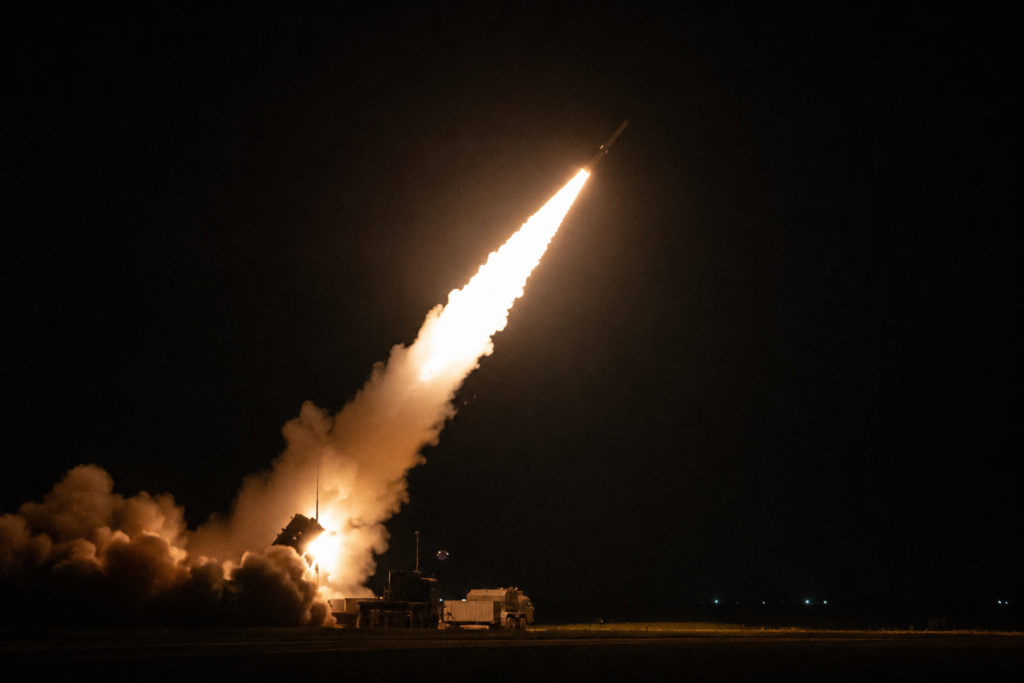
 The United States launched a new wave of attacks on Iran late on Tuesday six months into a deadlocked conflict, prompting Iranian missile fire at what it called U.S. assets in Jordan, Bahrain, Kuwait and Iraq.
Here are other ways Iran might retaliate if the conflict continues to escalate or a U.S. campaign to choke off Iran’s economy intensifies.
IRAN COULD EXPAND ATTACKS ON GULF STATES
Iran has repeatedly struck at its neighbours in response to U.S. attacks and threatened to retaliate against any who take part in U.S. efforts to strangle the country’s economy with “earthquake” force.
It has targeted Gulf states and Jordan repeatedly since the war began on February 28, mostly focusing on U.S. bases but also hitting energy infrastructure and other targets.
Any intensified attacks that targeted upstream oil or gas facilities could further drive up energy prices in ways that inflict political damage on the Trump administration and could be harder to reverse than attacks on shipping.
Targeting power and water desalination plants in the hot, parched region would also pose a major risk to U.S.-aligned Gulf monarchies that function as significant financial hubs for the global economy.
IRAN COULD STOP MORE OIL GETTING OUT OF THE MIDDLE EAST
Mohsen Rezaei, the former Revolutionary Guards chief and secretary of Iran’s Supreme National Security Council, has threatened to shut down oil exports — one of Tehran’s main strategic approaches throughout the conflict. He said if the economic war continues, not a single drop of oil will be exported through the Strait of Hormuz or from anywhere in the Persian Gulf.
Iranian attacks and threats to shipping have already stopped most traffic through the Strait of Hormuz, largely shutting down a waterway that carried around a fifth of global energy before the conflict.
Although some oil tankers have been moving through the strait in recent weeks, volumes remain very low.
Missile, drone or speedboat attacks on tankers trying to leave the Gulf have repeatedly pushed up oil prices during the six months of the conflict.
Meanwhile, Tehran’s Houthi allies have restricted Red Sea shipping with attacks and threats to blockade all Saudi Arabian shipping, which carries crude to Asia through the Bab el-Mandeb strait past the group’s Yemeni stronghold.
While the attacks initially only stopped some vessels, with more than half still getting through in mid-August, the situation is difficult for shippers with Chinese shipping companies now rerouting away from Bab el-Mandeb, according to industry sources.
Further attacks, such as the one that targeted a vessel off the main Saudi Red Sea oil terminal at Yanbu last week or a drone strike near the Suez Canal in early August, could raise oil market anxiety levels and crude oil prices.
IRAN COULD ATTACK WESTERN COUNTRIES DIRECTLY
While Western countries are beyond the range of Iran’s main munitions, the Revolutionary Guards have historically been willing to find alternative ways of attack.
Britain has said Iran-linked hackers shut down a small electricity station while U.S. officials have said Tehran was likely behind cyber attacks on water plants in Minnesota. Iran has not commented on those allegations.
Western security services have also accused Iran of recruiting local people to stage attacks or attempt assassinations in the West. Iran has denied that.
(By Angus McDowall; Editing by Aidan Lewis, Alexandra Hudson)