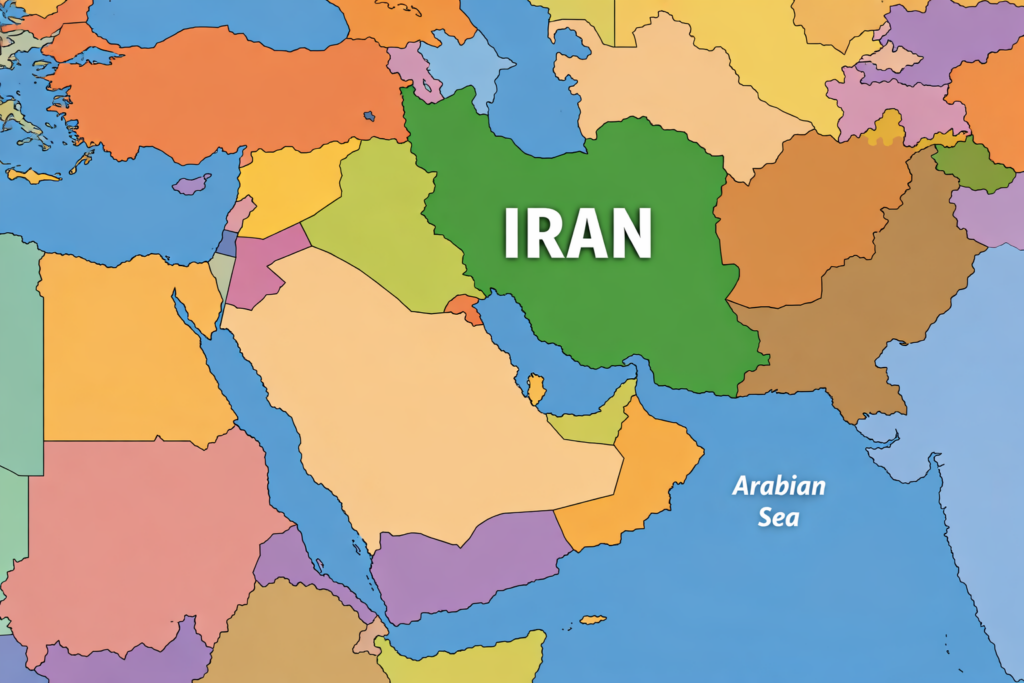
 Iran threatened on Monday to retaliate against any new U.S. attacks on its assets, warning that the energy production chain in the region was “sprawling, accessible and exposed” and that U.S. oil and gas companies there shared that exposure.
“Strike our assets and you get struck,” Iranian Parliament Speaker Mohammad Baqer Qalibaf said after U.S. and Iranian strikes on shipping at the weekend that pushed oil prices up to six-week highs at one point on Monday.
On Sunday, senior Iranian security official Mohsen Rezaei said Iran would announce plans for a new restricted zone in the Gulf in the coming days, and that it would soon approve maps of a new shipping corridor through the Strait of Hormuz.
Iran has throttled traffic through the strait, a vital global oil and gas supply route, since the war with the United States began with U.S. and Israeli strikes on February 28.
Rezaei said the new restricted zone would begin from where a U.S. naval blockade of Iran starts and extend into areas of the Gulf. Any ship entering the new zone would be added to an Iranian sanctions list, he said.
“We will only commit to the Strait of Hormuz being open when they (the Americans) stop the sabotage, threats and attacks on Iran,” Rezaei said.
Underlining Iran’s defiance, Qalibaf issued a new threat to respond to any U.S. strikes, in what appeared to be a response to a warning by U.S. Defense Secretary Pete Hegseth that Iran’s oil tanker fleet was “defenceless”.
“It’s simple: the oil and gas production chain here is sprawling, accessible, and exposed. American oil and gas companies across these waters and facilities share that exposure,” Qalibaf, who is Iran’s top negotiator, wrote on X.
“Strike our assets and you get struck. We’ve already proven it. Ask the bases that are no longer viable,” referring to Iranian attacks on U.S. military bases in the region throughout the conflict.
IRAN AND U.S. EXCHANGE ATTACKS
U.S. President Donald Trump has yet to achieve the aims he set out when he launched “Operation Epic Fury” in February: to end Iran’s nuclear programme, halt its ability to attack its neighbours and create conditions for Iranians to topple their leadership.
Tehran’s clerical rulers remain in power and aim to emerge from the war stronger than before, demanding the lifting of sanctions and hoping to collect fees from ships that use the strait, which carried a fifth of global oil and gas shipments before the war.
After a pause in military action for much of August, tit-for-tat strikes have resumed following the unravelling of an interim ceasefire deal that was reached in June, and there has been little progress on getting the peace process back on track.
U.S. forces struck three Iranian oil tankers on Saturday, U.S. Central Command said, including one off Kharg Island, Iran’s key oil export hub, following attacks by Iran’s Islamic Revolutionary Guard Corps on U.S. warships in the region.
Tehran has shown it retains the capability to attack U.S. interests in neighbouring countries and to shut down oil flows through the Strait of Hormuz.
An average of 10 commodity ships transited the Strait per day in the past 10 days, the lowest since May, according to shipping data on Monday.
That contributed to a rise in oil prices on Monday, with Brent crude futures hitting their highest point since July 24 at $97.93 a barrel before slipping back to $96.19.
SANCTIONS, OIL BLOCKADE SQUEEZE ECONOMY
Iran has said it will step up efforts to tackle problems created by U.S. sanctions that are crippling its economy.
However, the U.S. campaign to throttle Iran’s economy by blockading its oil exports and stopping sanctions evasion is growing increasingly difficult to withstand, three senior Iranian sources have said.
Qalibaf said at the weekend that, alongside the military front, Iran’s main battle was now over production and people’s livelihoods, citing currency fluctuations, inflation, unemployment and market management as big challenges.
The conflict has also impacted oil-producing Gulf Arab states such as the United Arab Emirates, which has come under fire from Iranian missiles and suffered attacks on its oil tankers in the Strait of Hormuz.
UAE presidential adviser Anwar Gargash said on Monday the country was building alternative routes for its energy exports and trade to ensure they are not “held hostage” by the war.
The impact of Iran’s blockade of the Strait of Hormuz on energy supplies has also been felt in the U.S. as fuel prices have increased. The increase has weighed on Trump’s popularity as his Republican Party heads into elections in November when control of Congress is at stake.
(Writing by Lincoln Feast and Timothy Heritage, Editing by Michael Perry and Alex Richardson)