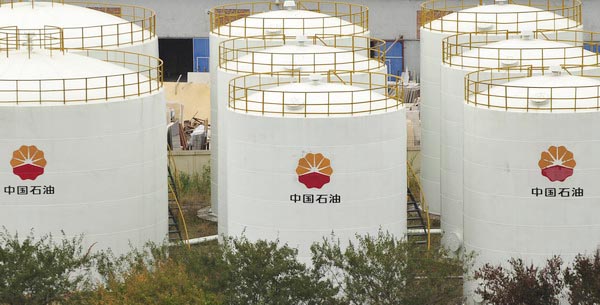
 China dipped into its massive crude oil stockpile in August for the third month in the past four as increased refinery processing exceeded a modest increase in oil imports.
Refineries processed about 640,000 barrels per day (bpd) more than what was available to them from imports and domestic oil production, according to calculations based on official data.
China, the world’s biggest crude importer, slashed its purchases to the lowest in a decade in the wake of the higher oil prices caused by the disruption to supplies from the Middle East after the U.S. and Israel attacked Iran on February 28.
It also trimmed refinery run rates to levels sufficient to meet domestic demand, but not high enough to support exports of refined fuels, which also dropped sharply in the months following the outbreak of the Iran conflict.
China does not disclose the volumes of crude flowing into or out of its strategic and commercial stockpiles, but an estimate can be made by deducting the amount of oil processed from the total crude available from imports and domestic output.
On this basis, imports of 8.93 million bpd in August and domestic production of 4.34 million bpd meant refiners had a total of 13.27 million bpd available.
Refineries processed 13.91 million bpd in August, the most since March, according to official data released on Tuesday, meaning throughput was 640,000 bpd more than available crude.
China tapped inventories by about 500,000 bpd in May and 940,000 bpd in June, before a surplus of 210,000 bpd was seen in July as imports ticked up slightly and refinery runs stayed weak.
The recent draws on China’s crude inventories, which are estimated to hold at least 1.2 billion barrels, haven’t been enough to outweigh builds seen in the early part of the year, with a surplus of 330,000 bpd for the first eight months.
Nonetheless, it’s clear that China is still undergoing a dramatic shift in response to the loss of millions of barrels of crude from the Middle East.
OIL FLOWS
The Strait of Hormuz, through which about 20% of global crude and refined products flowed prior to the start of the war, remains contested between Iran and the United States, while advances by Yemen’s Houthi group threaten Saudi exports through the Bab el-Mandeb passage from the Red Sea to the Gulf of Aden.
While there is some dispute as to the exact volumes flowing from the Middle East, even the most optimistic figures point to a loss of about 5 million bpd.
China has absorbed the bulk of this loss by cutting seaborne oil imports by as much as 4 million bpd from pre-war levels.
But whether this will continue is one of the main issues facing the oil market.
Certainly, China has the inventories available to keep its imports low while still maintaining refinery runs.
China’s onshore crude inventories in storage tanks were 1.23 billion barrels as of September 9, according to data compiled by EA Crude Oil Inventories.
However, the data also shows that stored volumes have declined 24.05 million barrels since the end of August, implying that China is starting to draw on inventories at a faster pace.
Exports of refined fuels are also recovering, with data from commodity analysts Kpler showing light and middle distillates shipments of 975,000 bpd in August, and this will likely rise above 1 million bpd in September, which would be the highest level since March 2024.
While China’s refiners will be happy to bank the high profits on offer for fuels such as diesel and gasoline, the jump in crude prices in recent weeks will make them reluctant to lift imports.
The major question is: how long will China be prepared to crimp oil imports and increase fuel exports?
Enjoying this column? Check out Reuters Open Interest (ROI), your essential new source for global financial commentary. ROI delivers thought-provoking, data-driven analysis of everything from swap rates to soybeans. Markets are moving faster than ever. ROI can help you keep up. Follow ROI on LinkedIn and X.
The views expressed here are those of the author, a columnist for Reuters.
(Editing by Sonali Paul)