 Unlike crude oil or gasoline, diesel rarely makes front-page news, yet it now has U.S. President Donald Trump’s full attention. Spiking prices for the fuel threaten to push inflation much higher, and taming it will be an epic challenge.
Trump has recently shifted his focus from domestic gasoline prices to diesel. Last week, he urged Ukrainian President Volodymyr Zelenskiy to stop targeting Russian diesel production. He later announced that Russia and Ukraine had agreed not to attack each other’s energy infrastructure. Neither side appears to have respected the arrangement, but the president’s effort raises the question: why is he so focused on diesel right now?
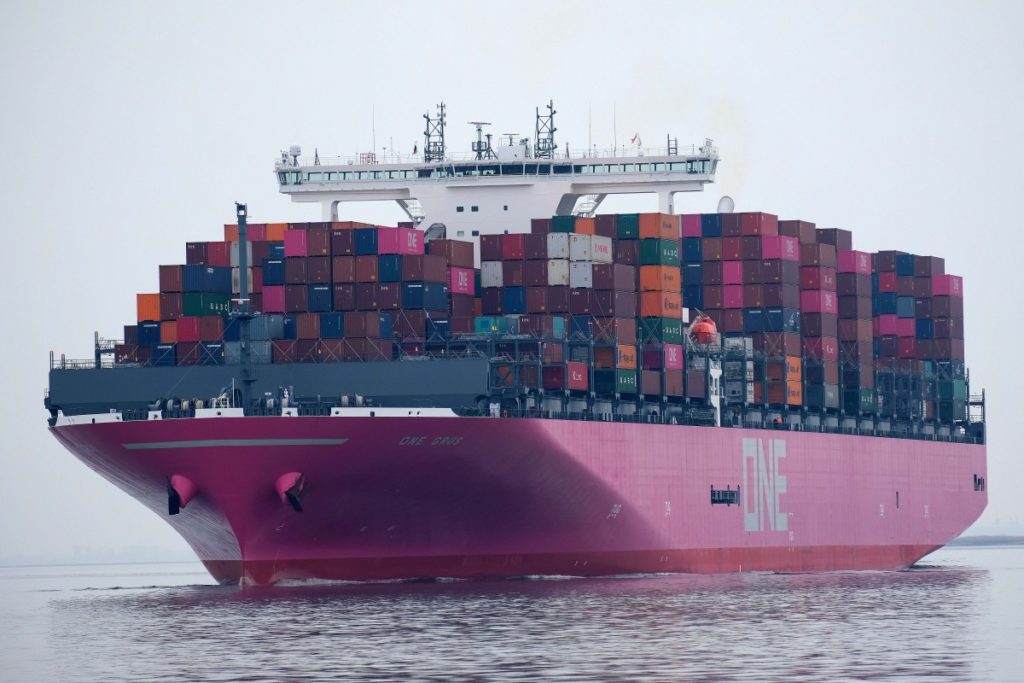
Diesel is the fuel that keeps the global economy moving. It powers the trucks that stock supermarket shelves, the ships that carry goods around the world, and the machinery that drives farms, factories and construction sites.
Diesel and heating oil account for nearly 30% of global oil consumption, or about 29 million barrels per day (bpd). Roughly a quarter of that supply is traded internationally. The Middle East is typically the world’s largest exporting region, shipping around 1.5 million bpd last year, while Russia supplied another 800,000 bpd, according to Kpler data.
But energy infrastructure – and refineries in particular – has become a key target in both the conflict between Russia and Ukraine and the expanding war in the Middle East, making diesel supplies dangerously tight.
Air strikes have damaged several refineries in the Gulf this year, while other facilities were forced to cut operating rates after losing access to feedstocks. Diesel exports from the region fell by more than 50% between March and August.
Then came a second blow. Years of Ukrainian drone attacks have crippled Russia’s refining network, and in July, Moscow imposed a diesel export ban. By September, half of Russia’s six largest diesel-producing refineries had either sharply reduced output or shut down altogether.
As a result, combined diesel exports from Russia and the Gulf have fallen by roughly two-thirds from 2025 levels, leaving a hole that the rest of the world has struggled to fill.
Prices have responded accordingly. European diesel futures hit a record $210 a barrel this week, while US retail diesel prices topped $6 a gallon for the first time.
This price spike is arguably more worrying than the rise in US gasoline, which is currently around $4.40 per gallon. That’s because diesel has more potential to ripple through supply chains for months, if not years, raising costs for manufacturing, transporting food and other goods, and construction.
For the Trump administration, which has seen approval ratings for its handling of the economy plummet in the last seven months – largely because of cost-of-living concerns – this could be a serious new inflation headache with no simple remedy.
In short, it’s not an ideal backdrop to the November 3 midterm elections, particularly in the Farm Belt, a key political constituency where farmers face higher diesel costs during the autumn harvest.
DOWN THE CHAIN
The diesel crisis is alarming not because of the price spike itself, but because of what’s driving it. The main problem is no longer a shortage of crude, but a severe shortfall in the refining capacity that transforms crude into fuels.
When the US, Israel and Iran went to war in late February and traffic through the Strait of Hormuz was disrupted, markets understandably zeroed in on crude supply. Roughly a fifth of global oil consumption previously transited through this key chokepoint.
Yet crude proved more resilient than many feared. Higher production in North America, emergency stock releases and reduced Chinese imports helped cushion the blow.
Moreover, Middle Eastern shipments have already recovered to about 60% of their pre-war levels, aided by alternative export routes and a US-protected shipping corridor.
But restoring refining capacity will likely prove a lot harder.
Repairing plants damaged by the Iran war could take years due to an already tight market for industrial kit.
The outlook for Russia is even less encouraging. Sanctions continue to restrict access to specialised equipment and replacement parts. These will be especially hard to come by, given that reconstruction efforts across the Middle East are likely to compete for the same engineering expertise and materials.
CURE FOR HIGH PRICES
The rest of the world is trying to compensate – and capture windfall profits from enormous refining margins.
Many refiners outside the conflict zones have been running flat out for months, producing more diesel at the expense of other fuels. In the US, the world’s largest diesel producer and exporter, refiners have recently pushed output of the fuel to the highest level since 2018 for this time of year.
But that effort is proving insufficient. Unlike oil producers, refiners have limited spare capacity, and ultimately, war-related damage has simply taken too many refineries offline. Global refinery throughput is therefore expected to average just 81.5 million bpd this year, down from around 84 million bpd in 2025, according to the International Energy Agency.
Inventories of diesel and other middle distillates are also relatively low after months of heavy draws. US inventories are at their lowest level since at least 1982 for this time of year, when stocks typically rise before the surge in winter heating demand.
This has created a troubling dynamic. The cure for high diesel prices is typically high diesel prices, which spur production and curb demand. But with limited refining capacity available, the cure will likely be far higher prices and significant demand destruction.
That’s not something any president wants to hear.
STICKY DEMAND
The bigger question for Trump is whether persistently elevated diesel prices could push up US inflation broadly – and durably – and ultimately drag down growth.
The US economy is far less energy-intensive than it used to be, having shifted manufacturing overseas and expanded the services sector. The US is also now a net oil exporter, having been a major importer for decades. Many experts point to this to explain why the spike in both gasoline and diesel prices this year has, thus far, had a limited impact on core inflation and economic growth.
According to economists at the Federal Reserve Bank of Dallas, the estimated 0.3-percentage-point decline in US gross domestic product (GDP) from the global oil shock is only about one-twentieth of what it would have been in 1980 – an eyepopping 5.6 percentage points – and one-sixth of the hit estimated for the rest of the world.
Spending on oil as a share of GDP has also plummeted over the decades, falling to 3% in 2024 from a high of almost 8% in 1980, the researchers found. On the surface, the US economy thus appears far less vulnerable to energy supply shocks.
But that doesn’t mean no pain is being felt – or is likely to be felt ahead – because fuel costs today are much higher than current crude prices would suggest.
This is particularly true for diesel. Analysts at Societe Generale calculated that diesel prices at the pump today are more in line with global benchmark Brent crude near $190 a barrel, not $105.
It’s also important to note that the inflationary impacts of diesel often come with a lag. That’s because diesel’s direct footprint in consumer inflation indexes is minuscule, yet its indirect impact through higher transportation, delivery and production costs is significant. Economist Joel Prakken estimates that diesel accounts for around 70% of intermediate fuel usage in the US.
Moreover, the same forces that have made the US economy less sensitive to direct energy price increases could make it more vulnerable to indirect ones. A shift away from domestic manufacturing has stretched supply chains across continents, increasing reliance on diesel-powered shipping and freight.
The boom in home deliveries since the pandemic has also added further demand from trucks and vans.
Importantly, demand for diesel also tends to be stickier than gasoline demand. The latter can fall quickly when motorists drive less, but diesel use doesn’t tend to fall unless economic activity overall is slowing.
Higher diesel prices “take longer to filter through, gradually driving the global economy slower,” said Alan Gelder, senior vice president for oil markets at consultancy Wood Mackenzie.
In other words, unless US and global economic activity slows considerably, diesel prices may continue to rise, putting upward pressure on inflation broadly.
COLD COMFORT
There is one reason not to panic. Adjusted for inflation, today’s diesel prices remain well below the peaks reached in 2008 and 2022.
But those earlier spikes were largely driven by fears of supply disruption. The 2022 surge, for example, followed Moscow’s invasion of Ukraine and reflected concerns over a reduction in Russian exports that didn’t fully materialize at the time.
Today’s rally is different. It reflects actual losses of refining capacity, constrained oil flows and depleted inventories.
The Trump administration has few levers to pull. Restricting US diesel exports, an idea touted by some politicians, could offer short-lived relief, but it would likely wreak havoc on the country’s refining industry.
A lasting ceasefire in the Middle East and a full reopening of the Strait of Hormuz would certainly cool the energy market. But even then, oil flows would take months to normalise and damaged refineries could take years to rebuild.
In 2024, Trump’s predecessor Joe Biden learned the hard way how politically toxic high inflation can be. If diesel prices keep rising, the current administration risks finding itself in a similar position.
(The opinions expressed here are those of Ron Bousso and Jamie McGeever, columnists for Reuters.)
Enjoying this column? Check out Reuters Open Interest (ROI), your essential new source for global financial commentary. Follow ROI on LinkedIn, and X.
And listen to the Morning Bid daily podcast on Apple, Spotify, or the Reuters app. Subscribe to hear Reuters journalists discuss the biggest news in markets and finance seven days a week.
<^^^^^^^^^^^^^^^^^^^^^^^^^^^^^^^^^^^^^^^^^^^^^^^^^^^^^^^^^^^
^^^^^^^^^^^^^^^^^^^^^^^^^^^^^^^^^^^^^^^^^^^^^^^^^^^^^^^^^^^>
(Writing by Ron Bousso; Additional reporting and analysis by Jamie McGeever. Editing by Marguerita Choy)