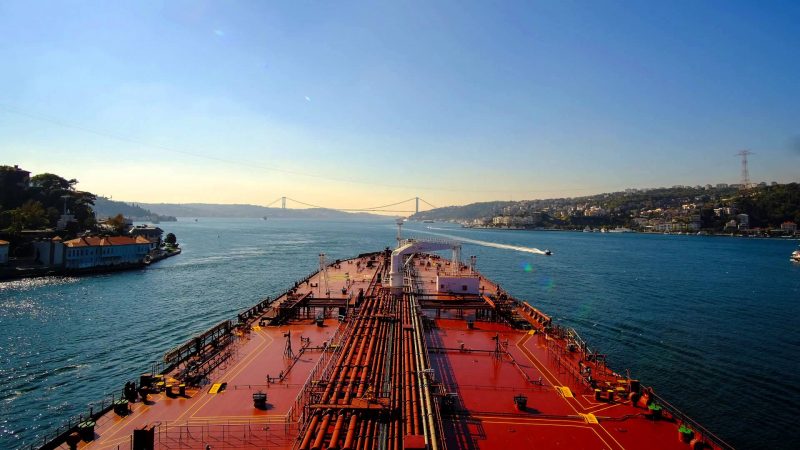
 Middle East oil exports exceeded pre-war levels in September, shipping data from Kpler and Vortexa showed on Monday, as Gulf producers ramped up cargoes despite attacks on vessels crossing the Strait of Hormuz.
Merchant ships transiting the key chokepoint face a “heightened and increasingly unpredictable kinetic threat” given the recent sharp increase in traffic, Marisks, a shipping intelligence service, said on Saturday.
The seven-day moving average for crude exports from the region was 18.3 million bpd on September 30, provisional Kpler data showed, with cargoes topping pre-war levels on 14 days in September, including transits via Hormuz, the Red Sea and exports from terminals.
Before September, oil shipments from the region matched or exceeded pre-war levels on a handful of days in June and July, Kpler data showed, after Washington and Tehran reached a memorandum of understanding that has since lapsed.
In the 12 months before the start of the US-Israeli war with Iran, crude exports from the region averaged about 18 million bpd, according to Kpler.
The export surge has been driven by Saudi Arabia loading from both the Red Sea and the Gulf, three weeks after a September 10 attack on its East-West pipeline, Kpler said.
Also, Iraq’s state-owned Oil Tanker Company and some refiners have chartered tankers to load Basrah crude inside the strait after Baghdad secured Iranian permission for Iraqi oil tankers to pass through Hormuz.
Vortexa said that the 14-day moving average for Middle East crude and condensate exports hit 18.6 million bpd, exceeding the 10-year seasonal average and returning to pre-conflict levels.
“Most of this month-over-month increase seen in September comes from Saudi Arabia, which is ramping up exports to regain market share from other Middle Eastern countries,” senior market analyst Xavier Tang said.
“This increase in Middle East supplies will also help alleviate tightness in the oil market, especially for Asian refiners,” he said.
Liquefied natural gas cargoes exiting the Strait of Hormuz also rose in September to their highest since February.
SHIP ATTACKS
However, attacks on tankers continued, with at least seven incidents reported in the past week, Marisks said.
The very large crude carrier (VLCC) Kazimah III was reportedly struck on October 1 by an unknown projectile while in the strait, causing a fire onboard, it added. Its owner, Kuwait Oil Tanker Company, did not respond to a request for comment.
Separately, the Liberian-flagged Aframax tanker Lipsi was reportedly struck by an unknown projectile on October 4 while transiting approximately 3.9 nautical miles northeast of Jazirat Um Al Fayarin, Oman, in the Strait of Hormuz, damaging its engine room, Marisks said on Monday. Dynacom, its manager, did not immediately respond to a request for comment.
The crew aboard both tankers were reported safe, with no casualties reported, Marisks said.
The United Kingdom Maritime Trade Operations agency has reported at least one attack a day in the Strait of Hormuz or the Gulf of Aden since October 2.
“Current intelligence suggests that the recent pattern of incidents may not necessarily represent deliberate targeting of individually selected merchant vessels,” Marisks said.
“Instead, available information indicates the possibility that Iranian forces are launching missiles into a predetermined engagement area or ‘kill box’, with weapons potentially acquiring and locking onto available radar signatures within that area.”
Before the Iran war started on February 28, the strait typically handled about 125 large commercial vessels per day, including tankers, gas carriers, bulkers and container vessels, accounting for some 20% of global crude and LNG supply.
(Reporting by Florence Tan; Editing by Sonali Paul, Tony Munroe and Hugh Lawson)