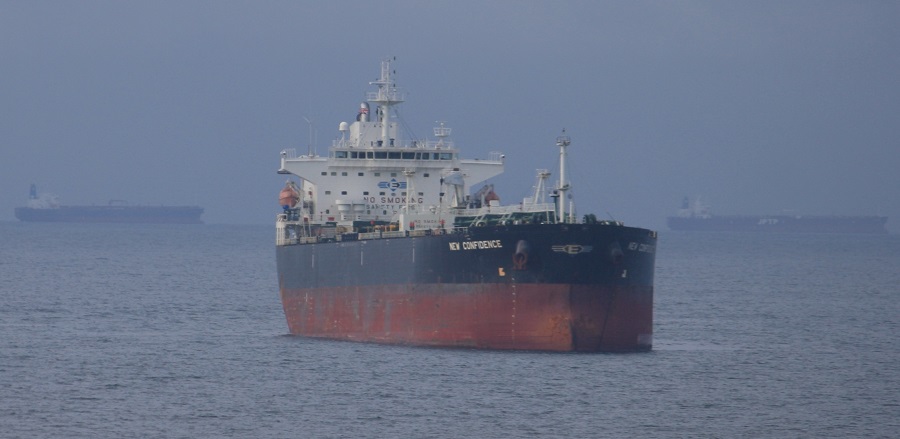
 Dense heavy crude, which oil refiners around the world favor for its typically low cost, is piling up in the Americas as soaring freight rates have stifled exports and US refiners have been running close to their limits.
The glut in North and South America has opened an unusual split in the global oil market, as buyers in Asia and Europe struggle with supply shortages and benchmark prices hold above $100 a barrel.
Heavy crude is a denser type of oil that Asian, many US, and some European refineries are typically configured to process. It is usually cheaper than light crude, offering refiners better margins, when shipping costs are affordable.
“It’s all freight,” said Scott Shelton, an energy specialist at TP ICAP. Venezuela, the US and Canada all produce more oil than they consume, he said, so they rely on exports to Asia to balance their crude markets.
With US diesel prices soaring, the cheap, stranded barrels should be getting snapped up in a diesel-starved market, since heavy crude yields more of the fuel than lighter grades. But Gulf Coast refiners have already bought as much as they can process, analysts and traders said.
Venezuelan exports have surged since the US captured former President Nicolas Maduro in January, then started pushing to reactivate the country’s oil sector. Canadian output is at a record and Washington has released more than 130 million barrels from its emergency reserve.
The cost of hiring a supertanker from the US Gulf Coast to Asia, meanwhile, has more than quintupled since February, as ship-to-ship transfers in the Gulf of Oman tie up vessels worldwide.
“You need a ship and the price of ships are going up, and the availability ships are going down,” Shelton said.
Flagship Canadian, Colombian and Ecuadorian heavy crude grades have all eased more than $10a barrel to trade at their lowest level in six weeks, according to price reporting agency Argus Media. Prices for Western Canada Select, excluding shipping or insurance costs, was around $74 on Thursday; Colombia’s main grade Vasconia was trading at around $84; and Ecuador’s Oriente was trading at around $76, Argus said.
Venezuelan crude excluding shipping costs was trading around $74.50 a barrel on Thursday, two traders said.
Shipping oil on a supertanker from the US Gulf Coast to Europe was estimated to cost around $46 million, or $24.50 a barrel, last week, including ship-to-ship transfer and other costs, according to Georgios Sakellariou, a Signal Maritime analyst. That compares with $6.5 million or around $4 a barrel before the Iran war broke out in late February.
The cost of a tanker from the Americas to Asia rose to more than $80 million, or about $40 a barrel, last week compared with around $10-15 million near the start of the year.
US REFINERS MAXED OUT
US refineries have operated at about 93.5% capacity on an average weekly basis so far this year, according to the Energy Information Administration. That is the highest level in 28 years as they crank out as much as fuel as they can to profit from record high diesel prices. While those refineries are complex and geared to run a heavier crude slate, they can only process it up to a certain percentage of their total capacity.
“While Venezuela and US emergency barrels have been a factor for months now, leading to near maximum US coker utilization, high freight is now a further headwind to shipping these barrels east and is forcing heavy sour storage builds in the Americas,” Irwin added. Cokers convert residual crude oil into feedstocks for diesel and gasoline production, and a heavier crude slate requires them to run at a higher capacity.
Many US refineries are also configured for offshore Gulf of Mexico crude such as Mars Sour, rather than Canadian or Venezuelan oil that must be mixed with lighter feedstock.
(Reporting by Georgina McCartney and Arathy Somasekhar in Houston, Amanda Stephenson in Calgary; Editing by Liz Hampton and Nathan Crooks and David Gregorio)