Every year, a familiar scenario plays out across Western Canada’s mature oilfields.
Production on an older well begins declining. Nothing appears obviously broken, so paraffin, scale or other downhole buildup becomes a likely suspect. A chemical treatment is scheduled, the well is treated and production resumes.
Except sometimes, the decline continues.
The problem wasn’t the treatment. It was the diagnosis.
According to Alberta-based Central Optimization, chemical programs remain an important production tool, but operators can spend tens of thousands of dollars treating wells for restrictions they may not actually have. In a multi-well program, the difference between diagnosing first and treating broadly can potentially represent $80,000 to $100,000 per well in annual spending.
The alternative starts with a surprisingly simple premise: get the downhole data before deciding on the solution.
What Is the Well Actually Telling You?
A properly designed acoustic pressure build-up test can reveal far more than whether a well is producing below expectations.
By shutting in the well and monitoring the fluid level & pressure recovery over time using purpose-built automated equipment like Central’s, engineers can evaluate reservoir characteristics and identify evidence of skin damage or near-wellbore restriction. Combine that information with pre-shut in pumping acoustic fluid-level measurements and another part of the production picture emerges: how effectively the artificial lift system is handling current reservoir inflow.
Together, the data can help answer four very different questions:
Is it a reservoir problem?
A restriction problem?
An artificial lift problem?
Or is the well simply experiencing natural reservoir depletion?
Those distinctions matter because each demands a different response.
Say a typical build-up test on a conventional oil well can cost approximately $4,000 to $5,000, including analysis and reporting. Testing ten wells, for example, could represent $40,000 to $50,000 in diagnostics – but potentially will clearly identify which wells actually warrant intervention before committing $80,000 to $100,000 per well to a broader treatment program.
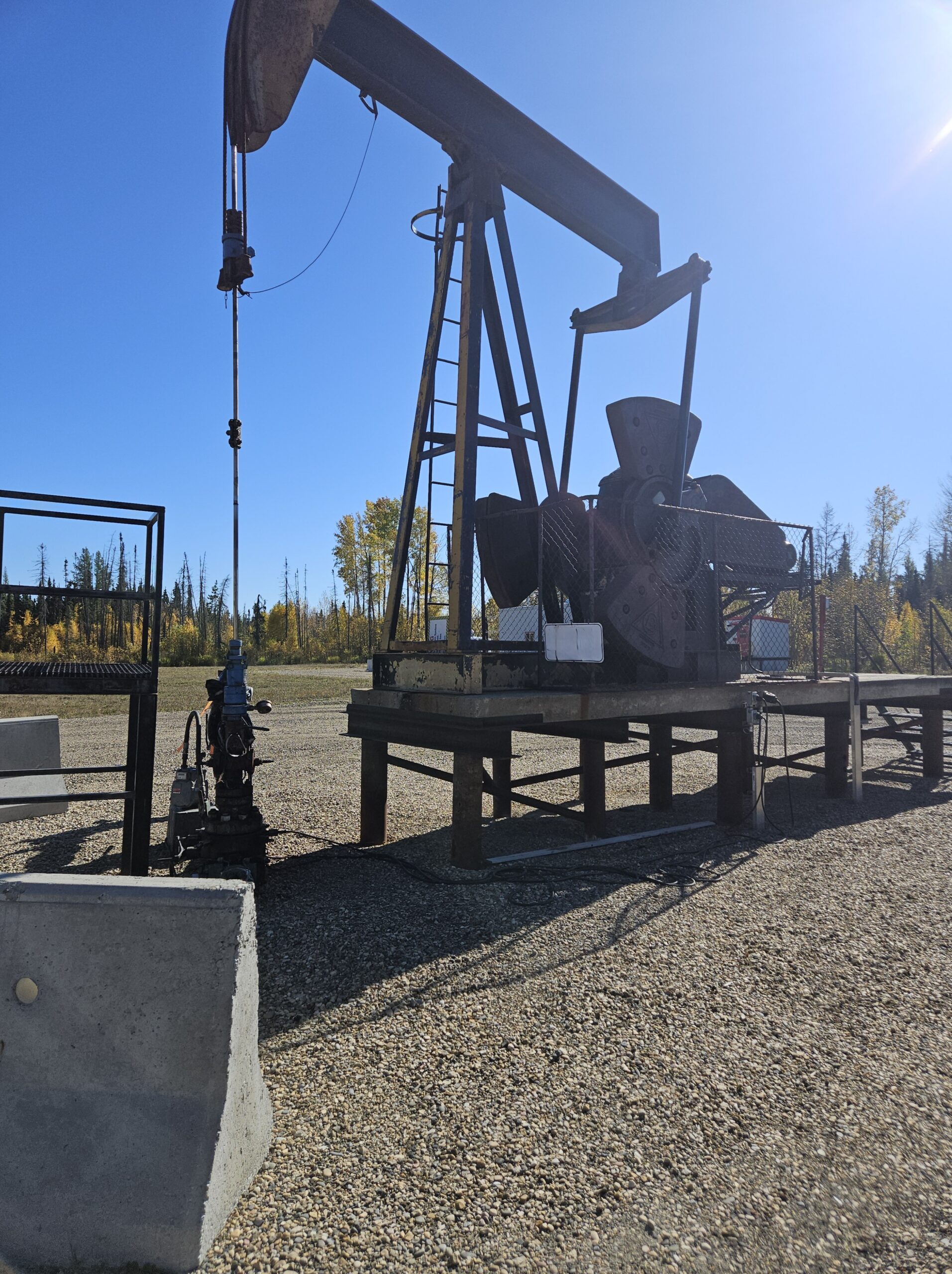
When Yesterday’s Lift System Meets Today’s Well
There is another reason diagnostics become increasingly important as Western Canada’s producing assets mature: the well has changed.
For example: A Cardium well 10 or 15 years into its producing life is operating under very different conditions than when its artificial lift system was originally selected. Reservoir pressure and inflow may have declined, fluid characteristics may have changed and a pump sized for earlier production could now be operating inefficiently.
Yet declining production can still be interpreted as evidence of skin damage effects or scale/wax buildup without a proper test.
In some cases, pressure and fluid-level data tell a different story: the reservoir is capable of supplying the well, but the lift system is no longer appropriately matched to current conditions.
That changes the conversation entirely. Pump optimization, plunger lift changes or another production adjustment may offer substantially more value than another chemical treatment.
An $18,000 Diagnosis With a Six-Figure Impact
In one recent project by Central Optimization, an Alberta producer had been conducting recurring chemical treatments on a group of declining Cardium wells.
Central tested four priority wells. According to the company, three showed healthy reservoir pressure without the meaningful skin damage that would have supported the original assumption. Fluid-level data instead indicated lift-system inefficiencies.
The diagnostic program cost approximately $18,000. Central estimates that eliminating unnecessary chemical treatments and addressing the actual lift constraints represented more than $100,000 in first-year savings and recovered production alone.
The wells that did show evidence of restriction could then receive targeted treatment based on measured conditions, rather than assumption.
The Lesson? Diagnose First. Spend Second.
None of this suggests producers should stop using chemical treatments. Quite the opposite.
The opportunity is to target them better.
For executives and engineers managing mature assets, the larger lesson is applicable well beyond just chemistry. A well’s current performance should determine today’s solution – not assumptions based on what worked five or ten years ago.
“After 30 years in this industry, one thing I’ve learned is that wells don’t always behave the way we assume they should. That’s why we measure first. The data has a way of challenging what everyone thought the problem was.” says Central Optimization’s President, Devin Swanson.
Before spending $80,000 treating a suspected problem, a simple $5,000 diagnostic may be one of the better optimization investments an operator can make.
Before your next treatment or intervention, make sure you know what your well is actually telling you.
Learn more about this and other tips at Central’s Optimization Academy or reach out to them directly for an assessment.
This article is sponsored content, written and paid for by the advertiser. We do not endorse or take responsibility for the accuracy of the information presented. It has not been reviewed by our editorial team, and the opinions expressed are solely those of the sponsor.