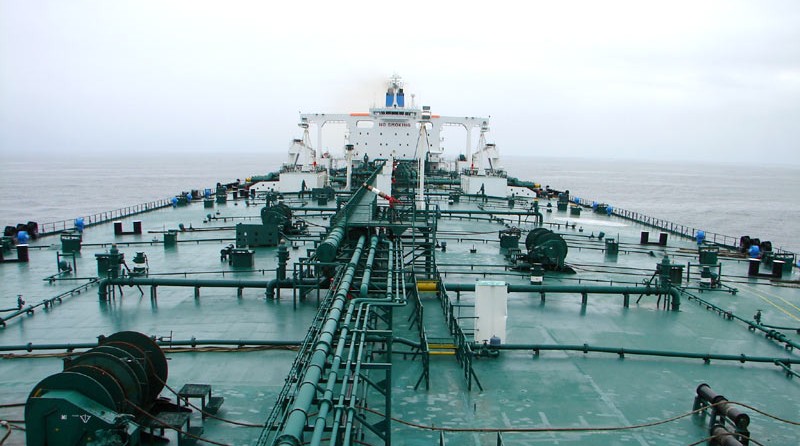
OTTAWA – Alberta Premier Danielle Smith is urging Ottawa to terminate the West Coast oil tanker ban as the federal government prepares to unveil the details of a new energy pact it has been negotiating with the province.
Here’s what you need to know about the oil tanker ban and what repealing it would mean for Canada.
What is the tanker ban?
The tanker ban legislation, also known as the Oil Tanker Moratorium Act, was passed in June 2019.
The act prohibits tankers from carrying more than 12,500 metric tonnes of crude oil in areas along the northern coast of British Columbia from the northern tip of Vancouver Island to the Alaska border.
The tanker ban became law under former prime minister Justin Trudeau and has been attacked frequently by the government of Alberta.
Why does Alberta oppose the tanker ban?
Smith has been critical of most federal climate policies and has accused Ottawa of invading provincial jurisdiction. She has publicly called on Ottawa to terminate what she has called “bad laws,” including the tanker ban.
Smith has said repealing the ban is necessary to move Alberta oil to overseas markets.
B.C. Premier David Eby has called on Ottawa to keep the ban in place. Eby said repealing the tanker ban would risk upsetting the “fragile consensus” in his province over resource development, one that he hopes to strengthen.
Is Ottawa considering repealing the ban?
Energy and Natural Resources Minister Tim Hodgson said Monday the government is close to providing clarity on whether Ottawa will repeal the ban.
Jonathan Wilkinson, a B.C. Liberal MP and a former federal environment minister, said that “a number of things” would need to happen before the tanker ban could change, including discussions with the B.C. government and coastal First Nations.
The Globe and Mail has reported that the federal government, which is in talks with Alberta on the prospect of building a new pipeline, is considering allowing some tanker traffic off the northern B.C. coast.
B.C. Liberal MPs have said the tanker ban can’t change without provincial and First Nations consent.
What does the tanker ban have to do with pipelines?
Smith has said her government intends to submit a proposal for an oil pipeline from Alberta to B.C. to the federal government’s Major Projects Office next spring.
While he’s in Calgary on Thursday, Carney is expected to announce details of a memorandum of understanding with Alberta affirming support for a pipeline alongside emissions reduction measures.
The agreement reportedly includes exemptions to the tanker ban.
Experts say lifting the tanker ban would remove only one of many obstacles deterring the private sector from backing a pipeline project.
Smith and industry leaders have said repeatedly no pipeline project is worthwhile as long as the tanker ban remains in place.
Enbridge CEO Greg Ebel said in a speech last month his company wouldn’t build a “pipeline to nowhere,” citing the industry’s inability to export oil off the B.C. coast because of the tanker ban.
Zach Parston, national infrastructure leader at KPMG in Canada, said lifting the tanker ban would be a “helpful symbolic gesture” but it likely wouldn’t be “sufficient on its own to change investment calculus.”
“Ultimately, these projects need to continue to be de-risked,” said Parston.
“Things like corridor certainty, predictable permitting, support from local communities and Indigenous Nations and competitive investment climate are going to be critical to that decision to invest in pipelines in Canada.”
This report by The Canadian Press was first published Nov. 26, 2025.
— With files from David Baxter, Nick Murray and Lauren Krugel in Vancouver