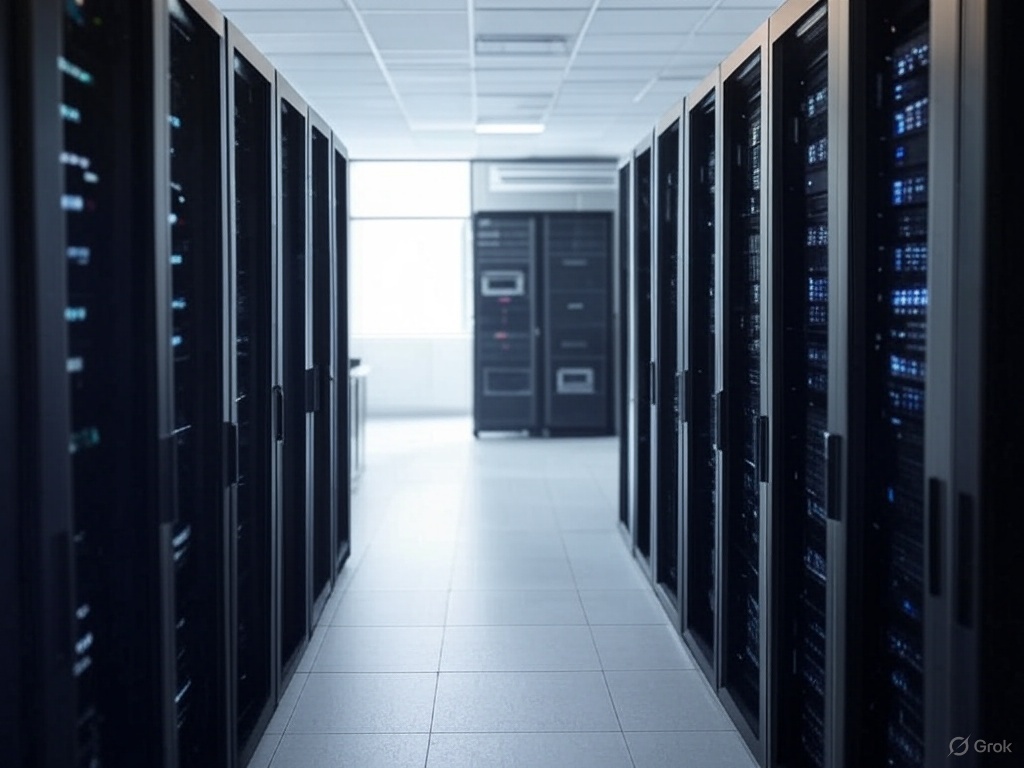
 Data centers are being blamed for America’s rising electric bills. But the real issue is not that AI — and consumers in general — are boosting energy usage. The real problem is structural, and it began long before the latest infrastructure boom.
Average residential electricity rates rose 6% last year — more than twice the inflation rate. Roughly one-third of American households now spend more than 5% of their income on electricity.
In 2025, rate increase requests filed by investor-owned utilities hit their highest level since the mid-1980s. Something is clearly broken.
These increases are often attributed to new demand from data centers powering the AI race and other industries turning toward electrification.
But in several states that have welcomed enormous data centers and vast new industrial facilities, including Nebraska, New Mexico and North Dakota, residents’ electricity bills have actually decreased.
Meanwhile, households across the Mid-Atlantic, California, the Northeast and the Southeast — areas that have seen far less data center growth — are watching their power costs climb well above the rate of inflation, according to two studies by the Columbia University Center on Global Energy Policy (CGEP).
So why is demand growth lowering bills in some places and raising them in others?
Two words: poor incentives.
BUILT TO SPEND
For decades, the American power system has rewarded utilities for building new infrastructure rather than for managing existing assets wisely. Under traditional rate regulation, utilities earn reliable returns — typically 9% to 10% — on capital they deploy, according to Federal Energy Regulatory Commission filings. But upgrade an existing line instead or deploy software instead of building new infrastructure? The answer is not as clear. The incentive to make large capital investments is baked in, and customers foot the bill over the lifetime of every new asset built. Over the last decade, that dynamic has become less tenable because of spiking inflation in the power sector. Since 2019, inflation, tight supply chains and increased tariffs have driven the price of transformers, which transfer electricity between circuits, up by 89%. Wire and cable prices have risen 152%. Those costs could flow into customer bills for decades.
Another issue is the growing toll of climate change. In Florida, some utility bills now carry “storm cost recovery” surcharges. In California, bills have increased over the last five years to mitigate wildfires. These hikes are not anomalies. They are compounding, recurring costs that ratepayers are absorbing.
The data center boom arrived against this backdrop, meaning it did not cause a power affordability crisis, but exposed and accelerated one that was already well underway.
NOT KEEPING PACE
That does not mean data centers are benign actors.
Through 2024, data center power demand ranged widely from 5 megawatts (MW) to about 200 MW, equivalent to the demand of about 200,000 homes. But massive new data campuses with power demand of 1,000 to 5,000 MW have now been proposed, and some are already under development. This has raised concerns across the country, with data center demand projected to consume 5% to 15% of total U.S. electricity by 2030.
Moreover, grid upgrades are far from costless.
Where the grid is constrained, large new loads can raise local costs, especially if utilities pass those expenses to households.
The answer, though, is not to limit new demand. Indeed, the broader evidence points to different solutions.
Where low-cost wind and solar power are available and large users pay their fair share, new electricity demand can actually lower prices for everyone. That outcome isn’t guaranteed, of course. It depends on whether the grid can connect to low-cost supply and allocate upgrade costs fairly. This could mean requiring data centers to pay for their own transmission upgrades.
LOWER COSTS, BETTER RULES
The main problem for major U.S. grid operators is that the infrastructure needed to deliver higher volumes of electricity has not kept pace with demand growth. This is certainly the case for PJM, the largest grid operator in the U.S., serving 13 Mid-Atlantic and Midwestern states. The good news, CGEP studies show, is that meaningful solutions are available. Employing existing technology in innovative ways could significantly expand the capacity of transmission lines already in place. Dynamic line rating, for example, uses real-time weather data to determine how much electricity lines can actually carry, rather than relying on static assumptions that often overestimate the amount needed. One Pennsylvania utility reduced congestion by up to 65% on monitored lines using this approach.
Another option is upgrading the physical lines themselves. Replacing conventional steel-core wires with lighter, stronger carbon-core alternatives could nearly double line capacity in months.
CGEP analysis indicates that deploying these grid-enhancing technologies nationwide could result in $180 billion in savings by 2050.
Data centers themselves can also be part of the solution. Pilot projects in Arizona and North Carolina have shown that data centers can be designed to avoid drawing power from the grid during periods of high demand.
These near-term tools buy time. But deeper reforms are also necessary.
One possibility is tying utility executive compensation to how efficiently the system is managed, not just how much is built. Modernizing the permitting and interconnection processes that delay new power plants and transmission lines could also be a game-changer.
Finally, data centers – and other new large energy-hungry infrastructure – could also bear a fair share of the energy costs they trigger, instead of passing those costs to residential ratepayers.
The states where electricity prices are falling despite increased demand from data centers have not discovered magic. They have managed supply, infrastructure and cost allocation sensibly. Prices rise when those things are mismanaged. They do not have to.
(The views expressed here are those of Douglas J. Arent, a Global Fellow at the Columbia University Center on Global Energy Policy and a Distinguished Fellow of the World Economic Forum.)
Enjoying this column? Check out Reuters Open Interest (ROI), your essential new source for global financial commentary. Follow ROI on LinkedIn, and X. And listen to the Morning Bid daily podcast on Apple, Spotify, or the Reuters app. Subscribe to hear Reuters journalists discuss the biggest news in markets and finance seven days a week.
(Writing by Douglas J. Arent; Editing by Marguerita Choy and Anna Szymanski)