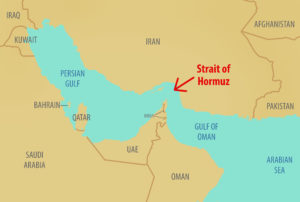
U.S. Energy Secretary Chris Wright said on Tuesday that ship traffic through the Strait of Hormuz is rising "very meaningfully" as the conflict with Iran continues. "I would say rising very meaningfully," Wright said when asked how ship traffic is flowing through the Strait compared to a week or two ago. Wright made the remarks during an Atlantic Council conference and added that it would take many months to get back to normal flows of energy once the war is over. Vessel movements on the [Read more]
New York state’s electricity reserves are shrinking, grid operator says

Electricity supplies in New York have shrunk over the last five years, leaving one of the most populous U.S. states at risk of falling short of the energy needed to power homes and businesses on the hottest and coldest days of the year, the state grid operator said on Tuesday. * The retirement of fossil fuel-fired power plants in New York has outpaced the addition of comparable new electricity generation, resulting in a 1.5 gigawatt net decline in supplies since 2019, the NYISO said in an [Read more]
LNG demand in Asia recovers from Iran shock as China buys: Russell

Liquefied natural gas demand in Asia is quietly recovering from the shock of losing almost 20% of global supply to the Iran conflict as top buyer China shows signs of returning to the market. The biggest-importing region is on track for arrivals of 21.83 million metric tons in June, the most for five months and also up from the 21.55 million tons in the same month last year, according to data compiled by commodity analysts Kpler. Asia's LNG imports had dropped to a six-year low of 18.74 [Read more]
Alberta pitches cheap natural gas for data center boom

Alberta is touting its abundant supply of cheap fossil fuels to entice tech companies to build data centers for the AI boom, a move that would undermine Canada's plan to link new data center development with clean energy expansion. Canada is the world's fifth-largest producer of natural gas, around 60% of which comes from Alberta. As well as huge fossil fuel reserves, the western province boasts a cooler climate that can offset the cooling costs of data center infrastructure and plenty of [Read more]
Oil falls as investors await clarity after Iran-Israel halt attacks
Oil prices fell on Tuesday, erasing most of the previous session's gains, after Iran and Israel said they had halted attacks on each other following an appeal from U.S. President Donald Trump, though both sides warned they could resume hostilities. Brent crude futures were down 91 cents, or 1%, at $93.34 a barrel at 0400 GMT, while U.S. West Texas Intermediate declined $1.13, or 1.2%, at $90.17 a barrel. Prices climbed as much as 5% in the previous session after renewed Israeli strikes on [Read more]
Discount on Western Canada Select narrows

The discount on Western Canada Select crude oil to North American benchmark West Texas Intermediate futures narrowed on Monday. WCS for July delivery in Hardisty, Alberta, settled at $12 a barrel below the U.S. benchmark WTI, according to brokerage CalRock, compared with $12.15 a barrel on Friday. * The WCS differential has been volatile with global crude price swings since the start of the U.S.-Iran conflict. * But U.S. refinery demand is strong, as evidenced by refineries deferring [Read more]
Germany deepens Canada energy ties with provisional LNG deal
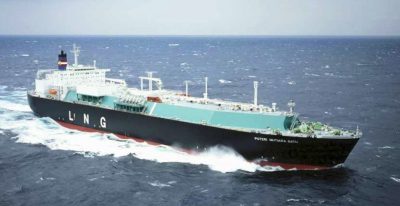
German energy firm Uniper has signed a preliminary agreement to secure liquefied natural gas from a key project in Canada, a joint statement said on Monday, the latest sign of an intensifying energy partnership between the two countries. The deal to procure LNG from Canada's Ksi Lisims, a proposed export facility to be located on British Columbia's Pacific coast, comes hot on the heels of a similar deal by Uniper's German peer SEFE last month. * Uniper and Ksi Lisims LNG have signed a [Read more]
Why are the Houthis threatening to attack Red Sea shipping and what does it mean for oil markets?
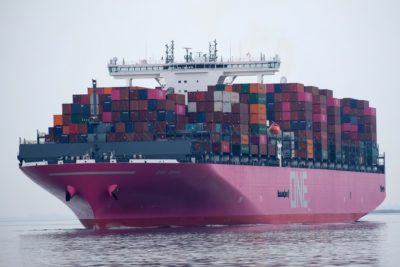
June 8 - Yemen's Iran-aligned Houthis said on Monday that they would ban ships linked to Israel from the Red Sea after Israel renewed its military attacks on Iran, adding to concerns about global shipping and energy flows. This is why it matters and what it means for the Iran war and the global energy crisis: HOW BIG IS THE RISK TO GLOBAL ENERGY MARKETS? Iran's closure of the Strait of Hormuz since Israel and the United States attacked it on February 28 has disrupted most oil and other [Read more]
Oil market calm masks a host of unknowns: Bousso

The biggest oil supply shock in decades has entered its fourth month – with no resolution in sight as neither the U.S. nor Iran appears willing to budge - yet the market remains surprisingly calm. This disconnect reflects an uncomfortable reality: the biggest drivers of today’s energy market are a host of unknowns. The renewed strikes between Iran and Israel over the weekend have sent oil prices up over 4% to $98 a barrel on Monday, but Brent crude remains well below levels seen only a few [Read more]
Hormuz strait will be open but with transit fees, Iran envoy to Moscow quoted
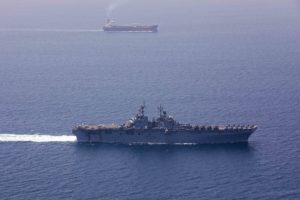
The Strait of Hormuz will be open but under new conditions to be set by Iran and Oman, including a transit fee, Iran's ambassador to Moscow was quoted as saying on Monday. The U.S.-Israeli war on Iran has largely cut oil flows via the strait, which before the conflict saw one-fifth of the world's oil pass through. Several tankers have managed to leave the Gulf recently, but oil and liquefied natural gas flows are still severely constrained. "Of course, this strait will be open, but with [Read more]
- « Previous Page
- 1
- …
- 76
- 77
- 78
- 79
- 80
- …
- 1211
- Next Page »