

There is a lot of discontent with the government’s policies these days, pretty much all of them, but particularly anything pro-environment which is interpreted as anti-business by default. The frustration is somewhat understandable given the economic situation the province is in – the energy business is taking a kicking like it hasn’t in a good long while. That is fundamentally due to the price of oil, which has nothing to do with any government (it’s hard to call Saudi Arabia’s arrangement a [Read more]
Suncor ponders “stranding” oil sands reserves: humbly adjusting to the lowest common denominator, with spectacular results
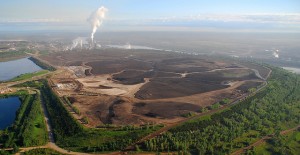
A sad story appeared in the news the other day, in the business section of all places. Not comically sad like earthquakes or pet hamster deaths, more like the demoralizing sadness one gets when hearing an interview with a Wall Street banker. The sense that the wrong people are winning. In this instance, the disheartening story was how Suncor Energy, a major Canadian oil sands producer and general all around fossil fuel company, made headlines by announcing that it would be prepared to “strand” [Read more]
No more free electricity: British electro-motorists at forefront of inevitable day of reckoning

Green energy has come a long way in the past decade, for a number of reasons. A primary one was that oil prices hit levels never seen before, which made many green technologies economic to pursue. That incentive has gone away now with low oil prices, and has resulted in consumers somewhat losing interest. Another green-boosting phenomenon is showing signs of weakening as well – the tendency of governments and businesses (through government) to provide major, some might say outlandish, incentives [Read more]
Why can’t we build anything anymore? Seven billion people need infrastructure, get over it
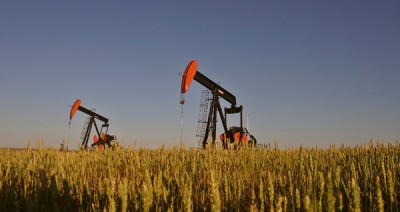
We are heading for a big collision between two huge and opposing forces. On one hand we want everything, and we want it cheap, safe, environmentally friendly, and right now. On the other, vested interests always seem to jam a stick in the spokes of progress for subjective and highly personal reasons, which custom now demands that everyone respect. Something has to give somewhere. At its most obvious, this problem is easiest illustrated by the problems associated with construction of [Read more]
When analyzing oil markets, use your own judgment – experts often know less than you
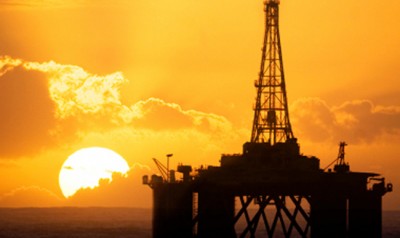
The general population forms opinions by absorbing the flow of headlines that bombard the senses; for peripheral topics like energy there is little time or inclination for most to dig deeper. The same happens with financial industry media coverage. One forms opinions based on the preponderance of evidence (that is, the headlines) and it often is too intimidating to challenge predominant themes, or too much of a pain to try. The logical assumption, arrived at in lieu of a lot of digging, is that [Read more]
Alberta’s enormous well abandonment problem can be solved with creativity and courageous thinking. Here’s a start.
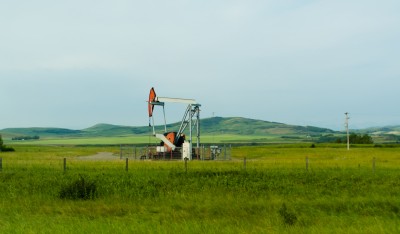
Everyone enjoys a party, but cleaning up the empties…not so much. I am of course referring to Alberta’s abandoned/suspended well problem: a thorn in everyone’s side and currently the topic du jour in Canada’s oilpatch. From the viewpoint of an eco-warrior, it is a black eye for the government and the province. But it is also a nasty hangover for industry, and particularly small companies that are most at risk of perishing. The abandonment/reclamation (A/R) problem is at the epicenter of a [Read more]
Natural gas and power can move anywhere, but oil is too dangerous? How long do we have to put up with this nonsense?
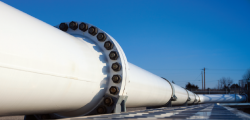
Enough is enough. Major, nation-building infrastructure projects are being derailed for no good reason. Meanwhile almost anything can proceed in the name of green energy, no matter how appalling the environmental footprint, and all is silent. Pipelines currently bear the brunt of the attack, because everyone likes a dopey villain. People in British Columbia swear they will put their lives at risk to stop construction of any oil pipeline. Their sad enthusiasm is built on the work of [Read more]
Do we really have 100 years of natural gas? Maybe, if we avoid the feral pig approach to development
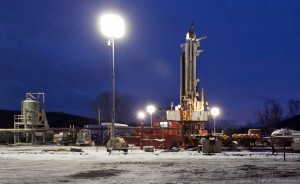
Last week I postulated that the world is possibly looking at massive production shortfalls, and despite current conventional wisdom shale resources won’t be able to make up the difference. There are a number of reasons for this misconception, with a primary one being that the media always needs a current object of desire that sweeps all before its path. Some weeks it’s Justin Bieber’s tattoos, others it’s shale resources. (Some phenomenon last longer than others, such as climate change – often [Read more]
A shortage of capital and surplus of turmoil may soon decimate global oil production, and shale hype won’t fill refineries

Despite the risk of sounding like an anti-shale lunatic, it’s important to counter the fan-boy mentality that’s gripped the media and swept away the common sense of analysts and commentators who might possibly know better. Any discussion about potential future global production shortfalls is dismissed with a hand wave and the ubiquitous “shale production will fill the void” nonsense. The same phenomenon existed 25 years ago with the “call on OPEC”, where it was universal knowledge that OPEC [Read more]
Energy education is sorely needed: A primer in weighing the alternatives
The energy business presents a challenge for the media to cover. Energy is wildly complex while the energy reporting business tends to have attention deficit disorder, or worse. Of course some other businesses are complex as well, but few have so many technical, economic and political aspects that are so globally intertwined. Specific aspects are also completely different. Natural gas is far different than oil, downstream businesses have more to do with chemical processing and marketing [Read more]
- « Previous Page
- 1
- …
- 40
- 41
- 42
- 43
- 44
- 45
- Next Page »