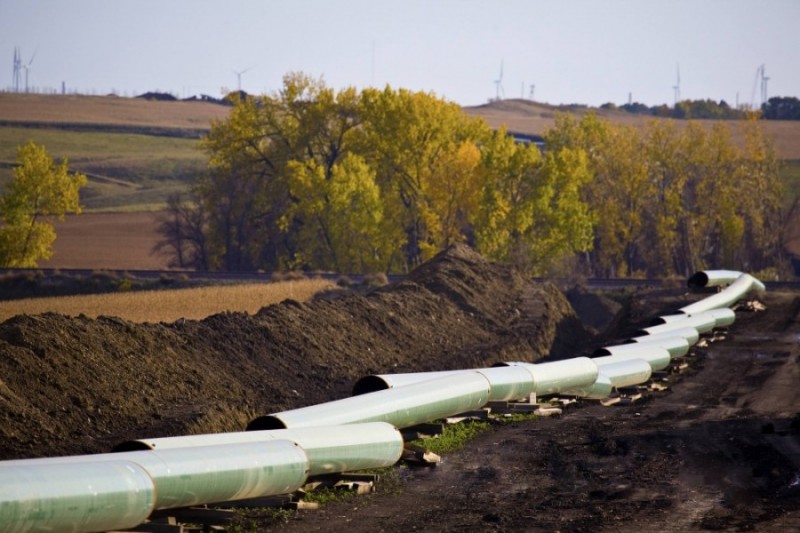
LINCOLN, Neb. – TransCanada (TSX:TRP) is moving to acquire the remaining land in Nebraska needed to build its controversial Keystone XL pipeline after the state’s high court earlier this month removed a major legal barrier for the planned route.
Officials of the Calgary-based company said Tuesday they’ve filed paperwork in nine counties to acquire access to the remaining land needed to construct, operate and maintain the controversial $8-billion pipeline, which is in its seventh year of regulatory limbo.
The two-year window for TransCanada to invoke eminent domain, or the right to expropriate private property with compensation, closes in Nebraska on Thursday. By law, TransCanada can use the courts to force Nebraska landowners to sell access to their land.
Company officials say they still need to acquire 12 per cent of the total land easements from Nebraska landowners who have not yet reached a deal with the company. Some holdouts have said they won’t negotiate no matter how much TransCanada offers.
The pathway could still face legal challenges in Nebraska. Opponents have sued to try to prevent TransCanada from using eminent domain and to overturn the state pipeline-siting law that allowed former governor Dave Heineman to approve the route in 2013.
In its current iteration, Keystone XL would cut diagonally from the Saskatchewan-Montana border, through South Dakota to Steele City, Neb., where it would connect with the existing Keystone system.
The 830,000-barrel-per-day project would offer a more direct route for Alberta crude to Gulf Coast refineries, but would tap into some U.S. fields as well.
TransCanada’s Keystone projects land manager, Andrew Craig, said the company would continue to work to acquire easements voluntarily. Craig said eminent domain proceedings traditionally take about six months.
The company has acquired 100 per cent of the private landowner easements in Montana and South Dakota, Craig said.
“This is all we have left,” Craig told The Associated Press. “… We think 88 per cent voluntarily agreements in the last two years is a substantial success.”
Pipeline opponents argue that many of the landowners in Montana and South Dakota were “bullied” early in the process and told they had no other option.
“Farmers and ranchers have the grit and stomach to prevent TransCanada from polluting our water. Landowners will match TransCanada’s lawsuits in local courts and continue to take our fight to the one person who can put an end to all of this: President (Barack) Obama,” said Jane Kleeb, executive director of pipeline opposition group Bold Nebraska.
Obama has downplayed the project’s benefits and the White House has publicly threatened to veto legislation in Congress that would fast-track the project.
Environmentalists and other pipeline opponents argue that any leaks could contaminate water sources and the project would increase air pollution around refineries and harm wildlife.
Supporters, including state and national Republicans and oil industry members, say those fears are exaggerated and argue that the pipeline would create jobs and ease the country’s dependence on foreign oil.
At least 70 per cent of the Nebraska landowners have signed agreements, Craig said, and he expects the company will sign agreements with at least half of the remaining landowners without having to use eminent domain.
In the two lawsuits filed last week, seven landowners in Nebraska’s Holt and York counties said they’ve received written warning that pipeline developer intends to initiate eminent domain proceedings.
Those still willing to negotiate mostly have concerns about compensation and restoration of native grasslands that could take three to five years to regrow, Craig said.
— With files from The Canadian Press