CALGARY – TransCanada wants the U.S. State Department to include recent Canadian climate change announcements in its review of the Keystone XL pipeline, arguing those developments bolster the case for the long-delayed project.
The Calgary-based pipeline builder outlined its rationale in a letter sent Monday to Secretary of State John Kerry and other U.S. officials as the U.S. regulatory process nears its seventh anniversary.
“We are asking the U.S. State Department to consider these recent developments that add to the abundance of evidence already collected through seven years and 17,000 pages of review that Keystone XL will not ‘significantly exacerbate’ greenhouse gas emissions,” Alex Pourbaix, TransCanada’s president of development, said in a statement Tuesday.
In the “supplemental filing,” TransCanada points to recent climate policy announcements by both the Alberta and federal governments.
U.S. President Barack Obama has said Keystone XL would only be in the U.S. national interest if it didn’t “significantly exacerbate” climate change.
Last week, Alberta’s new NDP government said it would ratchet up emission reduction targets for large industrial emitters and double its carbon price for those that exceed their allotment.
“If Alberta wants better access to world markets, then we’re going to need to do our part to address one of the world’s biggest problems, which is climate change,” Alberta Environment Minister Shannon Phillips said at the time.
“Nobody knows this better than the people who work in our energy industry.”
In May, Ottawa announced it aims to cut Canada’s greenhouse gas emissions by 30 per cent below 2005 levels by 2030, though no mention was made of the oilsands crude that Keystone XL would ship.
The federal government has also backed a G7 agreement to “decarbonize” the economy by 2100.
TransCanada’s letter also notes the CEOs of some of the biggest oilsands players have come out in favour of tougher carbon pricing, including Suncor Energy (TSX:SU) and Cenovus Energy (TSX:CVE), along with large European firms with Canadian operations, like Royal Dutch Shell and Total.
TransCanada (TSX:TRP) also reiterated its view that the oilsands — derided in many quarters for their big carbon footprint — are likely to be developed regardless of Keystone XL, meaning the pipeline alone should not enable higher emissions.
Alberta Premier Rachel Notley has said she wouldn’t stump for Keystone XL south of the border like her Progressive Conservative predecessors frequently did. She has said she’d rather see the oilsands bitumen upgraded in Alberta instead of being shipped raw to Texas.
She’s also said she won’t advocate for Enbridge’s (TSX:ENB) proposed Northern Gateway oilsands pipeline to the West Coast.
But Notley has taken a warmer tone when it comes to TransCanada’s Energy East Pipeline to the East Coast and Kinder Morgan’s expanded Trans Mountain pipeline to the Vancouver area.
The State Department is responsible for weighing Keystone XL because it crosses the Canada-U.S. border. It then makes a recommendation to Obama, who has the final say.
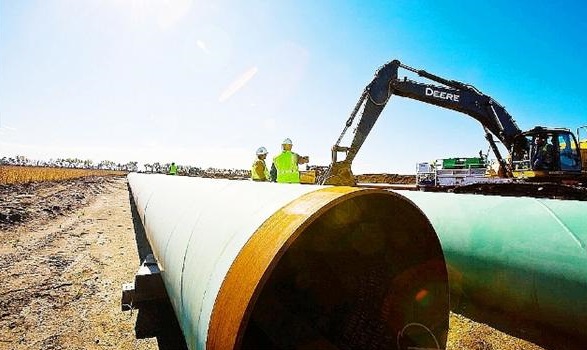
Keystone XL would start in Hardisty, Alta., and cut diagonally from the Saskatchewan-Montana border to southern Nebraska, enabling more oilsands crude to flow to refineries on the U.S. Gulf Coast by connecting to TransCanada’s existing network.
Follow @LaurenKrugel on Twitter.