• Sign up for the Daily Digest E-mail
  • X
  • LinkedIn
  • See more results

    Generic selectors
    Exact matches only
    Search in title
    Search in content
    Post Type Selectors

BOE Report

Sign up

See more results

Generic selectors
Exact matches only
Search in title
Search in content
Post Type Selectors
  • Home
  • StackDX Intel
  • Headlines
    • Latest Headlines
    • Featured Companies
    • Columns
    • Discussions
  • Well Activity
    • Well Licences
    • Well Activity Map
  • Property Listings
  • Land Sales
  • M&A Activity
    • M&A Database
    • AER Transfers
  • Markets
  • Rig Counts/Data
    • CAOEC Rig Count
    • Baker Hughes Rig Count
    • USA Rig Count
    • Data
      • Canada Oil Market Data
      • Canada NG Market Data
      • USA Market Data
      • Data Downloads
  • Jobs

McKenna won’t say if Canada can develop oilsands and meet climate targets

March 29, 201612:11 PM The Canadian Press0 Comments

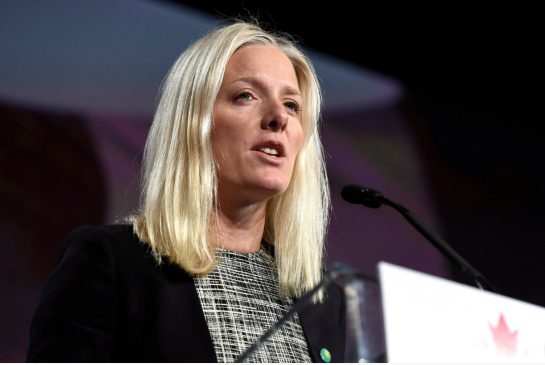
MONTREAL – Canada’s environment minister wouldn’t say on Tuesday how her government plans to meet its climate change commitments and also green-light new pipeline projects.

Catherine McKenna told reporters after a luncheon speech to the Montreal Council on Foreign Relations that Canada needs to de-carbonize its economy but stressed it won’t happen overnight.

“We have made a lot of investments in green technology and clean technology and that’s the direction of our government,” she said. “But it’s clear we also need jobs.”

Canada has come under increased pressure from environmentalists to explain how the country can continue to develop Alberta’s oilsands and also meet ambitious greenhouse gas emission targets.

The country’s energy industry is forecasting an expansion of the oilsands to meet growing world demand.

TransCanada wants to meet part of that demand and its Energy East Pipeline proposal would see 1.1 million barrels of oil a day move from Alberta and Saskatchewan to New Brunswick.

Climate research suggests, however, that most of Canada’s oilsands need to stay in the ground if world temperature increases are to remain below two degrees Celsius.

Canada’s current climate goals are to reduce emissions by 30 per cent by 2030 when compared with 2005 levels.

“Look, we need to grow our economy as well,” she said when asked whether Canada can simultaneously reduce emissions and build pipelines. “You can’t overnight say there is going to be no development (in the oil sector). But we’re moving in this direction and I think our budget is a very clear step towards that.”

She said her government is pledging $5 billion over five years to build “green infrastructure” across the country, such as wastewater treatment facilities.

McKenna added the recently tabled federal budget also includes $1 billion over four years for investments in green technology.

“We are going to be in a period of transition but we are moving in that direction,” McKenna said.

TransCanada

Follow BOE Report
  • Facebook
  • X
  • LinkedIn

Sign up for the BOE Report Daily Digest E-mail

Successfully subscribed

Latest Headlines
  • Prairie Provident Resources Announces Second Quarter 2026 Results
  • Pine Cliff Energy Ltd. Announces Second Quarter 2026 Results, and Capex Guidance Update
  • Journey Announces Disposition of Assets
  • Birchcliff Energy Ltd. Announces Strong Q2 2026 Results, Increased 2026 Production Guidance and New Malin Natural Gas Market Diversification
  • Chevron Announces Leadership Changes

Return to Home
Alberta GasMonthly Avg.
CAD/GJ
Market Data by TradingView

    Report Error


    Note: The page you are currently on will be sent with your report. If this report is about a different page, please specify.

    About
    • About BOEReport.com
    • In the News
    • Terms of Use
    • Privacy Policy
    • Editorial Policy
    Resources
    • Widgets
    • Notifications
    • Daily Digest E-mail
    Get In Touch
    • Advertise
    • Post a Job
    • Contact
    • Report Error
    StackDX
    • BOE Report Jobs
    • StackDX Intel
    © 2026 Stack Technologies Ltd.