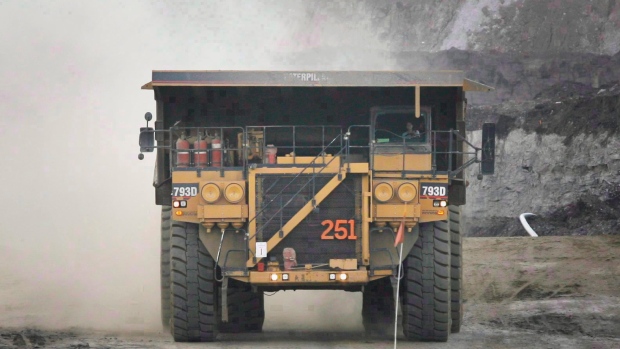
CALGARY – Royal Dutch Shell’s deal to sell off most of its Canadian oilsands holdings shows the waning appeal of the higher-cost sector for foreign investors at a time of soft crude prices and abundant global supply.
The megadeal announced on Thursday has Netherlands-based Shell and Houston-based Marathon Oil both making big divestments of their Alberta oilsands assets. Canadian Natural Resources is spending $12.74 billion in cash and shares to snap them up, a price it says is still less than replacement cost.
Shell said it would focus on plays like deepwater oil and gas that offer higher returns on capital, while Marathon said it would spend US$1.1 billion to buy U.S. shale assets.
The transaction shows that the oilsands just can’t compete for those investments at current oil prices, said Martin Pelletier, portfolio manager at TriVest Wealth Counsel.
“If you have opportunities to invest in other jurisdictions that are more profitable, you will,” he said.
But he added this trend could have a longer-term upside for the oilsands, as major players consolidate their holdings and boost economies of scale.
The oilsands have seen the retreat of several foreign companies in recent years, including Norway-based Statoil in January, as the explosive growth of cheaper shale oil and its knock-on effects on crude prices are felt throughout the industry.
In announcing its asset sale, Marathon Oil noted that the oilsands had been taking up a third of operating and production expenses, but only accounting for about 12 per cent of production.
Moves by the Alberta government to tax carbon and limit emissions have also added to the cost burden for industry. Greenpeace spokesman Ben Ayliffe was quick to point out that the oilsands are challenging both from cost and environmental perspectives.
“This news shouldn’t really surprise anyone — not only is producing oil from the tarsands highly polluting, it’s also extremely expensive and Shell’s Canadian projects were always going to be on the wrong end of the cost curve,” said Ayliffe in a statement.
On Thursday, Shell’s CEO Ben van Beurden reiterated the company’s support for a carbon price in a speech in Houston. He said the company is shifting away from oilsands and more towards natural gas, where it sees it can make the largest contribution to reducing emissions.
The overall state of the industry is a sharp turn from just a few years ago, when the oilsands were seen as one of the biggest areas of potential growth, said Michael Dunn, an oilsands analyst for GMP FirstEnergy.
“What happened 10 years ago was the world was running out of oil — or so it seemed — and the only place you could build big capacity was the oilsands,” said Dunn.
That perception led to multibillion-dollar buy-ins by global players, peaking with China-based CNOOC’s $15.1-billion bet on Nexen Energy in 2013. The trend started to reverse after oil prices collapsed in 2014.
Increased consolidation likely means more modest growth for this part of the energy industry long-term, said Kevin Birn, a director at the IHS Energy Group. But he said the potential of the remaining players should not be overlooked.
“These are huge companies now; we’re talking about million-barrel producers,” said Birn. “That’s world scale.”
Lanny Pendill, a Missouri-based analyst who covers oilsands at Edward Jones, said oilsands companies need the right assets, expertise and scale to compete with shale plays and ensure their long-term prospects.
“I don’t think anybody’s really soured on the oilsands,” said Pendill. “When you think of Canadian Natural, when you think of Suncor, Imperial Oil, those are your 800-pound gorillas in the oilsands and they’re the ones that will be here 100 years from now. So they will continue to grow operations.”
— With files from Dan Healing in Calgary.