CALGARY – Canada’s oil production is expected to increase by 1.4 million barrels per day by 2035, despite an ongoing “competitiveness gap” that discourages investment, according to the Canadian Association of Petroleum Producers.
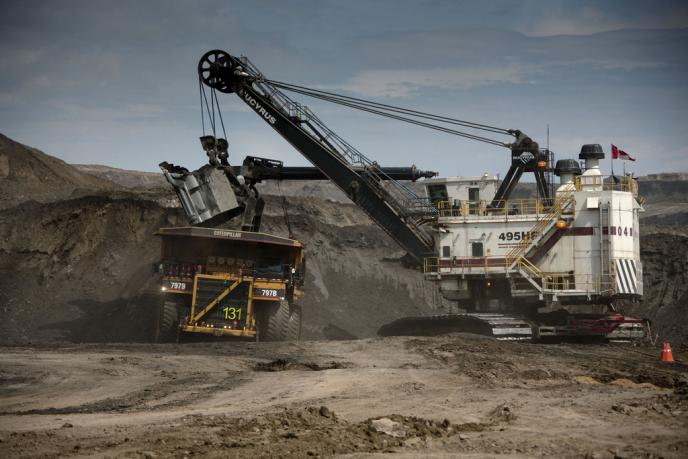
Total Canadian oil production will increase to 5.6 million bpd in the next 17 years mainly due to a 58 per cent rise in oilsands production to 4.2 million bpd, the group, which represents Canada’s upstream oil and gas sector, says in its annual forecast.
The increase is only slightly higher than the one predicted a year ago and is down substantially from the Calgary-based association’s 2014 prediction that oil production would grow to 6.4 million bpd by 2030, said CEO Tim McMillan on Tuesday.
“I think that Canada can do better,” he said while presenting the numbers at the Global Petroleum Show, an annual three-day oil and gas marketplace and conference in Calgary.
“We are down substantially from what we were predicting in 2014 and that very much mirrors the capital investment that we’ve seen both globally and in Canada, as well as we face some significant headwinds on market access and general competitiveness.”
The forecast is based on a survey of spending plans and project approvals by industry participants.
Oilpatch critics said the forecast is too optimistic given a growing global appetite for cleaner fuels and renewable options such as solar and wind power.
“I think it’s very aggressive and very optimistic, absolutely, given what’s going on when you take a look at both positives and negatives in terms of investment in that industry,” said Robyn Allan, an independent economist and one-time CEO of the Insurance Corporation of British Columbia.
Events like the International Marine Organization’s call to reduce sulphur levels in bunker fuel in 2020 will reduce demand and head off project construction in the oilsands, she said.
“The harsh truth that they need to face is that in 2035 we won’t be buying what they are selling, and that’s a good thing if we want our kids to inherit a livable planet,” added Greenpeace Canada’s senior energy strategist Keith Stewart.
Western Canada’s non-oilsands crude production will be about 1.3 million bpd in 2035, up slightly from 2017, according to the CAPP forecast.
Oil output in Eastern Canada is expected to rise to 290,000 bpd by 2025 thanks to major offshore projects including Hebron, Hibernia, Terra Nova, and White Rose, and then drop to just 70,000 bpd by 2035 as those oil wells are depleted.
The Eastern Canada part of the forecast could change dramatically, however, if the government of Newfoundland and Labrador succeeds in its plan to actively attract new investment, McMillan said.
Canada’s oil output exceeded its transport capacity in 2017, CAPP said, as proposed pipelines including TransCanada’s Keystone XL project, the expansion of the Trans Mountain pipeline and Enbridge’s Line 3 pipeline replacement continued to face uncertainty.
“In our forecast, we need all of those pipelines,” said McMillan. “If you take any of them out of the mix, we would not have the capacity.”
The federal government has since made a deal to buy Trans Mountain from Kinder Morgan Canada Ltd. for $4.5 billion, a deal that CAPP has reluctantly endorsed.
CAPP said Canada is losing its competitive edge, suggesting more efficient regulation in the United States is partly responsible for energy capital spending there rising by 38 per cent to $120 billion in 2017 while investment in Canada fell to $45 billion.
A year ago, CAPP forecast Canadian oil production would climb by 33 per cent to 5.12 million barrels per day by 2030. This year’s forecast, which extends five years further into the future, calls for 5.4 million bpd by 2030.
Follow @HealingSlowly on Twitter.