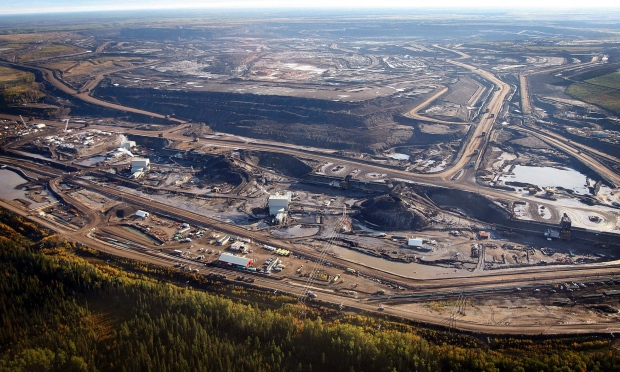
EDMONTON – Several Alberta First Nations have told the province’s government and energy industry that they must be consulted and share in the benefits of carbon capture projects near their lands that are crucial to making the oilsands more climate friendly.
“(The companies) want to work together to reduce climate effects,” said Cameron Alexis, head of Tribal Chiefs Ventures, which includes six Treaty 6 First Nations near Cold Lake, Alta.
“However, those big players didn’t come in the first instance to the First Nations. We’re an afterthought and that’s not right.”
The six largest oilsands producers have formed a group called Oil Sands Pathways to work together to find a way to reduce the industry’s greenhouse gas emissions and bring them to net zero.
Its plans rely heavily on carbon capture and storage, which would collect carbon dioxide from large emitters at oilsands mines, pipe it to a central location and inject it deep underground in geologic formations that would keep the carbon safely out of the atmosphere.
But Alexis points out much of that infrastructure, as well as the underground formations being used, would lie on or near First Nations traditional territory.
“We want full consultation and full inclusion.”
Alexis said the bands will also be looking to negotiate impact and benefits agreements. And they will want research to ensure the developments are safe for the land and the people.
The chiefs have already met with the heads of oilsands companies and have sent a letter to Premier Jason Kenney to express their concerns.
Justin Brattinga, spokesman for Kenney’s office, said the province has no record of any letter from the chiefs or their bands on the issue.
“The project hasn’t advanced enough for us to be involved in the process,” he said in an email.
Kendall Dilling, interim head of Pathways, said talks with First Nations are just beginning.
“They want to be intimately involved in this journey,” he said. “Most of this infrastructure will be on their traditional lands and they want to be at the table.”
Dilling said the projected carbon dioxide pipelines would mostly follow existing right-of-ways. He said the injection facility would consist of 16 or so wells that look similar to a natural gas field, with which the First Nations are familiar.
None of the underground storage space the companies have applied to use underlies First Nations land, Dilling said.
The chiefs have already had one meeting with Pathways. He said they’re looking for more than construction jobs.
“They want longer term and more predictable revenue streams.”
That might include an equity stake, said Dilling, similar to how some First Nations have taken ownership of oilsands tank farms and pipelines.
“We’re open to exploring it.”
Dilling said the chiefs were also concerned that environmental monitoring of any carbon storage project be well planned and thorough.
“We’re going to work with the First Nations’ requests.”
But Alexis said the oilsands producers first announced their plans last fall and the consultation process has barely begun more than six months later. He said First Nations should have been involved from the start, not just fit into something already laid out.
“These things should be happening before there’s even a footprint.”