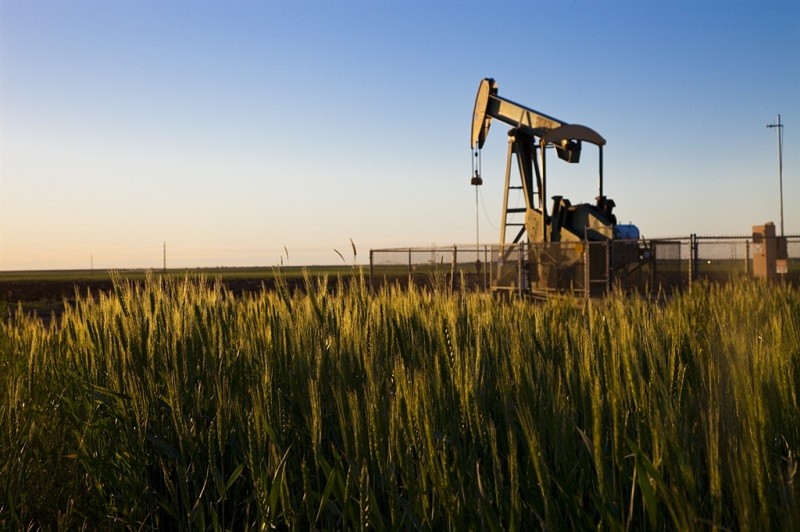
 U.S. crude oil production will fall next year as lower commodity prices have forced drillers to drop rigs faster than expected, the U.S. Energy Information Administration said on Tuesday in its monthly Short-Term Energy Outlook report.
Crude output in the world’s largest oil-producing nation will drop to about 13.37 million barrels per day (bpd) in 2026, from around 13.42 million barrels per day this year, the EIA said. It previously expected U.S. output to grow to 13.49 million bpd next year.
The forecast marks the first time that the U.S. Department of Energy’s statistical arm has predicted a decline in U.S. oil output next year, countering President Donald Trump’s vow to unleash more domestic energy production.
It comes amid mounting concerns that the around two-decade- old U.S. shale revolution has peaked, especially as oil prices have slumped to multi-year lows in recent months due to the OPEC+ group’s easing of its supply curbs and concerns about the global economy arising from Trump’s erratic trade policies.
Total world oil output will rise to 104.4 million bpd this year, the EIA said, up from its prior forecast of 104.1 million bpd. For next year, the agency expects world oil output to average 105.1 million bpd, down from its earlier forecast of 105.4 million bpd.
Brent crude oil prices are expected to average $65.97 a barrel this year in the spot market, and $59.24 a barrel next year, the EIA said. U.S. West Texas Intermediate crude oil will average $62.33 a barrel this year and $55.58 next year, it said.
(Reporting by Shariq Khan and Scott DiSavino in New York; Editing by Andrea Ricci)