 A serious military confrontation between the U.S. and Iran could trigger a major disruption in Middle East oil supplies. The vast oil reserves the U.S. and China hold could prove critical in containing it. For now, uncertainty dominates in this protracted standoff, with U.S. and Iranian officials continuing to hold indirect talks, as American military forces amass in the region. What kind of military action Washington might choose – and Tehran’s potential response – remain open questions. For the U.S., scenarios range from a limited, pinpoint strike to weeks of intense bombardment. Iran, for its part, could opt for a contained and carefully calibrated response, similar to its well-telegraphed reaction to U.S. strikes on its nuclear sites during the 12-day Israel-Iran war last June.
Alternatively, Iran’s leadership could decide to “set the region on fire” if it feels the regime faces an existential threat. Such an extreme scenario could involve attacks on Israel and other U.S. allies in the region, including Saudi Arabia, strikes on oil and gas fields and the doomsday scenario – blocking the Strait of Hormuz. Around 20 million barrels per day (bpd) of crude and refined products – nearly a fifth of global consumption – are transported through this narrow shipping lane between Iran and Oman. Of course, if Iran were to disrupt transit through Hormuz, it would also halt its own oil exports, depriving Tehran of vital revenues. This is likely part of the reason the Strait has never been fully blocked.
Moreover, the U.S. Navy is well prepared for any interference, suggesting that any disruption would likely be measured in hours or days rather than weeks.
Furthermore, alternative export routes for a portion of the Gulf’s roughly 15 million bpd of oil shipments exist, including pipelines in Saudi Arabia and the United Arab Emirates. Nevertheless, this conflict has the potential to be far more serious than anything Iran has seen in decades, meaning its past actions may not be a good indicator of how it could respond this time. The risk of a serious supply disruption thus cannot be discounted, especially given that the forecast supply glut in crude markets has yet to materialize. The global oil market, which is entering a period of oversupply in 2026, would have multiple options for dealing with this challenge, with two of the most critical running through the U.S. and China.
SPR TO THE RESCUE
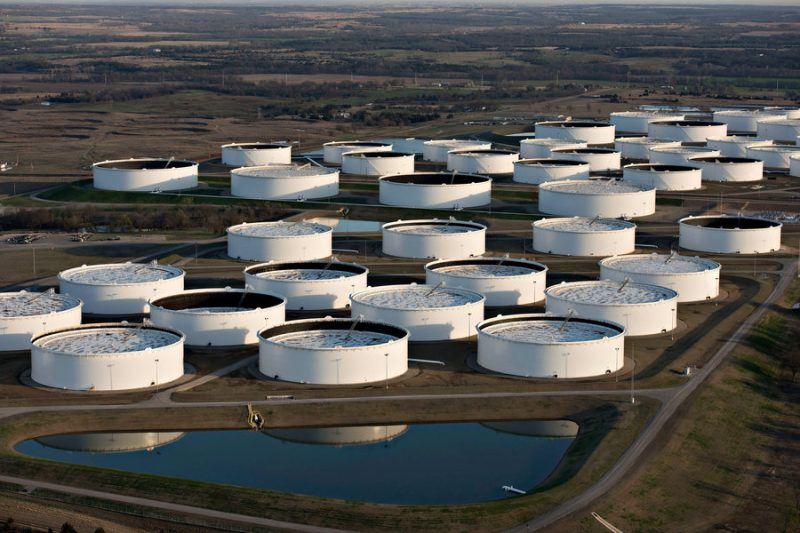
Many countries, particularly those heavily dependent on oil imports, could tap strategic reserves in the event of a supply shock. The International Energy Agency (IEA) requires its members to hold at least 90 days of net imports of crude oil and refined products in strategic reserves. IEA members last released oil from their strategic petroleum reserves in early 2022 following Russia’s full-scale invasion of Ukraine. That included the largest-ever drawdown from the U.S. Strategic Petroleum Reserve of around 1 million bpd over six months. The U.S. SPR is the world’s largest emergency oil stockpile, with capacity of 714 million barrels. Although Washington has slowly rebuilt inventories since mid-2023, stocks stood at around 415 million barrels by mid-February, well below capacity, according to the U.S. Energy Information Administration.
That is not necessarily a pressing concern for the U.S., however. The country is now the world’s largest oil producer, pumping around 13.6 million bpd, making it far less reliant on imports than in the past. The SPR currently covers roughly 200 days of net crude imports, well above historical norms, according to Reuters calculations. This gives Washington a substantial buffer in the event of a supply shock that U.S. President Donald Trump could tap to dampen oil prices.
CHINA’S SECRETIVE STOCKPILING
China’s crude-buying behaviour is also likely to play a central role in any supply disruption scenario. China, which consumed around 17 million bpd in 2025, is particularly exposed to Middle East instability. The region accounted for roughly half of China’s 10.4 million bpd of crude imports last year, according to analytics firm Kpler. At the same time, China has absorbed a large share of global excess supply in recent years, adding an estimated 800,000 bpd to storage in 2025 alone, according to ROI calculations. China does not publish official data on crude inventories, but analysts estimate stocks could total as much as 1.3 billion barrels – more than four months of imports – with additional storage capacity still available.
The commercial dynamics behind China’s stockpiling remain opaque, but crude purchases have historically decelerated during periods of relatively high oil prices. Beijing is likely to slow its buying in the event of a sharp price spike, easing pressure on global supplies. China could also opt to release some inventories to relieve pressure on domestic refiners. It has conducted only one formal SPR release, in 2022, though the volume was limited.
It is impossible to know exactly how the confrontation between Washington and Tehran will unfold, but any escalation is likely to push oil prices higher, and a severe disruption to Middle East oil supplies could trigger one of the biggest energy crises in decades.
Ultimately, the world’s two largest oil consumers – the U.S. and China – hold the keys to managing such a shock.
(The opinions expressed here are those of Ron Bousso, a columnist for Reuters)
Enjoying this column? Check out Reuters Open Interest (ROI), your essential new source for global financial commentary. Follow ROI on LinkedIn, and X. And listen to the Morning Bid daily podcast on Apple, Spotify, or the Reuters app. Subscribe to hear Reuters journalists discuss the biggest news in markets and finance seven days a week.
(Ron Bousso Editing by Marguerita Choy)