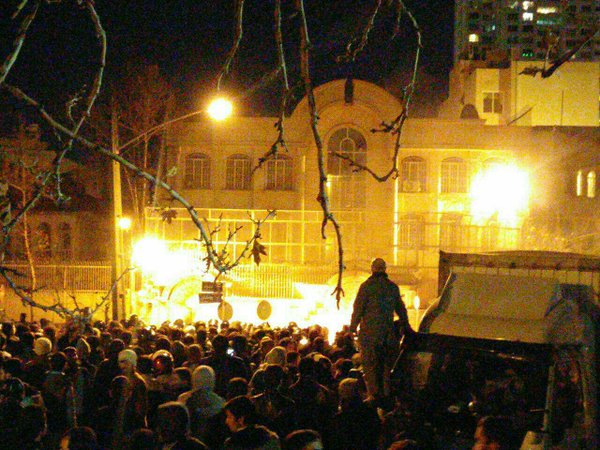
 Global energy markets face one of their gravest shocks in decades as joint U.S. and Israeli strikes on Iran and Tehran’s retaliatory missile attacks across the Gulf disrupt oil exports from the world’s most important producing region.
The scale of the disruption will likely be determined by the duration of the conflict, but for now the threat and the uncertainty are already enough to severely impact flows from the region that accounts for 20% of global oil supplies.
Barring a swift resolution, oil prices will likely see steep increases when trading opens on Monday morning. Benchmark Brent crude oil prices rose in recent weeks to around $70 a barrel, their highest since August 2025 as investors braced for military confrontation in the Middle East. The United States and Israel carried out military strikes on Iran on Saturday, targeting senior leaders and plunging the Middle East into a widening conflict. U.S. President Donald Trump said the attacks would eliminate a security threat to the United States and give Iranians an opportunity to topple their rulers.
For now, there is no confirmed damage to oil and gas infrastructure from retaliatory Iranian strikes. Explosions were reported in the United Arab Emirates and Kuwait, two major oil exporters. Meanwhile, Qatar, the world’s second-largest exporter of liquefied natural gas, said it intercepted missiles aimed at the country. Blasts were also heard in Bahrain and near Iran’s Kharg Island, the terminal through which about 90% of its crude exports normally flow, although shipping data suggests Tehran had transferred most of the oil stored there onto tankers in recent days.
Crucially, there have so far been no reports of disruptions to shipping through the Strait of Hormuz, the narrow waterway between Iran and Oman that handles nearly 20 million barrels per day of crude oil and refined products.
CAUTION MEANS DISRUPTION
But the absence of physical damage may not matter much.
The risk that tankers could be stranded inside the Gulf, north of Hormuz, or that vessels could be targeted, is already enough to force producers, traders and shippers to rethink movements of oil and LNG. Reuters has reported that some oil majors and trading houses have suspended shipments through the strait for several days.
That caution is unlikely to ease until there is far greater confidence in the safety of the region’s sea lanes.
Tanker freight rates, which had already been climbing as tensions escalated, are set to rise further. Benchmark rates for very large crude carriers from the Middle East to China have more than tripled since the start of the year, reflecting both heightened risk and the shrinking pool of willing vessels.
The key questions now are whether energy infrastructure will be directly targeted and how quickly the U.S. military can secure shipping routes across the Gulf and the Strait of Hormuz. It is worth noting that the Strait of Hormuz has never been fully blocked.
While Iran is unlikely to sustain a prolonged blockade, it has the capability to disrupt traffic temporarily. The U.S. Navy would almost certainly respond swiftly, but even short-lived attacks or mine-laying operations could have outsized effects on prices and supply. Such tactics would not be unprecedented. During the 1980s Iran-Iraq war, Iran attacked commercial shipping and U.S. naval vessels, prompting President Ronald Reagan to deploy U.S. forces to escort tankers in Operation Earnest Will. More recently, in late 2007 and early 2008, there were repeated confrontations between Iranian and U.S. naval forces. And in April 2023, Iran’s navy seized the Advantage Sweet crude tanker, chartered by Chevron, in the Gulf of Oman. The vessel was released more than a year later.
GLOBAL SUPPLY CUSHION
The global oil market is relatively well supplied today, after production from the United States, Brazil, Canada and other countries rose in recent years. Saudi Arabia, the world’s top oil exporter, has also not sat idle in the face of the risk to supply. In recent days the kingdom increased crude shipments, which are set to exceed 7 million barrels per day in February, the highest since April 2023, according to shipping analytics firm Kpler. OPEC+, which comprises the Organization of the Petroleum Exporting Countries and allies like Russia, is expected to agree on an output increase during a meeting on Sunday. Of course, disruptions to export routes from the Middle East could negate much of the production increases from regional producers, though Saudi and the UAE have some alternative export routes.
The scale of the U.S. and Israeli strikes, and Trump’s language, suggest Washington is bracing for a sustained military campaign aimed at severely weakening Iran’s leadership. How threatened Iran’s leadership feels may determine whether it escalates further by attacking a broader range of targets across the region, including oilfields, export terminals and processing facilities.
But even without that worst-case scenario, the conflict is already set to disrupt vital energy supplies from the Middle East in ways not seen for decades.
(Writing by Ron Bousso; Editing by Lisa Shumaker)