 Whatever the outcome of the Iran war, one question is already inescapable for the Gulf’s energy-rich economies: is the U.S. security umbrella still worth the price? Since the U.S. and Israel launched strikes on Iran on February 28, it’s been its Gulf neighbours who have suffered most from missiles and drones that followed – tearing through energy infrastructure, damaging economies,and exposing the limits of a supposed U.S. security umbrella.
That reckoning carries consequences far beyond the military. At stake is a potential rethink of the financial, trade and military ties at the very heart of their dollar-based economies — and of the hundreds of billions indollar reserves underpinning them.
THE PETRODOLLAR BARGAIN
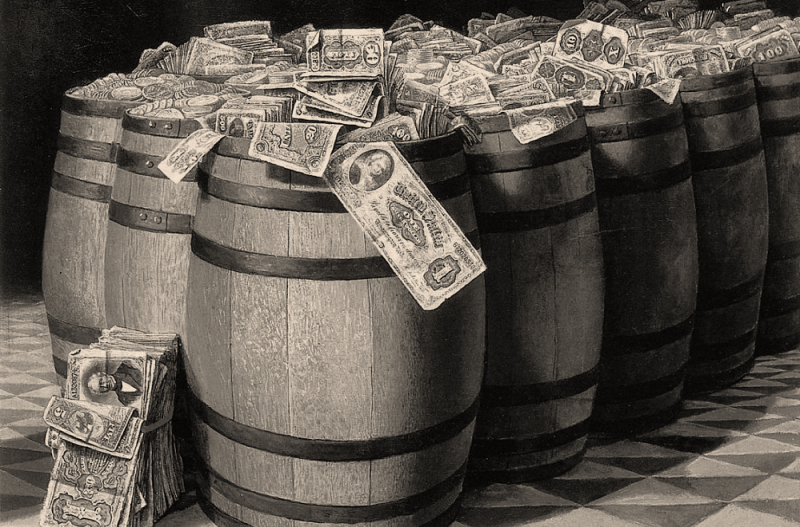
For decades, Washington and the Gulf states relied on an implicit bargain: U.S. protection in exchange for access to Gulf energy, oil priced in dollars, and the recycling of hundreds of billions of those “petrodollar” windfalls back into U.S. arms, technology, and American stocks and bonds.
The arrangement – built up since the 1970s – underpins the dollar’s status as the world’s reserve currency and has been central to U.S.-Saudi relations ever since.
The numbers built on that bargain tell their own story. Saudi Arabia, the United Arab Emirates, Qatar, Oman and Bahrain all peg their currencies to the dollar, requiring large supporting reserves – estimated at around $800 billion.
But that is dwarfed by sovereign wealth funds from the Gulf Cooperation Council, estimated to manage more than $6 trillion invested worldwide in bonds, stocks, private equity and other U.S.-heavy investments.
The U.S. Treasury lists Saudi Arabia and UAE funds among the top 20 national holders of Treasury securities, with almost $250 billion between them.
And there’s likely to be billions more sitting in dollar deposit accounts in financial centres like London and other offshore havens.
THREE FAULT LINES
The petrodollar system rests on three pillars – America’s need for oil, the pricing of oil in dollars and theGulf region’s security relationship with Washington. All three are now under strain.
First, America’snewfound position as a net energy exporter means it doesn’t strictly need Middle East oil any more.
Second, dollar pricing of oil was already eroding before the war. Many countries, mainly China and Russia and Iran itself, have pushed for years to denominate energy trade in their own currencies and have had limited success in that at the margins.
Third – and most acutely – the war has thrown the U.S. security umbrella – and Gulf confidence in it — up in the air.
PETRODOLLAR SWITCH
Former Goldman Sachs economist and UK Treasury minister Jim O’Neill argues the war could push GCC countries closer to China, India and other major oil-consuming nations.
“If this war has shown anything so far, it is that allying yourself with the U.S. no longer guarantees security,” O’Neill wrote earlier this month. “The economic opportunities offered by rising Asia are growing more attractive by the day.”
The numbers support that view. Saudi sells four times as much oil to China as it does to the U.S., according to a Deutsche Bank report on Tuesday on the fate of the petrodollar universe.
Deutsche strategist Mallika Sachdeva argues the petrodollar regime was already under pressure before the war: most Middle East oil now flows to Asia; sanctioned Russian and Iranian oil was trading in non-dollar currencies; and Saudi Arabia had been both localising its defence industry and experimenting with non-dollar oil payments.
The war could accelerate all of this, both by undermining the security umbrella and by forcing the liquidation of dollar assets to cover the economic damage across the Gulf.
THE LONGER GAME
A reorientation from a strictly petrodollar world toward pools of “petroyuan,” “petrorupee” or even “petroeuro” reserves is a deeper, longer-term issue.
And if the global energy shock from this conflict accelerates a shift away from fossil fuels altogether, the long-term impact on petrodollar power could be even more profound.
As Deutsche Bank concluded in its report: “The huge strategic importance of the Middle East to the dollar’s role as the world’s reserve currency should not be underestimated. The current conflict could test the foundations of the petrodollar regime.”
Reports of oil tankers possibly being allowed to pass through the otherwise blocked Strait of Hormuz if the oil is denominated in yuan are one of the many strands markets are watching closely with long-term ramifications.
And Gulf investor shifts also now require intense scrutiny – whether the war ends soon or not.
(The opinions expressed here are those of Mike Dolan, a columnist for Reuters.)
Enjoying this column? Check out Reuters Open Interest (ROI), your essential new source for global financial commentary. Follow ROI on LinkedIn, and X. And listen to the Morning Bid daily podcast on Apple, Spotify, or the Reuters app. Subscribe to hear Reuters journalists discuss the biggest news in markets and finance seven days a week.
(by Mike Dolan; Editing by Marguerita Choy)