 The fragile truce in the Middle East was in jeopardy on Tuesday after the U.S. and Iran launched new attacks as they wrestled for control of the Strait of Hormuz.
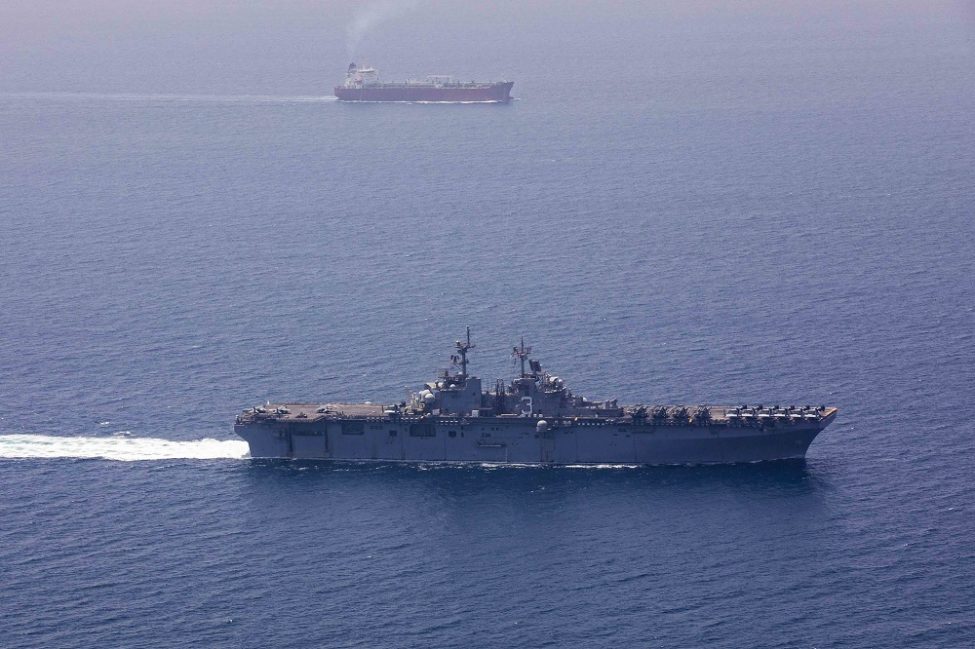
The U.S. military said on Monday it destroyed six Iranian small boats, as well as cruise missiles and drones, after President Donald Trump sent the navy to escort stranded tankers through the strait in a campaign he called “Project Freedom”.
Iran’s parliament speaker, Mohammad Baqer Qalibaf, said in a social media post on Tuesday that the security of shipping and energy transit had been threatened by breaches of the four-week-old ceasefire by the U.S. and its allies.
The strait is a vital thoroughfare for global supplies of oil, fertiliser and other commodities that has been virtually closed since the U.S. and Israel began attacks on Iran on February 28, causing price rises around the world.
Several merchant ships in the Gulf reported explosions or fires on Monday, and an oil port in the United Arab Emirates, which hosts a large U.S. military base, was set ablaze by Iranian missiles.
CONFLICTING REPORTS
Iran’s Islamic Revolutionary Guard Corps has effectively closed the narrow waterway under threat of mines, drones, missiles and gunboats. The U.S. has responded with a blockade of Iranian ports.
Iranian Foreign Minister Abbas Araqchi said Monday’s events showed there was no military solution to the crisis. He said peace talks were progressing with Pakistan’s mediation, and warned the U.S. and the UAE against being drawn into a “quagmire.”
The U.S. military said two U.S. merchant ships made it through the strait, without saying when, with the support of Navy guided-missile destroyers.
While Iran denied any crossings had taken place, Maersk said the Alliance Fairfax, a U.S.-flagged ship, exited the Gulf via the Strait of Hormuz accompanied by the U.S. military on Monday.
The commander of U.S. forces in the region said his fleet had destroyed six small Iranian boats, which Iran also denied. Iranian media quoted a military commander as saying U.S. forces targeted civilian boats, killing five civilians.
Iran also said on Monday it had fired on a U.S. warship approaching the strait, forcing it to turn around. Iranian officials later described the fire as warning shots.
Reuters could not independently verify the full situation in the strait on Monday as the warring sides issued contradictory statements.
South Korea reported one of its merchant ships, HMM Namu, in the strait suffered an explosion and fire in its engine room, though no one aboard was hurt. A South Korean government spokesperson said it was unclear if the fire was caused by an attack. Also on Monday, the British maritime security agency UKMTO reported two ships had been hit off the coast of the UAE, and the Emirati oil company ADNOC said one of its empty oil tankers was hit by Iranian drones.
UAE OIL PORT ABLAZE
Iranian authorities released a map of what they said was an expanded sea area now under their control, extending far beyond the strait to include long stretches of the UAE’s coastline.
After reported drone and missile attacks inside the UAE throughout the day, including one that caused a fire at Fujairah, an important oil port, the UAE said Iranian attacks marked a serious escalation and it reserved the right to respond.
Fujairah lies beyond the strait, making it one of few export routes for Middle East oil that does not require passing through it.
Iran’s state television network said military officials had confirmed they attacked the UAE in response to the “U.S. military’s adventurism”.
Oil prices eased 1% on Tuesday after climbing by as much as 6% in the previous session on signs the U.S. Navy is loosening Iran’s grip on the Strait of Hormuz.
The war in the Middle East has cost thousands of lives and roiled the global economy. U.S. and Iranian officials have held one round of face-to-face peace talks, but attempts to set up further meetings have failed.
Trump has said the U.S.-Israeli attacks aimed to eliminate what he called imminent threats from Iran, citing its nuclear and ballistic missile programmes, its support for Hamas and Hezbollah and its “menacing activities”.
Iranian state media said on Sunday that the U.S. had conveyed its response to a 14-point Iranian proposal via Pakistan, and Iran was reviewing it. Neither side gave details.
The Iranian proposal would postpone discussion of Iran’s nuclear energy and research programmes until after an agreement to end the war and resolve the standoff over shipping. Trump said over the weekend he was still studying it, but would probably reject it.
The latest U.S. intelligence shows limited damage to Iran’s nuclear programme since the war began, officials told Reuters.
Trump wants to remove Iran’s stockpiles of enriched uranium to prevent it from processing it to the point where it could make a nuclear weapon. Iran denies any intention to build a nuclear bomb.
(Reporting by Reuters bureaux; Writing by Jonathan Allen and Stephen Coates; Editing by Andrea Ricci and Alex Richardson)