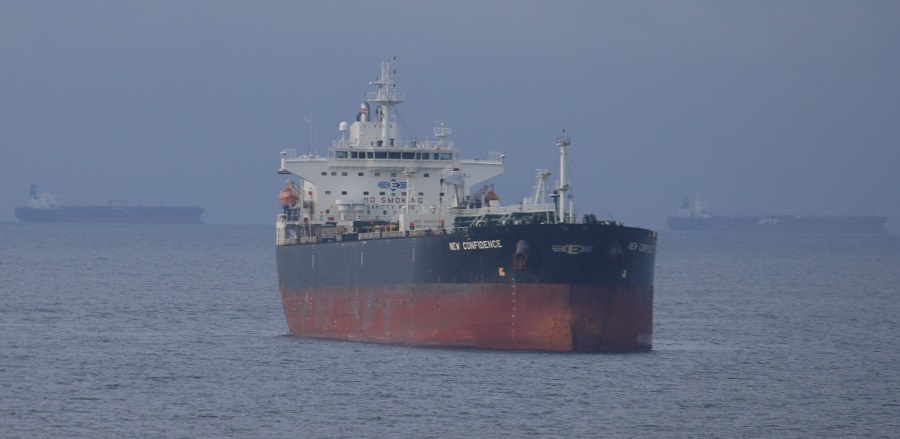
 A short-term glut has pushed oil futures back to pre-war levels as Middle East exports jump, analysts said and price data show, but returning demand and a slow normalisation could tighten the market next year.
August Brent futures traded around $73 a barrel on Thursday, their lowest since February 27 and 41 cents below September futures.
Prompt prices trading below later contracts — known as contango — signal ample supply in the market.
“The mini tsunami currently seen following the reopening of the Strait of Hormuz has moved the market from missing barrels to choking on barrels, so the near term focus will be squarely on this wall of barrels and how long it will take for it to be absorbed,” Saxo Bank analyst Ole Hansen told Reuters.
SHORT-TERM PRICE GLUT
The front-month structure flipped into contango on Wednesday for the first time since the war, as Middle East exports picked up after an interim U.S.-Iran deal to end their conflict and reopen the Strait of Hormuz — a route that carries around a fifth of daily global oil supply.
Demand weakness and a sharp drop in Chinese imports have also weighed on prompt prices, SEB analyst Bjarne Schieldrop said, with the reopening of Hormuz releasing supply in a surge rather than gradually.
Around 20 million barrels of oil have exited the strait in the past 24 hours, U.S. Energy Secretary Chris Wright said at the Reuters Global Energy Forum in New York.
LONG ROAD TO RECOVERY
The current curve marks a sharp change from the very steep backwardation seen at the height of the crisis in April, when front-month Brent hit $126.41 per barrel.
Backwardation — when prompt prices trade above future contracts — typically signals a tight market.
The curve remaining in backwardation into 2027 suggests the current glut may prove temporary.
More tankers are leaving Hormuz than are entering to load fresh cargoes as shippers remain wary of geopolitical risks, which will take time to normalise, Schieldrop said.
Demand to rebuild depleted inventories could also help rebalance the market into next year.
“That is also why we see backwardation further out, including into 2027, as replenishing inventories will be an important part of demand going forward,” said ANZ analyst Soni Kumari.
(Reporting by Robert Harvey in London, Anushree Mukherjee in Bengaluru, Georgina McCartney in Houston and Siddharth Cavale in New York. Editing by Rod Nickel, Alex Lawler and Mark Potter)