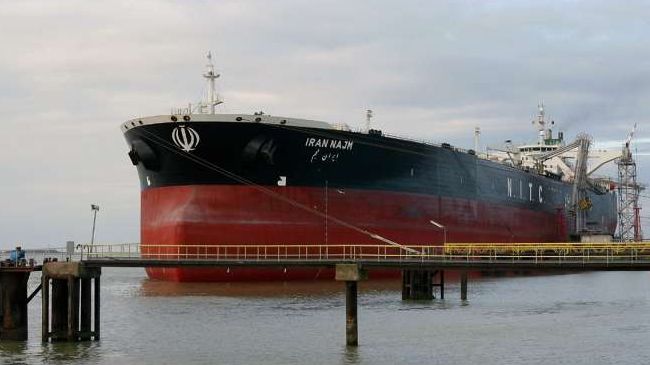
 The widening of the Mideast conflict into Yemen and drone strikes on a critical Saudi oil pipeline highlight an uncomfortable reality: the Iran war is no longer a short-lived energy supply shock, but a prolonged, unpredictable test of global economic endurance.
With crude oil back above $100 a barrel, markets are adjusting to a new and more volatile phase of the conflict, one in which many of the safeguards that cushioned the initial blow nearly seven months ago have disappeared.
U.S. President Donald Trump predicted last week that the conflict would end only after the U.S. midterm elections on November 3. This is a notable shift in tone from an administration that initially suggested the war would last weeks, not months.
Whether this new forecast proves correct is impossible to know, but recent developments at two of the world’s most important energy arteries suggest it may be very optimistic.
THE GATE OF TEARS
Yemen’s Iran-aligned Houthis have made rapid advances over the past week, tightening their grip on the Bab el-Mandeb Strait at the southern entrance to the Red Sea. The group announced a naval blockade of the shipping route in July and has reiterated that transit remains safe for all vessels except those belonging to Saudi Arabia.
At the same time, Saudi Arabia’s vital East-West oil pipeline, the kingdom’s main alternative to the Strait of Hormuz, was temporarily shut after a series of drone attacks launched from Iraq, according to Saudi authorities.
The 1,200-kilometre (745-mile) pipeline has been critical for the kingdom since the Strait of Hormuz began to be disrupted following the outbreak of the war in February.
By more than doubling west coast exports via the pipeline during the first five months of the conflict to 4 million to 5 million barrels per day (bpd), equal to roughly 4% to 5% of global oil supply, Saudi Arabia was able to offset a significant portion of the losses through Hormuz.
Yet those shipments fell to just 2 million bpd in August, the lowest since January, largely because of the Houthi blockade, according to Kpler data. In turn, output from what was once the world’s largest oil exporter fell to 6 million bpd in August, the lowest level in more than three decades, according to the International Energy Agency (IEA).
Satellite imagery suggests that at least one pumping station was struck, although the full extent of the damage and the timeline for repairs remain unclear. Saudi Arabia will also likely be able to draw on stored crude to offset any interruption in pipeline flows for several days. But this escalation comes at a dangerous moment.
RUNNING DRY
Disruption to Middle East oil exports, which accounted for around a fifth of global supplies before the war, has sharply eroded global stocks. Inventories have fallen by 507 million barrels, or roughly 2.8 million bpd, since the conflict began, according to the IEA.
It’s true that more crude has been exiting Hormuz in recent months compared to the early months of the war, largely because more vessels have been using a route along Oman’s coast under U.S. Navy supervision. Around 5 million bpd of crude oil and refined products have been exported through the strait since June, around a quarter of pre-war levels, according to Kpler, though the real figure may be higher because many ships switch off their navigation systems during transit.
Iranian strikes on over a dozen tankers attempting to cross Hormuz or inside the Gulf last week were a reminder that transits remain risky.
Regardless, this status quo is unsustainable. The Middle East remains the most important energy-producing region in the world. Halving crude exports from the Gulf may be manageable for a few months, but certainly not indefinitely.
Moreover, refined products like diesel, gasoline and jet fuel have fared considerably worse than crude, with exports from the region remaining nearly 60% below pre-war levels, according to IEA estimates. This has led to acute fuel shortages, particularly of diesel, pushing prices to record levels. Further disruption to Saudi Arabia’s Red Sea exports would put additional pressure on global inventories.
This latest flare-up could also cause ship traffic through Hormuz to shrink once again. Tanker operators remain reluctant to enter conflict zones, freight and insurance costs have surged to all-time highs and naval escorts can only partially mitigate the risks of operating in a war zone.
A DIFFERENT TONE
The question now is just how long these market dynamics can hold.
Iran’s leadership views the conflict as existential and has every reason to maximise economic pressure on both the U.S. and the wider global economy ahead of any eventual negotiations.
At the same time, Washington’s increasingly stringent blockade of Iranian oil exports is inflicting severe damage on the Islamic Republic’s economy, raising the costs of extending the confrontation indefinitely.
The Houthi advances and attacks on Saudi infrastructure may temporarily shift momentum back toward Tehran.
Those competing pressures could eventually bring both sides closer to the negotiating table. Equally, they could encourage each camp to keep fighting in the hope that economic or military gains will strengthen its bargaining position.
For nearly seven months, markets assumed Trump would find an off-ramp once rising gasoline prices and political costs became too painful. But that outcome depended on Tehran being willing to cooperate. So far, it has shown little interest in doing so.
U.S. policymakers and traders may have become accustomed to a conflict that appears manageable.
But if the war drags on for many more months, as Trump now suggests it might, the risk is that new disruption would find the market with far fewer shock absorbers.
(The opinions expressed here are those of Ron Bousso, a columnist for Reuters.)
Enjoying this column? Check out Reuters Open Interest (ROI), your essential new source for global financial commentary. Follow ROI on LinkedIn, and X.
And listen to the Morning Bid daily podcast on Apple, Spotify, or the Reuters app. Subscribe to hear Reuters journalists discuss the biggest news in markets and finance seven days a week.
(Ron Bousso Editing by Marguerita Choy)